Leave Your Message
0%

You can check out more about Basalt Cleavage, but honestly, it's often misunderstood. See, Basalt is a fine-grained volcanic rock—not a mineral with neat, predictable cleavage planes like some might think. Geologically speaking, it tends to break along fractures, cracks, joints, or where it’s cooled and formed vesicles. On the surface, it might look pretty uniform dark, but the inside? Not so simple. Tiny crystals of minerals like plagioclase, pyroxene, and olivine actually influence how it splits, wears down, or chips away.

A volcanologist I follow, Dr. Ray Cas, once said something that really hits home: “A rock’s behavior is controlled by its fabric, mineralogy, and history.” And honestly, that little nugget is super helpful when trying to understand why basalt can behave differently—from quarry to lava flow, or even in processed stone. Sometimes, you’ll see a block that breaks with clean, stepped edges. Other times, it’s crumbling around hidden pores or weathered seams. Guess what? Looking at how it appears on the surface doesn’t tell you everything about how it’ll perform. That can actually be pretty misleading.

This kind of knowledge really matters, whether you’re a quarry operator, engineer, architect, or stone fabricator. For instance, the way you cut the rock can impact how stable the edges are. Moisture might expose weak spots, and cooling joints—formed during the rock’s cooling—can look a lot like cleavage but aren’t really the same thing. That’s why lab testing is still important, but so is having some practical experience in the field.

Here’s the thing—it's not just about whether basalt has cleavage or not. The real question is, how will it respond when you put it under a certain load, or use specific tools, in a certain climate, or finish? To get those answers, you need to look closely—through petrographic analysis, strength tests, and careful onsite observations. Sometimes, samples can be imperfect but still give you confident, yet totally wrong, conclusions. Even seasoned professionals need to keep re-examining their assumptions. So, in the end, “Basalt Cleavage” isn’t really a fixed property—it’s more about understanding its texture, internal structure, and how it breaks in real-world situations.
What Is Basalt Cleavage and Why Does It Matter?

Defining Basalt Cleavage: Structure, Mineralogy, and Geological Meaning

What Is Basalt Cleavage and Why Does It Matter?

Basalt cleavage describes how basalt breaks, but the term needs careful handling. Basalt is a fine-grained volcanic rock, not one single mineral. Its crystals commonly include plagioclase, pyroxene, and olivine. These minerals have different cleavage patterns. Plagioclase often breaks along two planes, while pyroxene shows two planes near right angles. Olivine usually has poor cleavage. Because these crystals interlock tightly, whole basalt rarely splits along one continuous cleavage plane. It more often breaks irregularly or follows joints formed during cooling.

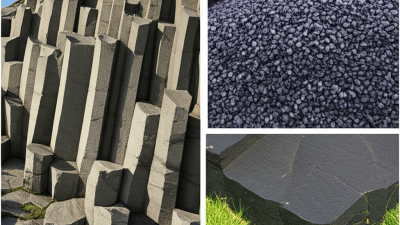
That structure carries geological meaning. Narrow, repeated fractures may record contraction as lava cooled. Columnar joints can form when heat leaves a thick flow, creating striking polygonal columns. Vesicles, filled cavities, and weathered edges can further weaken the rock. Field logging should separate mineral cleavage from rock joints. This distinction is easy to miss. A hand specimen may look “cleaved” when it actually contains aligned fractures or altered minerals.

Engineering records show why the difference matters. The United States Geological Survey estimated 1.5 billion metric tonsof crushed stone production in 2023, supporting Construction and transport infrastructure (USGS, Mineral Commodity Summaries 2024). Not all crushed stone is basalt, but the figure reflects the scale of aggregate use. For quarry testing, cleavage-related weakness can affect crushing behavior, durability, and slope stability. Laboratory results remain essential, because visual inspection alone is imperfect. Geological interpretation should stay cautious.

Distinguishing Cleavage from Basalt’s Typical Jointing and Fracture Patterns

Basalt cleavage is often misunderstood. Cleavage is a mineral’s tendency to split along repeated atomic planes. Basalt usually lacks strong cleavage because its fine-grained minerals interlock during cooling. A fresh break normally looks irregular, rough, and granular.

Jointing is different. Cooling basalt contracts and develops repeated cracks, often forming columnar joints. These planes can appear straight and widely spaced, sometimes creating polygonal columns. Fractures may develop later from loading, blasting, fault movement, or weathering. A geologist checks continuity, surface texture, mineral alignment, and crack spacing before calling a feature cleavage. Field judgment is useful, but not perfect.

The U.S. Geological Survey’s Mineral Commodity Summaries 2025 estimates U.S. crushed-stone production near 1.5 billion metric tons in 2024. That scale makes correct rock identification important for quarrying and reinforcement design. The USGS also commonly reports basalt density around 2.8–3.0 g/cm³, although vesicles and alteration can change measured values. A dense block may still contain weak cooling joints.

For construction, joint orientation can control splitting, water movement, and anchorage performance. This matters when selecting Basalt Fiber Mat Basalt Fiber Fabric For Building Reinforcement. The fabric does not repair a naturally open joint. It helps distribute tensile stresses across a prepared surface. Engineers should map discontinuities, test bond strength, and inspect moisture conditions. I would not label every planar basalt break “cleavage.” That shortcut sounds precise, but it can mislead.

Explaining How Cooling Contraction Produces Basalt Columns and Joints

What Is Basalt Cleavage and Why Does It Matter?

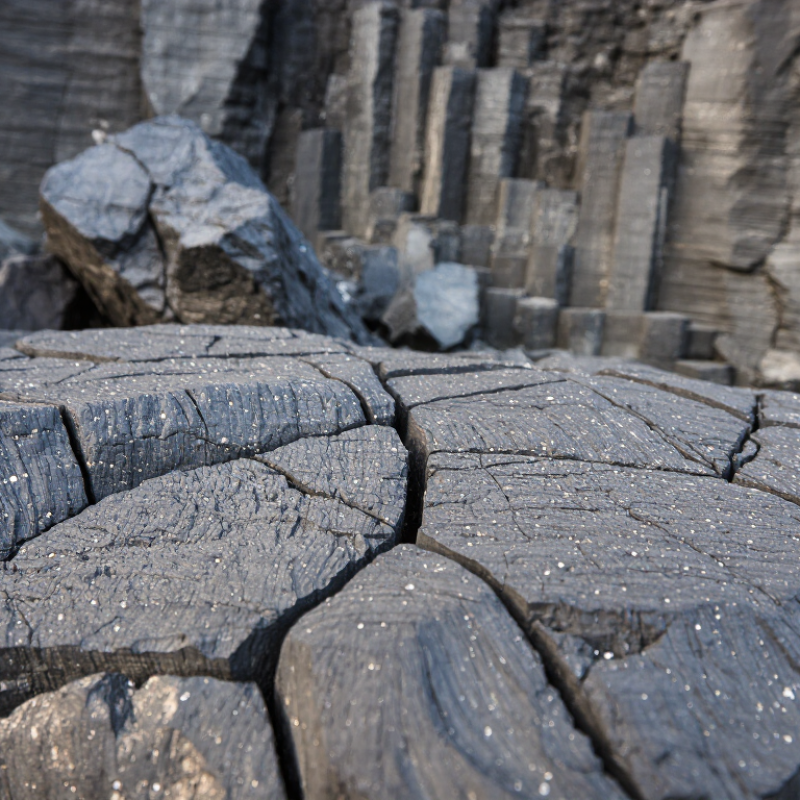
Basalt does not show mineral cleavage in the strict sense. Geologists usually mean columnar jointing when discussing basalt “cleavage.” These joints form as hot lava cools and contracts. The U.S. Geological Survey reports that basaltic lava commonly erupts near 1,000–1,200°C. As the surface loses heat, a cooling front moves inward. The colder rock shrinks, while hotter rock still resists movement. Tensile stress then opens cracks, often at roughly right angles to the cooling surface.

Those cracks divide the lava into columns. Hexagonal shapes are common, but nature is rarely perfect. Cooling rate controls the scale: slower cooling usually produces wider columns, while rapid cooling creates narrower fractures. Experimental research in the Proceedings of the National Academy of Sciences links column spacing to the depth of the cooling front. This explains why a thick lava flow can display large, regular columns near its center and smaller, irregular joints near its edges.

The process matters beyond scenery. Joint patterns influence cliff stability, groundwater movement, quarry design, and weathering. A field report should record column diameter, joint angle, surface orientation, and signs of water entry. I would not label every vertical crack “cleavage.” Some fractures reflect cooling, but others may result from later tectonic stress. Context matters.

Assessing Basalt Properties: 2.8–3.0 g/cm³ Density and Mohs Hardness 6

Basalt is a dense volcanic rock, usually measuring 2.8–3.0 g/cm³. This range appears in geological engineering references and published rock-property datasets. Its density reflects tightly packed minerals, mainly plagioclase, pyroxene, and sometimes olivine. It feels noticeably heavier than many sedimentary stones of similar size.

Hardness matters during cutting and abrasion. Basalt commonly reaches about 6 on the Mohs scale, although weathering, porosity, and mineral proportions can change the result. Geological testing guidance from the International Society for Rock Mechanics recommends reporting test conditions, not only a single hardness value. A scratched surface can mislead.

Field experience also shows basalt rarely has true cleavage. It usually breaks along irregular fractures or cooling joints. Columnar joints may create surprisingly clean-looking faces, but they are not mineral cleavage. ASTM rock-testing methods, including ASTM C97, support measuring absorption and specific gravity before structural use. Those tests help explain why dense basalt performs well in aggregate and lining applications.

For reinforcement products, basalt’s thermal stability and mineral structure support Basalt Fiber Basalt Yarn production. Yet the raw rock is not automatically consistent. A quarry sample may contain vesicles, altered zones, or hidden cracks. That uncertainty deserves attention. Density and Mohs hardness are useful screening indicators, not complete performance guarantees. Surface polishing can also conceal weak internal planes.

Measuring Cleavage-Related Weakness Through Strength and Durability Tests

Basalt cleavage is often confused with true mineral cleavage. In practice, engineers usually measure weakness along cooling joints, vesicles, or altered seams. These planes can split a core like a thin stack of dark plates. That visual clue matters.

Strength testing should compare directions, not just produce one impressive number. Intact basalt commonly shows unconfined compressive strength near 100–300 MPa, while weathered material may fall below 50 MPa, according to ranges summarized in international rock-mechanics datasets. Test cores parallel and perpendicular to suspected weakness planes. Record UCS, point-load strength, and Brazilian tensile strength. A large directional gap is more useful than a high average.

Durability exposes hidden damage. ASTM C666/C666M freeze-thaw procedures commonly run to 300 cycles, while ASTM C88 evaluates aggregate soundness through repeated sulfate immersion. Track mass loss, crack growth, ultrasonic velocity, and residual strength after cycling. A 10% strength reduction may be acceptable in one application, but dangerous beside a steep excavation. Field mapping should verify laboratory results, because small cores can miss a weak seam. Our first test plan was too clean. Real basalt is not.

For reinforcement, 3d Basalt Fiber Mesh can help distribute cracking, but it cannot repair a poorly characterized rock mass. A technical report should show orientation, saturation condition, cycle count, and failure surface photographs. Without those details, the number looks precise but remains incomplete.

Applying Basalt Cleavage Knowledge to Quarrying, Construction, and Geology

Basalt cleavage is a practical quarrying term, although basalt has no true mineral cleavage. Unlike mica or calcite, basalt usually breaks along joints, cooling cracks, and hidden flow planes. These surfaces form as lava cools and contracts. They may appear as vertical columns, rough horizontal seams, or irregular fractures. A quarry face can reveal them through color changes, damp lines, and repeated block shapes. Small details matter.

In quarrying, mapping these planes helps crews choose safer bench directions and reduce unwanted fines. The U.S. Geological Survey reported approximately 1.5 billion metric tons of crushed stone production in 2023, including basalt and other hard rocks (USGS, Mineral Commodity Summaries 2024). At this scale, avoidable breakage can create major material losses. Core logging, drone surveys, and Schmidt hammer testing improve decisions, but field judgment remains essential. Basalt can still behave unpredictably.

Construction teams use cleavage knowledge when selecting aggregate, facing stone, and reinforcement systems. Rock separated across weak planes may absorb water faster or lose durability during freeze-thaw cycles. Laboratory testing should measure abrasion, soundness, density, and compressive strength. The European Commission’s Joint Research Centre identifies aggregate quality and durability as important factors in long-life infrastructure (JRC, 2023). Basalt fibers and 3d Basalt Mesh may support crack-control designs, but engineers must verify bonding, fire performance, and local standards. The material is not automatically superior. Geological mapping also connects fracture patterns with lava-flow history, slope stability, and groundwater movement. Some interpretations deserve revision after fresh exposure.

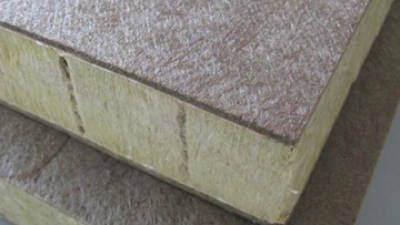
A1 Fireproof Basalt Fiber Boards for Industrial Insulation and Facade Protection

A1 fireproof basalt fiber boards provide a dependable insulation solution for industrial facilities, building envelopes, and façade protection systems. Produced by compressing high-purity basalt rock wool into rigid panels, these boards are non-combustible and can withstand continuous operating temperatures of up to 700°C without significant structural deformation. Their stable performance makes them suitable for furnace surroundings, processing plants, utility areas, and other locations where reliable fire resistance and thermal control are essential.

The boards’ carefully formed fiber structure offers low thermal conductivity, helping reduce heat transfer through walls, façades, and equipment enclosures while supporting improved energy efficiency. At the same time, the dense fibrous matrix absorbs sound, making the panels effective for mechanical rooms, industrial workshops, and other noisy environments. Resistance to moisture, aging, and chemical corrosion contributes to long service life, while the rigid format allows convenient installation in wall cladding and insulation assemblies. With no toxic smoke generated during normal fire exposure, these eco-conscious panels provide durable protection for demanding industrial and marine applications.

FAQS

What is basalt cleavage?

Basalt cleavage describes breakage related to its minerals. Whole basalt rarely splits along one continuous plane.

Why does basalt usually break irregularly?

Basalt contains tightly interlocked crystals. Fresh breaks often look rough, granular, and uneven.

Which minerals affect basalt’s cleavage?

Plagioclase commonly has two cleavage planes. Pyroxene also has two planes. Olivine usually shows poor cleavage.

How can cooling joints look like cleavage?

Cooling contraction creates repeated cracks. Straight cracks may form polygonal columns. They can resemble mineral cleavage.

What field clues help distinguish joints from cleavage?

Check crack spacing, continuity, surface texture, and mineral alignment. Do not label every flat break “cleavage.”

What can weaken basalt besides joints?

Vesicles, filled cavities, weathering, and altered seams can reduce strength. A dense-looking block may still hide weak planes.

How should engineers test suspected weakness?

Test cores parallel and perpendicular to the suspected plane. Record compressive strength, point-load strength, and tensile strength.

Why are durability tests important?

Freeze-thaw and sulfate cycles can reveal hidden damage. Track mass loss, crack growth, ultrasonic velocity, and residual strength.

Can reinforcement fabric repair an open basalt joint?

No. It can distribute tensile stress across a prepared surface. It cannot replace mapping, bonding tests, or moisture checks.

What is the main interpretation risk?

Visual evidence can mislead. Our first test plan might look too clean. Real basalt is less cooperative.

Conclusion

Basalt Cleavage refers to the way basalt may split along mineral boundaries, structural weaknesses, or altered zones, although basalt typically lacks the distinct cleavage found in some crystalline minerals. Because it forms from rapidly cooled lava, its fine-grained, interlocking texture usually creates irregular fractures rather than predictable cleavage planes. Understanding this distinction is essential for interpreting basalt’s geological history and assessing how the rock may behave under stress.

Cooling contraction commonly produces columnar joints and other fracture patterns, especially as lava loses heat and shrinks. Basalt generally has a density of about 2.8–3.0 g/cm³ and a Mohs hardness near 6, giving it considerable strength and resistance to wear. Strength, abrasion, water absorption, and durability tests can reveal whether joints, mineral alteration, or cleavage-related weaknesses reduce performance. This knowledge supports safer quarrying, more reliable construction material selection, and more accurate geological mapping and analysis.

Sophie

Sophie

Sophie is a dedicated marketing professional at Jiujiang Beihai Glass Fiber Co., Ltd. (Project Four), where she leverages her extensive knowledge of the company's products to enhance brand visibility and drive customer engagement. With a strong focus on innovation and quality, she plays a pivotal......
Previous How to Choose Basalt Brown Color for Global Sourcing?