
Leave Your Message
Looking for a reliable Basalt Chopped fiber supplier? Check out China Best! When global buyers are choosing basalt chopped fibers, they’re not just after the lowest price—they really want consistent performance, clear documentation, and quick, helpful technical support. These fibers can be a game-changer for improving crack control in concrete, mortar, asphalt mixes, and some composite applications. But here’s the thing: quality isn’t just about the price. It’s about factors like the composition of the raw rock, fiber diameter, chopping accuracy, and surface treatment. Honestly, those small details really do matter. Professor Vladimir Fiore, who’s quite well-known in basalt fiber research, once called basalt fiber “an interesting alternative to traditional fibers.” That’s a pretty good way of putting it—it shows potential! But, don’t forget, you still need to do your homework with lab tests to be sure.
A trustworthy supplier like China Basalt Fiber Materials Co., Ltd. should be ready to send you samples before you commit to any big orders. When comparing options, look at fiber length, moisture content, tensile strength, how well it disperses in the mix, and packaging durability. Usually, you’ll find lengths like 3mm, 6mm, or 12mm—depending on what you need. And make sure every batch comes with a traceable lot number and a solid certificate of analysis. It’s also crucial for your technical team to double-check if the fibers will work with your cement, polymers, mixing equipment, and adhere to local project standards. Experience here really counts—something that works perfectly in one project might not behave the same in another. No supplier is perfect, even the big names. Raw materials and shipping conditions can vary, which affects the final product. So, responsible sourcing means doing trial runs, getting detailed specs in writing, inspecting production, and having honest conversations with suppliers.
This guide is all about helping global buyers evaluate basalt fiber suppliers based on their technical know-how, consistency in quality, export readiness, and long-term support. The goal? Fewer assumptions, more solid evidence, and making smarter buying decisions—because nobody wants surprises at the worst moment.
What Is Basalt Chopped Fiber and Why Does It Matter?
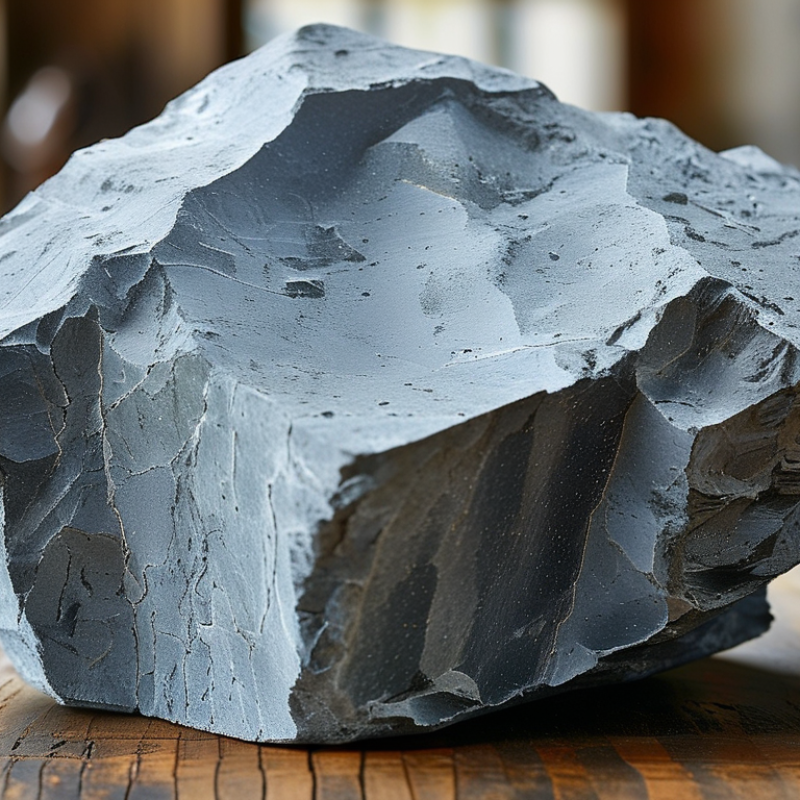
Basalt chopped fiber is made by melting natural Basalt Rock and drawing it into fine filaments. These filaments are cut into controlled lengths, often for concrete, mortar, asphalt, and polymer composites. The fibers help distribute tension across tiny cracks. They can also improve impact resistance, abrasion performance, and dimensional stability.
The need is practical. The International Energy Agency reports that cement production creates about 7% of global carbon dioxide emissions. The 2023 Global Status Report for Buildings and Construction also identifies construction materials as a major environmental burden. Longer service life can reduce repeated repairs and material consumption. Basalt fiber may support that goal, especially in slabs, precast panels, tunnel linings, and sprayed concrete. Small fibers can make a visible difference.
However, fiber is not magic. Its performance depends on dosage, dispersion, fiber length, concrete chemistry, and curing conditions. ACI 544 guidance stresses that fiber-reinforced concrete requires proper testing and mix design. Poor dispersion may leave clumps in the mix. Results can vary between projects. This is where an experienced supplier matters. Buyers should request tensile data, filament diameter, moisture condition, sizing details, batch traceability, and application-specific test results. Technical documents should explain test methods, not only headline strength figures. A cheaper product may look efficient until mixing problems appear. That uncomfortable possibility deserves attention.
| Data Dimension | Typical Basalt Chopped Fiber Information | Why It Matters to Global Buyers |
|---|---|---|
| Definition | Short strands cut from continuous basalt fibers produced by melting and drawing natural basalt rock. | It can be blended into concrete, mortar, asphalt, polymers, and composite compounds without installing continuous reinforcement. |
| Primary Raw Material | Volcanic basalt rock, processed into mineral fiber without adding a complex blend of reinforcing materials. | A mineral-based raw material supports consistent sourcing and helps meet demand for inorganic reinforcement solutions. |
| Common Cut Lengths | Typically about 3–24 mm; specialized products may use other lengths depending on the application and mixing process. | Cut length affects dispersion, pumpability, crack control, surface finish, and compatibility with automated mixing equipment. |
| Typical Filament Diameter | Commonly approximately 9–17 μm for structural and composite reinforcement grades. | Finer filaments provide a larger reinforcement surface area, while the selected diameter influences handling and dispersion. |
| Density | Approximately 2.65–2.80 g/cm³. | Density is needed to convert between fiber mass, volume fraction, and dosage during formulation and quality control. |
| Tensile Strength | Often reported in the approximate range of 2,800–4,800 MPa for continuous basalt fiber filaments; chopped-fiber performance depends on length, sizing, bonding, and test method. | High filament strength supports crack-bridging and load-transfer potential, but finished composite performance must be verified in the target matrix. |
| Elastic Modulus | Generally about 85–95 GPa for basalt fiber. | The modulus contributes to stiffness and helps limit deformation when the fiber is well dispersed and adequately bonded. |
| Elongation at Break | Typically around 2.5–3.2% for many basalt fiber grades. | This balance of strength and limited elongation can support reinforcement in applications requiring dimensional stability and crack control. |
| Thermal Behavior | Basalt fiber is non-combustible and can retain useful reinforcement capability at elevated temperatures; exact limits depend on grade, sizing, and exposure time. | It is suitable for selected fire-resistant, high-temperature, and inorganic composite applications where polymeric fibers may soften or burn. |
| Chemical Characteristics | Generally resistant to many acids, alkalis, and salts, although resistance varies with composition, concentration, temperature, and exposure duration. | Improved durability can be valuable in marine structures, wastewater facilities, roads, industrial floors, and chemically exposed components. |
| Typical Concrete Dosage | Often approximately 1–5 kg per m³ for crack-control formulations; the correct dosage must be determined through mix design and performance testing. | Dosage affects workability, fiber distribution, crack width, toughness, and material cost. |
| Concrete and Mortar Uses | Industrial floors, precast products, shotcrete, repair mortar, pavements, panels, pipes, and selected structural or non-structural components. | Chopped fibers can reduce plastic-shrinkage cracking and improve post-cracking toughness when properly mixed. |
| Polymer and Composite Uses | Thermoplastic compounds, thermoset composites, molded parts, friction materials, insulation-related products, and selected infrastructure components. | Fiber length, sizing chemistry, moisture content, and processing temperature must match the resin and manufacturing method. |
| Sizing and Surface Treatment | A compatible sizing may be applied to improve filament protection, handling, dispersion, and bonding with cementitious or polymer matrices. | The correct sizing can have a major effect on tensile retention, mixing behavior, moisture sensitivity, and final composite performance. |
| Key Buyer Quality Checks | Cut-length tolerance, filament diameter, moisture content, fiber linear density, tensile properties, dispersion, packaging condition, and lot consistency. | Documented specifications and representative samples help reduce production variation and support reliable international procurement. |
| Environmental Considerations | Basalt is an inorganic mineral resource, and fiber production does not require the synthesis of a polymer backbone; energy use and transport still contribute to total environmental impact. | Buyers can evaluate the complete life cycle, including raw-material extraction, manufacturing energy, packaging, shipping, service life, and end-of-life options. |
Note: The values shown are indicative industry ranges rather than guaranteed product specifications. Actual performance depends on fiber grade, cut length, sizing, matrix type, dosage, mixing procedure, curing conditions, and test method.
: It offers high tensile strength, heat resistance, low moisture absorption, and chemical stability. Reported tensile strength often ranges from 2,800 to 4,800 MPa. Its elastic modulus commonly reaches 85–95 GPa. Actual performance depends on sizing, length, and dispersion.
Common uses include reinforced concrete, pultruded profiles, insulation boards, friction materials, and molded polymer parts. It can also support composite repair systems. Transportation and construction applications continue to expand. The best use depends on processing conditions.
Published data often places continuous-use temperatures near 600°C. Resin bonding can change the result. Chopped fibers may behave differently from continuous filaments. Do not assume the highest temperature applies everywhere.
Match the strand length with resin viscosity and mold geometry. Shorter strands usually disperse more easily. Longer strands may improve crack control. They can also form clumps near corners. Trials matter.
It generally absorbs little moisture, which can reduce swelling around embedded strands. It also resists many acids and alkalis better than ordinary glass fibers. Resistance varies with the matrix and surface treatment. Storage humidity still matters.
Compatible systems may include epoxy, polyester, and vinyl ester resins. Surface sizing should match the selected resin. Poor compatibility can weaken bonding and reduce impact resistance. Do not guess.
Request technical data, batch traceability, inspection records, and moisture limits. Check fiber length, filament diameter, sizing stability, and packaging strength. Ask for samples from different production batches. Appearance alone proves little.
Laboratory data cannot fully predict pultrusion or molding behavior. A trial should measure flow, dispersion, surface bonding, impact resistance, and aging. It should also record cutting loss and actual fiber consumption. Some purchasing plans compare prices too early. That deserves reconsideration.
Buyers may request specific chopped lengths, roving tex, surface treatments, moisture limits, and packaging formats. Spools or bags can suit different production lines. Confirm lead times and replacement terms in writing. Perfect results should not be promised.
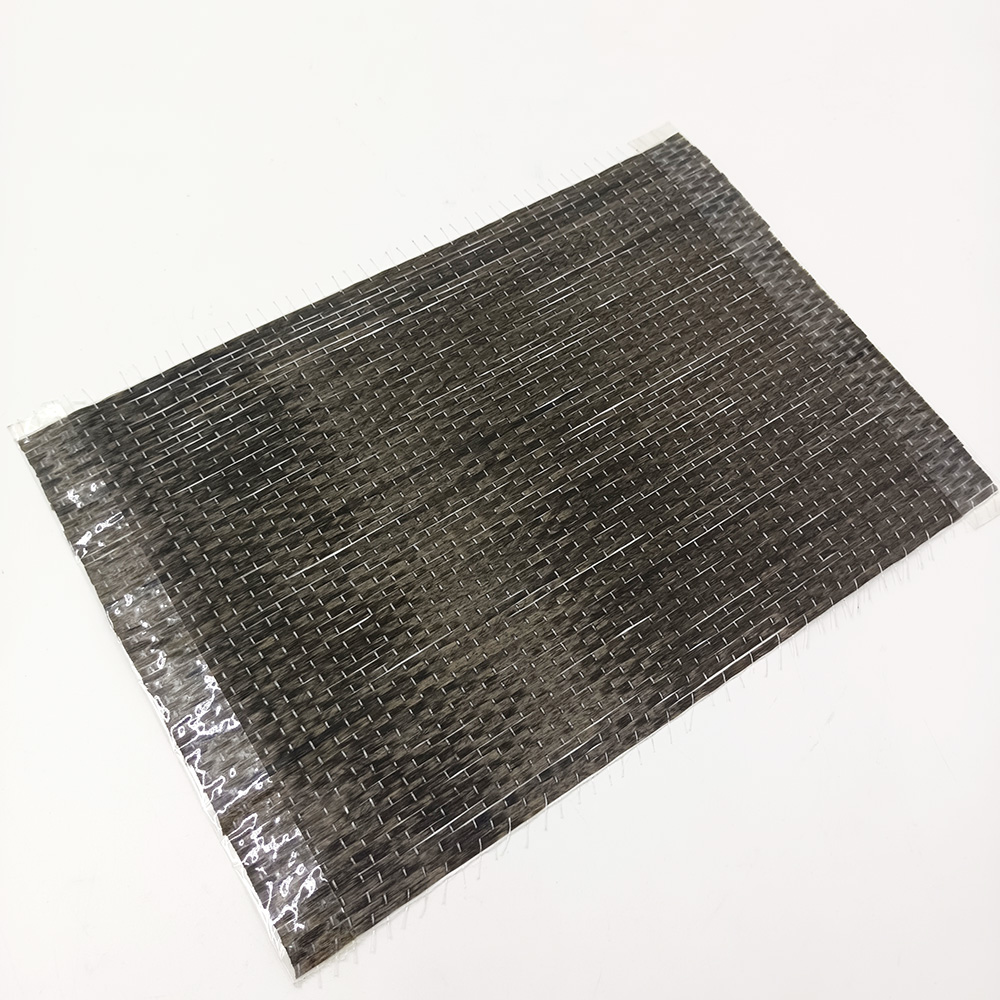
Basalt Chopped Fiber is a high-performance reinforcement material produced by cutting continuous basalt fibers into specific lengths. It combines excellent tensile strength, heat resistance, corrosion resistance, and chemical stability, making it suitable for concrete reinforcement, composite products, infrastructure repair, automotive components, and industrial applications. Its natural mineral origin also supports durable performance in demanding environments where conventional reinforcement materials may be less effective.
For global buyers, selecting a reliable China-based supplier requires careful evaluation of raw material consistency, fiber dimensions, dispersion performance, production capacity, testing procedures, and quality management standards. Buyers should also confirm customized specifications, packaging protection, export documentation, shipping arrangements, and compliance with destination-market requirements. A dependable supplier should provide clear technical data, stable batch quality, responsive communication, and practical support throughout product selection and international delivery.