






Crack resistance relies on process, not just additives: The proper use of basalt fiber in road and bridge engineering
The maintenance workforce has many problems including cracked old roads, the chip layer separating from the deck of bridges, and new concrete cracking because of initial contraction. These issues will be addressed in part using one specially developed chopped fiber material which will be black-grey in appearance. The heat-resistentent and non-conductive fibre has the ability to bond with both cement and asphalt, and has been successfully used in at least 4 high-profile projects including the Beijing Xiongan Expressway and the Shenzhen Zhongshan Link. This article will describe the inherent crack-resistant mechanisms of this fibre and will identify the important control areas in the mixing, laying, and curing processes so that you can make informed decisions regarding if using this fibre is appropriate for you or your organization, how best to utilize the fibre and whether it is being applied in accordance with the manufacturer's recommendations.
The most important characteristic of basalt fiber in the Construction of roads and bridges is that it builds a three-dimensional web of the material on the micron scale. This 3-dimensional web will stop the early plastic shrinkage and thermal cracking of the concrete and asphalt. Other objectives, which are important to achieve, are toughness of the mixture.
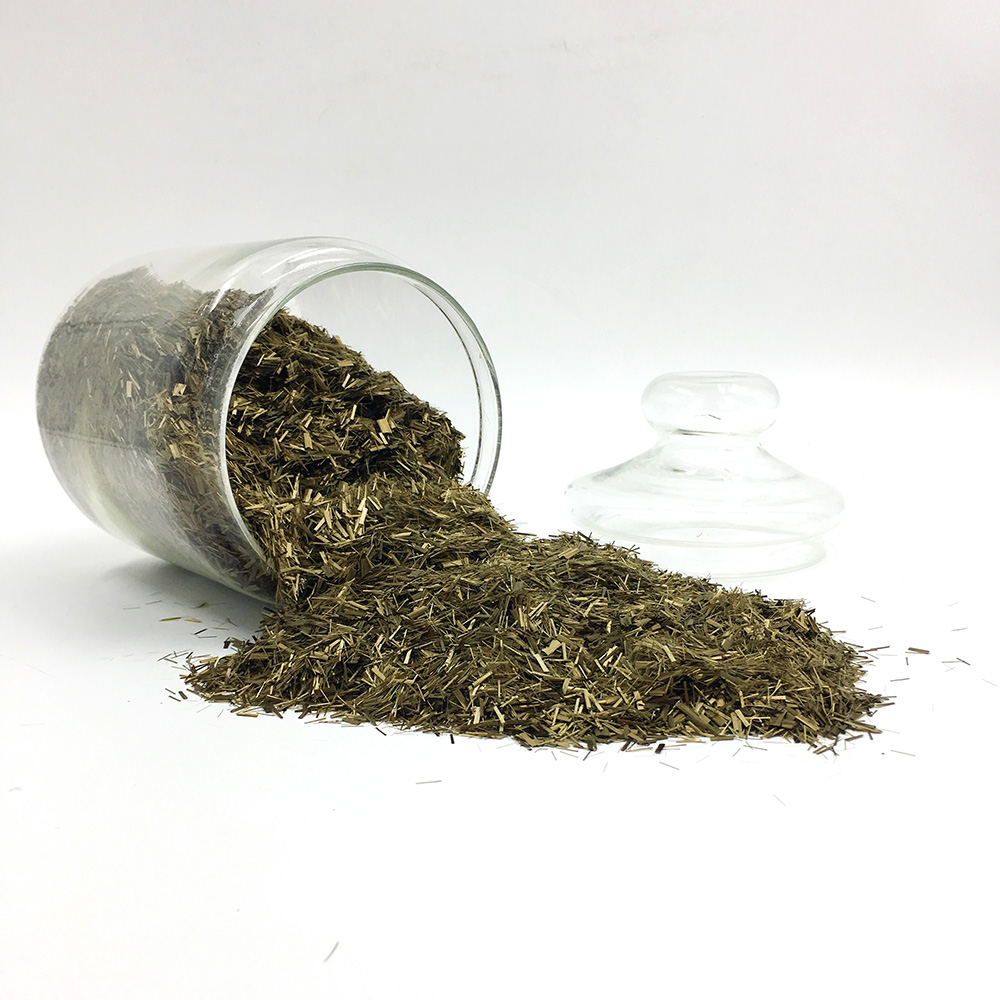
What is basalt fiber? Which physical and Chemical characteristics define it?
The composite material known as Basalt fiber is an inorganic, continuous filament produced by the melting of basalt ore in excess of 1450°C, and being subsequently drawn and cooled. The properties of the Basalt fiber that are relevant to engineering are these four distinct characteristics working together: (1) mineral composition shall be stable; (2) the diameter of the filament as well as its aspect ratio shall be consistent; (3) the surface energy of the Basalt fiber and its compatibility with the matrix material shall be optimal; (4) the thermal expansion coefficient of Basalt fiber must match that of the matrix material as closely as possible.
Which key compatibility indicators should be prioritized for different construction scenarios?
Suitability and performance outcomes depend on the synergistic matching of indicators closely linked to three specific scenarios: mixing compatibility, structural adaptability, and environmental durability—rather than the value of any single parameter.
When used in asphalt pavement overlays, thermal stability is critical: the fiber's softening point exceeds 850°C—far higher than typical asphalt mixing temperatures (160–180°C)—ensuring it neither melts nor clumps under high-temperature shearing. With an elastic modulus of approximately 95 GPa, it creates a complementary balance of rigidity and flexibility with the modified asphalt binder, thereby inhibiting the upward propagation of reflective cracks. For bridge deck surfacing in northern regions subject to frequent freeze-thaw cycles, it is essential to verify freeze-thaw resistance performance; in such scenarios, the fiber network's ability to constrain pore-water migration paths is more effective at delaying surface spalling than simply increasing compressive strength.
Which operational details during on-site construction determine the final crack resistance?
The toughening efficacy of basalt fiber depends 70% on four controllable actions during construction: the sequence of material addition, mixing time, control of paving thickness, and early-stage wet curing coverage.
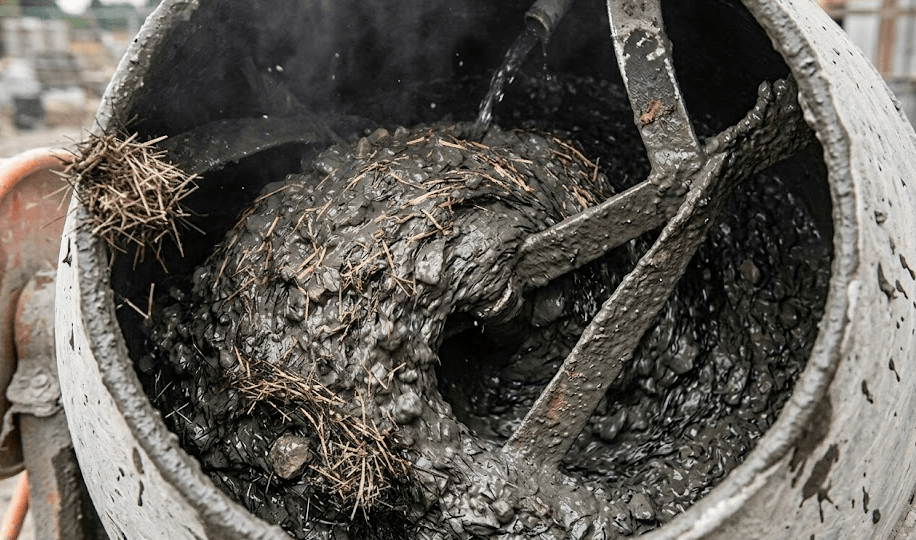
"Late addition" is mandatory—meaning fibers are added only after the initial mixing of aggregates, cement, and water—to prevent premature water absorption by the fibers, which would impair paste fluidity. A three-stage method is recommended: "dry mix → add water → add fibers," with the total mixing time extended to 120–150 seconds (30 seconds longer than for standard concrete) to ensure the spatial network fully expands.
Attention must be paid to thickness thresholds during paving: for bridge deck surfacing, the minimum design thickness for fibers to effectively provide crack resistance is 4 cm; below this value, the network density is insufficient, making the material prone to stress concentration zones.
Currently (during the trial period for the 2026 new regulations), the *Technical Specification for Maintenance of Urban Bridges* explicitly requires that concrete components containing basalt fiber be covered with a water-retention film within four hours of initial set and undergo wet curing at least twice daily for the first three days; these are critical conditions for preventing micro-crack formation caused by rapid surface moisture loss.
What are the common errors in decision-making? How can one perform a simple self-check?
The most frequently overlooked issues are equating "adding fibers" with "automatic crack resistance" and misjudging the compatibility between the fibers and the existing mix design.
Typical Error 1: Proceeding directly to full-scale application without compatibility testing. Basalt fiber slightly reduces concrete slump (usually by 20–40 mm); failing to adjust the admixture dosage during trial mixing can lead to pumping difficulties or inadequate consolidation during vibration. The correct approach is to conduct compatibility testing based on a fiber dosage of 0.9–1.2 kg per cubic meter of concrete, while allowing for a 1.5% surplus in water-reducing agent dosage. Misconception 2: Confusing "increased tensile strength" with "improved crack resistance." Fibers primarily contribute to residual flexural strength and energy absorption capacity (i.e., toughness) rather than significantly raising the initial tensile value; evaluating crack resistance based on standard tensile test results can lead to serious misjudgments.
Misconception 3: Overlooking the interval between transport and placement. While the fibers remain stable after dispersion, the network formed within the paste may partially collapse if placement is delayed beyond 90 minutes. A simple self-check method: spread and level the fresh mixture, let it sit for 30 minutes, and observe the surface for regular fine cracks; their presence indicates a need to optimize the feeding sequence or the set-retarding strategy.
Please verify these five key steps before starting work.
To truly unlock the crack-resistant and toughening benefits of basalt fiber, it must be precisely integrated into the construction workflow:
Priority 1: Confirm that the total content of SiO₂ + Al₂O₃ + Fe₂O₃ in the raw material batch test report is ≥85%; this is the mineralogical baseline for durability.
Step 2: Adopt a three-stage feeding method: dry-mix aggregates and cement → add water and mix for 60 seconds → pause to add fibers → mix again for 90 seconds.
Step 3: Control the pavement layer to the design thickness (≥4cm) and increase the dosage to 1.2 kg/m³ within a 2-meter range on either side of bridge expansion joints.
Step 4: Fully cover with a water-retention membrane within 4 hours of initial set; strictly prevent moisture loss through exposure during the first 72 hours.
Step 5: Close the loop by casting three sets of fiber-reinforced prismatic specimens per work shift to test the 28-day flexural toughness indices (I₅/I₁₀)—currently the acceptance metrics that best reflect actual engineering performance.
The most common execution gap lies in focusing solely on whether the fiber was added, while failing to verify uniform dispersion or proper curing. In the next phase, real-time monitoring of fiber dispersion uniformity at intelligent mixing plants will become a new quality control checkpoint.
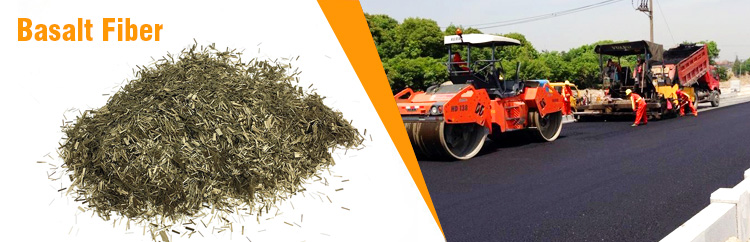
Here are some other frequently asked questions regarding the engineering application of basalt fiber:
Compared to steel fibers, for what operating conditions is basalt fiber suitable? Basalt fiber is better suited for applications requiring electrical insulation, non-magnetic properties, and corrosion resistance (such as subway shield tunnel segments and chemical plant flooring); it does not rust or reduce concrete resistivity. In contrast, steel fiber is more appropriate for heavy-duty pavements or areas requiring high impact resistance, though it carries risks of corrosion and electromagnetic interference.
Is it necessary to adjust the water-binder ratio when incorporating basalt fiber into concrete?
Generally, there is no need to actively lower the water-binder ratio; in fact, because the fibers inhibit bleeding, the workability of the original mix design can be maintained. However, note that the fibers absorb a small amount of free water; it is recommended to slightly increase the water content by 2–3 kg/m³ during the trial mix stage and re-verify the slump.
Is basalt fiber suitable for small-scale repair projects (such as patching potholes on bridge decks)?
It is highly suitable. Its chopped form is compatible with rapid-hardening cementitious materials; a dosage of 0.9 kg/m³ can significantly inhibit interfacial cracking between the repair layer and the original structure, making it particularly ideal for rapid nighttime repair operations.
What are the testing standards for basalt fiber-reinforced concrete?
Current standards include *JTG/T 3310-2025 Technical Specifications for Fiber-Reinforced Concrete in Highway Engineering* and *GB/T 23294-2023 Technical Specification for Application of Basalt Fiber-Reinforced Concrete*. Key testing parameters include the flexural toughness index, crack resistance grade (ring test method), and 28-day compressive strength ratio, rather than simply fiber length or single-filament strength.