
Leave Your Message
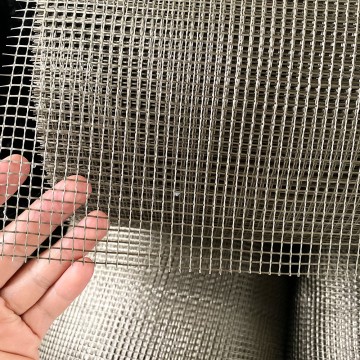
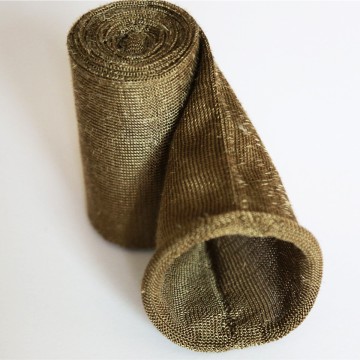

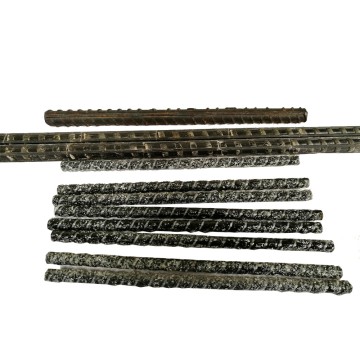
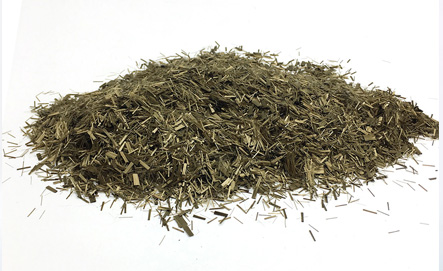
The global shipbuilding industry is undergoing a profound transformation. Traditional steel rebar and structural steel have long been the backbone of vessel construction — from bulk carriers to naval frigates. However, the accelerating demand for lightweight, corrosion-resistant, and environmentally sustainable materials is reshaping procurement strategies across major shipyards worldwide.
The global commercial shipbuilding market exceeded USD 180 billion in 2023 and is projected to grow steadily through 2030, driven by expanding seaborne trade, LNG carrier demand, and fleet renewal programs. Steel remains the dominant structural material, accounting for roughly 20–25% of total ship displacement weight. However, rising steel prices, stricter IMO emissions regulations, and the push for fuel efficiency are compelling designers to explore hybrid material architectures — integrating high-performance fiber composites alongside conventional steel in non-primary structural zones, deck panels, bulkheads, and piping systems.
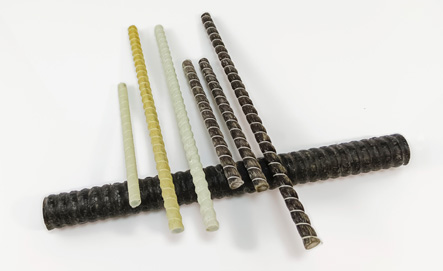
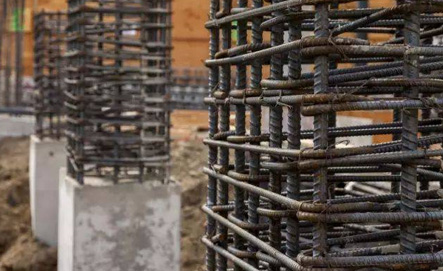
Corrosion is the single greatest long-term cost driver in marine engineering. Saltwater exposure, humid bilge environments, and electrochemical galvanic reactions cause steel rebar and structural steel to degrade at accelerated rates in marine applications. The International Maritime Organization estimates that corrosion-related maintenance accounts for up to 30% of total vessel lifecycle costs. Protective coatings, cathodic protection systems, and stainless steel upgrades add significant weight and expense — opening a compelling market window for non-metallic reinforcement alternatives such as basalt fiber rebar (BFRP), which is inherently immune to electrochemical corrosion.
Every kilogram saved in a vessel's structural weight directly translates to improved fuel efficiency, greater cargo capacity, and reduced greenhouse gas emissions. Modern shipbuilders targeting IMO's Carbon Intensity Indicator (CII) ratings are actively evaluating lightweight reinforcement materials. Basalt fiber rebar offers a density of approximately 2.1 g/cm³ compared to steel's 7.85 g/cm³ — a weight reduction of over 70% for equivalent reinforcement cross-sections. When applied to secondary structures, deck reinforcement, and non-load-bearing bulkheads, the cumulative weight savings can be substantial, improving vessel EEDI scores and operational economics.
Beyond commercial vessels, naval shipbuilding programs and offshore oil and gas platform construction represent significant growth sectors for advanced reinforcement materials. Submarine and surface combatant programs increasingly specify non-magnetic, radar-transparent structural composites. Offshore platforms operating in aggressive North Sea or Gulf of Mexico environments demand reinforcement materials capable of withstanding decades of saltwater immersion, thermal cycling, and mechanical fatigue. Basalt fiber rebar's combination of non-conductivity, high tensile strength exceeding 1000 MPa, and complete corrosion immunity positions it as a technically superior solution for these demanding environments.
The shipbuilding and marine engineering sectors are at an inflection point. Regulatory pressure, sustainability mandates, and technological innovation are converging to accelerate the adoption of advanced fiber reinforcement materials as complements and alternatives to conventional steel rebar.
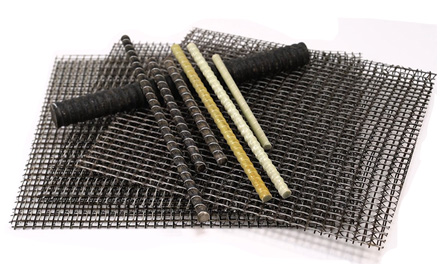
Leading shipyards in South Korea, Japan, and China are actively developing hybrid structural systems that combine conventional high-strength steel frames with BFRP (Basalt Fiber Reinforced Polymer) panels, deck gratings, and secondary reinforcement elements. This approach preserves proven structural integrity in primary hull frames while achieving significant weight and corrosion benefits in non-primary zones.
IMO's 2050 net-zero shipping target is driving shipbuilders to adopt materials with lower embodied carbon. Basalt fiber production generates significantly lower CO₂ emissions compared to steel manufacturing — basalt is simply melted and drawn from natural volcanic rock without chemical additives. This eco-friendly production profile aligns directly with green shipbuilding certification programs and ESG reporting requirements for major shipping corporations.
AI-driven structural optimization tools are enabling naval architects to precisely identify zones where steel rebar can be substituted with lighter, corrosion-resistant BFRP reinforcement without compromising structural integrity. Digital twin technology allows real-time simulation of material performance under wave loading, thermal stress, and fatigue cycles — accelerating qualification of new reinforcement materials for classification society approval.
Major classification societies including DNV, Lloyd's Register, Bureau Veritas, and ClassNK are progressively developing and updating rules for fiber reinforced polymer (FRP) structural elements in commercial vessels. As BFRP rebar gains type approval from these bodies, adoption barriers in mainstream shipbuilding are rapidly diminishing, opening large-scale procurement opportunities for qualified suppliers.
The rapid growth of electric and hybrid propulsion vessels, as well as hydrogen fuel cell ships, creates new requirements for non-magnetic, electrically non-conductive structural reinforcement near sensitive propulsion and power management equipment. Basalt fiber rebar is inherently non-magnetic and non-conductive, making it an ideal reinforcement material in proximity to electric motors, battery banks, and fuel cell systems.
Modern shipbuilding increasingly relies on modular block construction, where large prefabricated sections are assembled in parallel before final integration. Basalt fiber rebar's light weight significantly reduces the handling, lifting, and transportation effort for reinforced concrete ballast tanks, machinery foundations, and accommodation module floors — improving shipyard productivity and reducing construction cycle times.
From ballast tank reinforcement to offshore platform decks, basalt fiber rebar and composite materials are finding an expanding range of mission-critical applications across the full spectrum of marine and shipbuilding projects.

Ballast tanks are among the most corrosion-aggressive environments on any vessel. BFRP rebar completely eliminates corrosion risk in reinforced concrete ballast tank linings, dramatically extending service life and reducing maintenance drydocking frequency.

Offshore oil and gas platforms operating in the North Sea, Gulf of Mexico, and South China Sea require deck reinforcement materials that can withstand decades of saltwater spray, wave impact, and thermal cycling. Basalt fiber rebar provides the ideal combination of strength, durability, and corrosion immunity.

Reinforced concrete machinery foundations supporting main engines, generators, and auxiliary equipment benefit from BFRP rebar's vibration-damping properties and resistance to fuel oil and lubricant contamination — significantly outperforming conventional steel rebar in these chemically aggressive bilge environments.

Chemical tankers and LNG carriers operate with cargoes that are highly corrosive to conventional steel reinforcement. Basalt fiber rebar's exceptional chemical resistance across a wide pH range — from strong acids to strong alkalis — makes it the preferred reinforcement choice for tank linings, pump room floors, and cargo handling area structures.

Naval applications demand non-magnetic, radar-transparent structural materials that do not compromise stealth characteristics or interfere with sensitive electronic systems. Basalt fiber rebar's electromagnetic transparency makes it an ideal reinforcement material for naval vessel superstructures, sonar dome foundations, and mast bases.

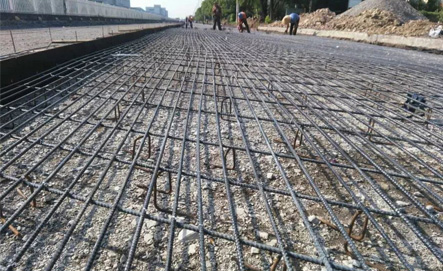
Quay walls, jetties, dry dock structures, and breakwaters are permanently exposed to tidal saltwater immersion and chloride penetration. BFRP rebar reinforced concrete structures in port environments eliminate the primary failure mechanism of conventional steel-reinforced structures — rebar corrosion and concrete spalling — delivering maintenance-free service lives exceeding 75 years.

Crew accommodation modules and passenger vessel interior structures benefit from BFRP rebar's light weight, which reduces overall vessel displacement and improves stability. The non-conductive nature of basalt fiber also enhances electrical safety in living quarters and reduces electromagnetic interference with navigation and communication equipment.

China Beihai's basalt fiber materials have been featured in the world's first deep-sea basalt fiber aquaculture platform — a landmark achievement demonstrating the material's capability in permanent marine immersion environments. This breakthrough validates BFRP rebar as a mature, commercially proven technology for the most demanding marine applications.