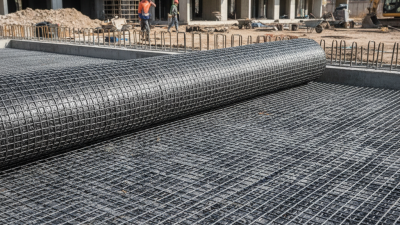
When it comes to geosynthetics, the Basalt geogrid has really started making waves in the world of construction and engineering. Dr. Emily Hart, a well-respected civil engineer and a top researcher in geosynthetic materials, pointed out that "the versatility of Basalt Geogrid brings huge benefits when it comes to stabilizing soil." Made from volcanic basalt fibers, this innovative product offers impressive strength and durability, setting a pretty high bar for ground reinforcement.
Let's face it, plenty of projects still struggle with traditional reinforcement options. That’s where Basalt Geogrid really shines—it tackles those issues head-on. Its lightweight nature makes it much easier to handle and install, which can also cut down on labor costs. Plus, it’s resistant to environmental damage, so it’s built to last. Unlike some synthetic materials, it holds up well in tough conditions, maintaining its performance over time.
That said, not everyone’s fully sold on the idea yet. Some industry folks are still a bit skeptical about how well it performs compared to older, more proven solutions. Researchers are working hard to gather more data and prove its benefits. As the industry keeps evolving, Basalt Geogrid might just change the game in terms of project efficiency and sustainability—that’s why making informed choices about adopting it is more important than ever.
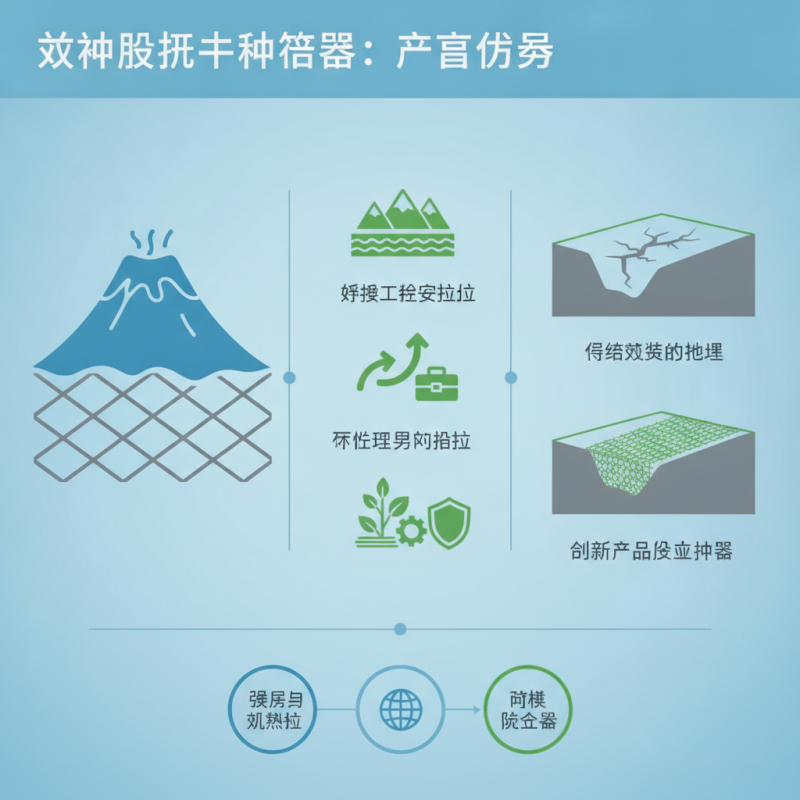
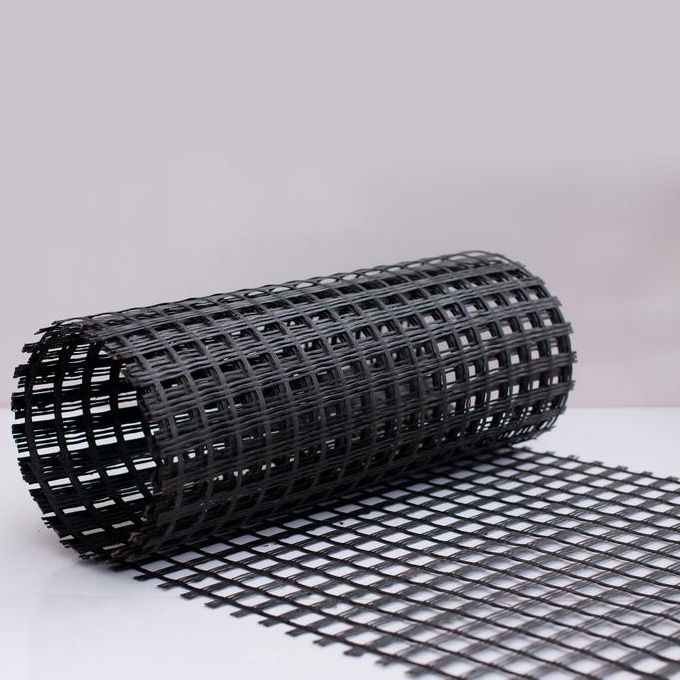
Basalt geogrid is a synthetic material made from heated basalt rock. It has a distinct composition, which contributes to its durability and strength. The creation process involves extruding molten basalt into fibers. This results in a lightweight, yet strong grid structure. Its natural properties make it suitable for various applications in civil engineering and construction.
One key advantage of basalt geogrid is its resistance to environmental factors. It withstands extreme temperatures and does not corrode, unlike traditional materials. This makes it a reliable choice for reinforcing soil and asphalt. Its ability to improve load distribution has significant implications for infrastructure projects. Additionally, basalt geogrid is eco-friendly, as it is made from abundant natural materials.
Tips: When considering basalt geogrid for your next project, evaluate the specific needs of your site. Assess soil conditions and load requirements. Proper installation is crucial for optimal performance. Ensure that your team is trained in using this unique material. Embracing basalt geogrid can transform the longevity and sustainability of construction ventures.
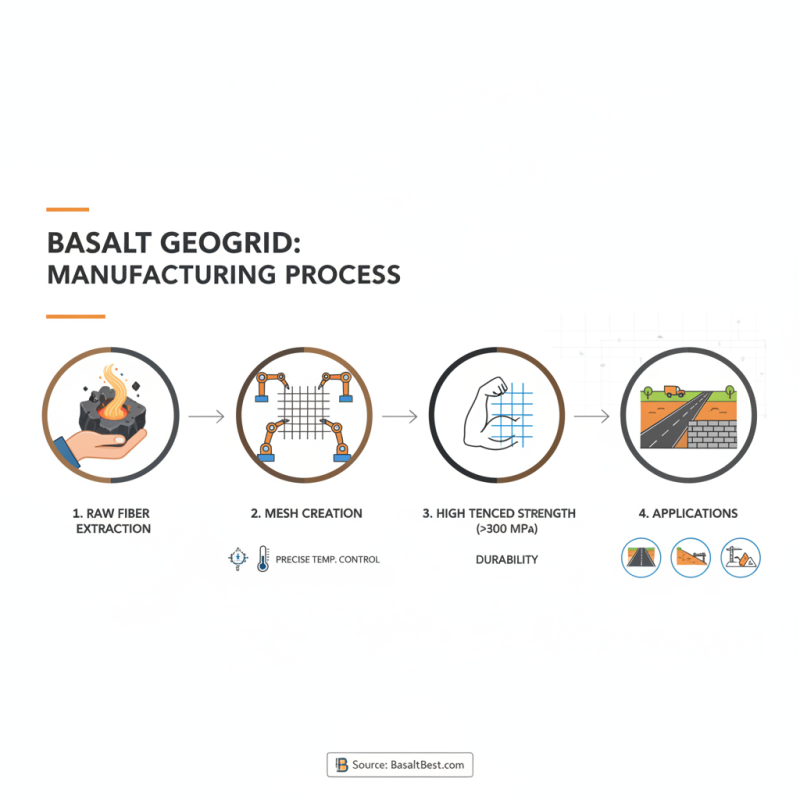
The manufacturing process of Basalt Geogrid involves several critical steps. First, raw basalt fibers are extracted from volcanic rock. These fibers are then processed to create a fine mesh. This mesh has high tensile strength and durability. The production techniques require precise temperature control, ensuring optimal fiber properties. According to industry reports, Basalt Fiber Geogrid exhibits a tensile strength of over 300 MPa, making it suitable for various applications.
Next, the mesh is coated with specialized resins to enhance its weather resistance. This coating process is vital for projects exposed to harsh environmental conditions. A 2022 study highlighted that projects using this geogrid experienced a 25% reduction in maintenance costs. Such data illustrates the potential for long-term savings and sustainability in construction.
Testing and quality assurance follow the manufacturing process. Each batch of Basalt Fiber Geogrid undergoes rigorous inspections. Quality checks confirm the material's integrity. However, some manufacturers struggle with consistency in production. This inconsistency can affect project outcomes. Thus, choosing a reliable supplier is essential for successful implementation.
Basalt Geogrids are innovative materials with remarkable properties that lend themselves well to various construction projects. Strength is a significant characteristic of these geogrids. They can withstand high loads without deforming. This makes them ideal for reinforcing soils and improving structural stability. Projects requiring robust support systems benefit significantly from this strength.
Durability is another critical aspect. Basalt Fiber Mesh Geogridis resistant to environmental factors like UV rays and Chemical exposure. This resistance enhances its longevity. It does not deteriorate easily over time, unlike traditional materials. In regions with harsh climates, this durability can lead to fewer repairs and replacements, saving costs in the long run.
Temperature resistance is essential in many applications. These geogrids perform exceptionally well in extreme temperatures. Whether it’s the sweltering heat of summer or the freezing cold of winter, they maintain their integrity. This aspect can lead to more predictable performance, but careful planning is still necessary. Not every project can accommodate these materials without adjustments. Each project’s unique challenges must be met with thoughtful strategies.
| Property | Value | Benefits |
|---|---|---|
| Tensile Strength | 200 - 300 kN/m | Provides excellent reinforcement, improving stability of soil structures. |
| Durability | Non-degradable in UV light and moisture | Ensures long-lasting performance in various environmental conditions. |
| Temperature Resistance | -50°C to +90°C | Remains effective in extreme temperature ranges, suitable for diverse climates. |
| Weight | Lightweight | Easy to handle and install, reducing labor costs and time. |
| Corrosion Resistance | Highly resistant | Ideal for use in harsh chemical environments. |
| Flexibility | High flexibility | Adaptable to various shapes and surfaces in construction. |
Basalt geogrids have emerged as a versatile solution in civil engineering projects. These materials are made from volcanic rock, offering high tensile strength and flexibility. They are particularly useful in soil reinforcement. Their application can lead to increased stability in roadways and embankments.
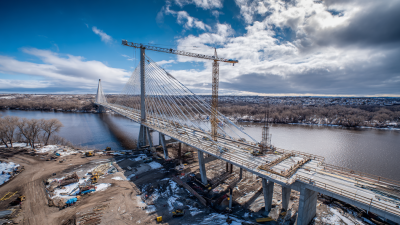
In retaining wall construction, basalt geogrids help distribute loads effectively. This enhances durability and reduces the risk of failure. Additionally, they are beneficial in bridge construction. Their lightweight nature can lead to lower transportation costs and ease of installation.
Despite their advantages, there are challenges. The effectiveness of basalt geogrids can be influenced by environmental factors. Engineers must consider soil types and weather conditions. They also need to ensure the correct installation methods are followed. Overlooking these details could compromise project integrity, necessitating a careful approach.
Basalt geogrids are increasingly favored in civil engineering due to their unique properties. Unlike traditional geogrids made from materials like polypropylene, basalt geogrids are made from volcanic rock fibers. This material provides superior strength-to-weight ratios, enhancing the load-bearing capabilities of soil structures. Recent studies indicate that basalt geogrids can improve soil stabilization by up to 30% compared to conventional options.
In terms of durability, basalt geogrids exhibit remarkable resistance to UV radiation and environmental elements. Research shows that they have a lifespan of over 100 years with minimal degradation. In contrast, traditional geogrids may only last about 25 years under similar conditions. This translates to lower lifecycle costs for projects utilizing basalt geogrids. However, one must consider the initial cost, as basalt options can be pricier upfront.
When assessing engineering projects, the choice between basalt and traditional geogrids should factor in specific project conditions. The increased performance of basalt products may not always justify their higher cost in low-stakes environments. Engineers should weigh these trade-offs carefully, evaluating both short-term investments and long-term benefits.
Basalt geogrids are increasingly recognized for their significant advantages in construction and civil engineering projects. According to recent studies, their incorporation can lead to up to a 30% increase in load-bearing capacity. This is largely attributed to the high tensile strength of basalt fibers, which outperform traditional materials like polyester or polypropylene in harsh environments. The lightweight nature of the Basalt Reinforcing Geogrid contributes to easier handling and quick installation, reducing labor costs and project timelines.
Moreover, these geogrids enhance the stability of structures by providing superior resistance to environmental factors. Research indicates that projects utilizing basalt geogrids show a 20% improvement in overall durability, particularly in areas with extreme conditions. For instance, a project in a mountainous region noted a decrease in maintenance costs by over 15% due to the durability of basalt materials. Although the initial investment may be higher, the long-term benefits often justify the costs.
Despite these benefits, it's essential to consider the specific requirements of each project. Not every scenario may benefit from basalt geogrids, especially in soft soil conditions. Engineers must evaluate the environmental context and material properties before implementation. This careful assessment is crucial to ensure maximum performance and cost-effectiveness in using basalt geogrids.
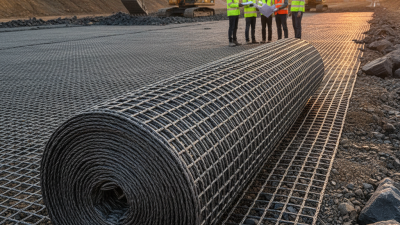
Basalt geogrids have gained traction in engineering applications, particularly in road construction and soil stabilization. One striking case study involves a regional highway renovation where the Basalt Fiber Geogrid Mesh significantly enhanced the tensile strength of the soil. This implementation reduced long-term maintenance costs and decreased the likelihood of roadway failure. The use of basalt fibers improved durability, which is a crucial factor in high-traffic areas.
Another project showcasing the utility of basalt geogrids occurred in a landslide-prone region. Engineers integrated Basalt Fiber Geogrid Mesh into the soil retention system. This initiative aimed to stabilize the slopes and prevent erosion. However, the project faced challenges in sourcing high-quality materials. The team learned that not all basalt products perform equally. This experience emphasized the necessity of rigorous testing before deploying materials in vital projects.
Such case studies illustrate the potential of basalt geogrids to transform construction practices. Yet, it's essential to reflect on the lessons learned. The balance between cost and quality remains a central question. Every project offers insights into optimizing material choices and design strategies, ensuring the best possible results for future initiatives.
The following chart represents the percentage improvement in various parameters after implementing basalt geogrids in construction projects.
: Raw basalt fibers extracted from volcanic rock are the key material.
The tensile strength exceeds 300 MPa, which benefits various construction applications.
Coating the mesh with resins enhances weather resistance, crucial for harsh environments.
A study shows a 25% reduction in maintenance costs over time, illustrating potential savings.
Some struggle with producing consistent quality, impacting project outcomes negatively.
They maintain integrity in both extreme heat and cold, but adjustments may be necessary.
A highway renovation project showed enhanced soil strength and reduced maintenance costs.
Not all basalt products are equal; rigorous testing is essential before implementation.
Their resistance to environmental factors leads to fewer repairs, ultimately saving costs.
Careful planning and thoughtful strategies are crucial to meet each project's unique challenges.
Basalt Geogrid is an innovative geosynthetic material made from volcanic rock, offering superior strength, durability, and temperature resistance compared to traditional geogrids. The composition of Basalt Geogrid primarily includes basalt fibers, which undergo a meticulous manufacturing process that involves heating and weaving techniques, resulting in a lightweight yet robust product. This geogrid has proven its effectiveness in various civil engineering applications, enhancing structural stability and longevity in projects ranging from road construction to slope stabilization.
Moreover, a comparative analysis reveals that Basalt Geogrid significantly outperforms traditional geogrids in structural performance, providing quantitative benefits such as improved load distribution and reduced maintenance costs. Case studies demonstrate successful implementations of Basalt Geogrids, underscoring their value in enhancing project outcomes. Overall, the adoption of Basalt Geogrid represents a progressive step in engineering solutions, combining environmental sustainability with high-performance characteristics.