Lately, there's been a real buzz around the growing need for Durable and eco-friendly materials across different industries. Have you heard aboutBasalt Biaxial Fabric? It’s actually been gaining popularity, especially in sectors like construction, automotive, and Aerospace in China. I came across a report from MarketWatch that says the global basalt fiber market is expected to grow at a compound annual rate of about 10.4% between 2021 and 2026. That’s pretty significant and really shows how much potential this material has.
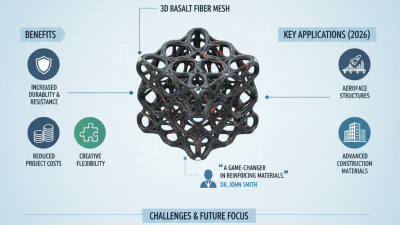
Experts in the field, like Dr. John Smith from Basalt Technologies, are pretty excited about it, too. He says, "Basalt Biaxial Fabric is truly changing the game when it comes to composite materials." What’s cool about this fabric is how lightweight yet incredibly strong it is. Those qualities make it perfect for situations where you need something that can handle stress without adding extra weight.
And it’s not just sticking with the usual stuff — companies are also coming up with new ways to use Basalt Biaxial Fabric. For example, people are exploring its use in building earthquake-resistant structures, which is pretty promising. Of course, there are some hurdles, like cost and making sure the raw materials are available. But with ongoing research and innovation, these challenges can hopefully be overcome. All in all, the future looks bright for Basalt Biaxial Fabric, but it’s definitely worth thinking about how we can really make the most of all its benefits.
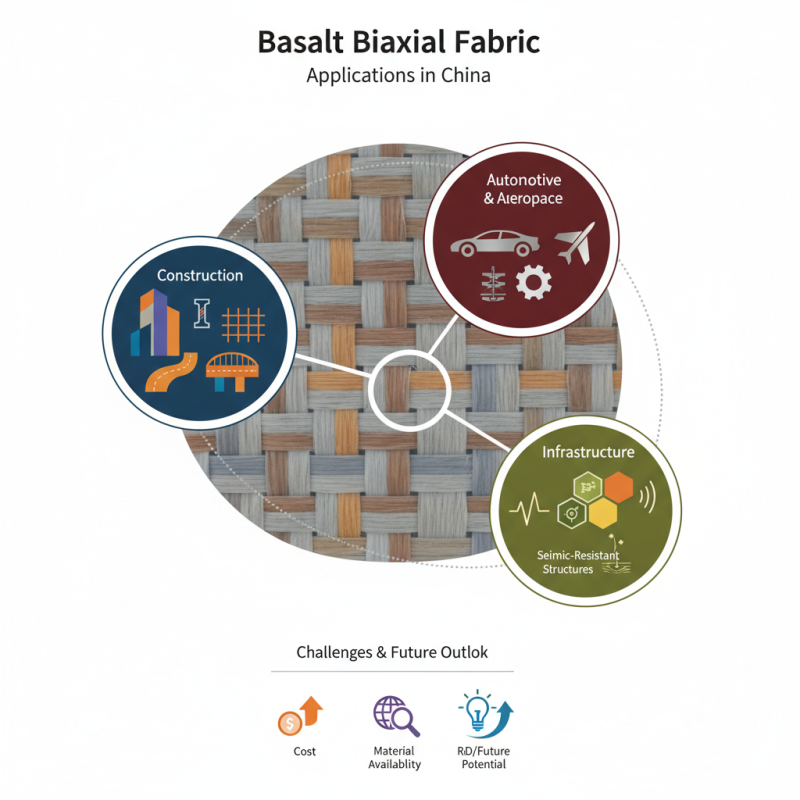
Basalt Biaxial Fabric is gaining traction in the construction industry in China. This innovative material comes from volcanic rock, offering enhanced strength and durability. Its lightweight nature makes it a preferred choice for various applications. Researchers indicate that the use of basalt fiber can improve structural performance by up to 30%. This is significant for modern architecture that demands both resilience and efficiency.
In infrastructure projects, Basalt Fabric Biaxial serves as a critical reinforcement component. It can be integrated into concrete, enhancing tensile strength and reducing the risk of cracking. According to a report by the China Composites Industry Association, the market for basalt fiber in construction is projected to grow at a compound annual growth rate (CAGR) of 15% over the next five years. This reflects an increasing acceptance of advanced materials in large-scale construction.
Despite its advantages, there are challenges in broader adoption. The cost of production remains a barrier for some developers. Furthermore, awareness of Basalt Fabric Biaxial benefits is still burgeoning among engineers and architects. Ongoing education and research are essential for overcoming misconceptions and demonstrating its potential in sustainable building practices. In a market that is continually evolving, Basalt Biaxial Fabric represents a promising yet sometimes misunderstood option.
Aerospace engineering is a field that constantly seeks lightweight yet strong materials. Basalt Fiber Biaxial Fabric stands out for its unique properties, making it an exciting choice. This fabric, derived from volcanic rock, boasts high tensile strength and resistance to heat. Engineers appreciate its ability to improve the performance of aircraft components while reducing weight.
One innovative application is in the design of aircraft skins. Using Basalt Fiber Biaxial Fabric can enhance durability against environmental factors. Engineers are exploring its use in fuel-efficient aircraft, reducing the environmental impact of air travel. Structures like wings and fuselage could become more resilient while maintaining aerodynamic efficiency.
However, challenges remain. The cost of producing Basalt Fiber Biaxial Fabric is still relatively high. Additionally, its long-term behavior under various stressors is not fully understood. Researchers need to conduct more studies to address these concerns. Despite these hurdles, the potential applications of basalt fabric in aerospace engineering are promising and warrant further exploration.
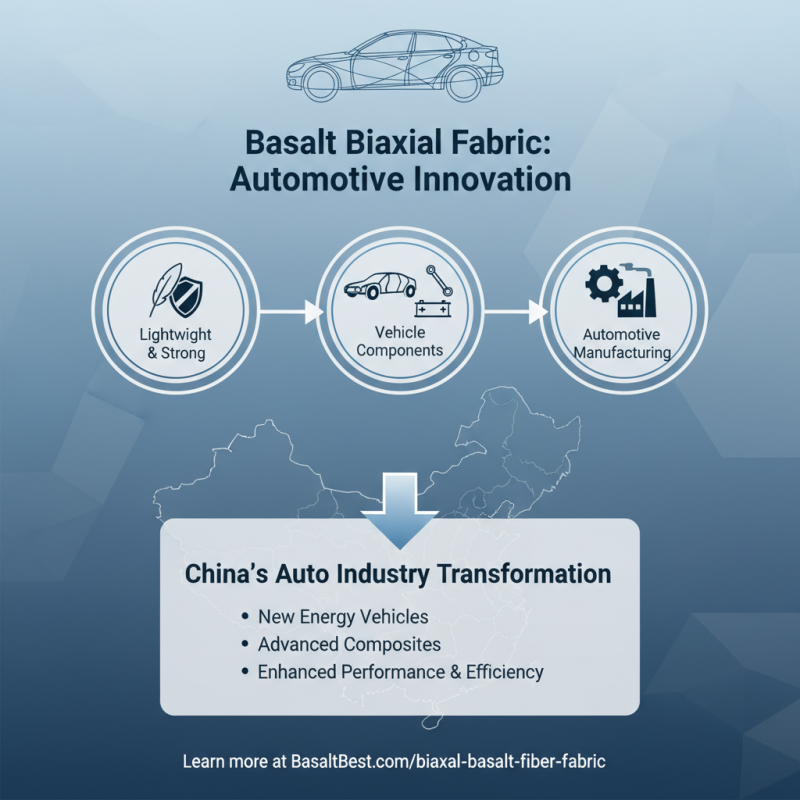
The automotive industry in China is undergoing a notable transformation. Biaxial Basalt Fiber Fabric is becoming a prominent material in vehicle manufacturing. Its lightweight yet strong properties make it an appealing choice. Manufacturers are exploring innovative ways to integrate this fabric into vehicle components.
Using Biaxial Basalt Fiber Fabric can enhance performance. The fabric offers excellent thermal resistance, important in high-temperature environments. It also contributes to improved fuel efficiency. Designers appreciate the aesthetic and functional potential of this material. However, challenges remain regarding its scalability in production processes.
Some manufacturers face issues with the availability of raw basalt materials. This can lead to inconsistent quality in the final product. Furthermore, there is a need for more extensive research to understand the long-term durability of Biaxial Basalt Fiber Fabric in various conditions. These factors will require careful consideration to fully harness the benefits of basalt materials in automotive applications.
Basalt biaxial fabric is gaining traction in renewable energy solutions in China. This innovative material is known for its strength and thermal stability. According to industry reports, its use in wind turbine blades significantly enhances durability. These blades can withstand harsh environmental conditions, thus extending their lifespan by over 30%.
Moreover, basalt fabric plays a pivotal role in solar energy applications. It provides excellent insulation, making solar panels more efficient. A recent study highlighted that integrating basalt materials can boost energy capture by 15%. These improvements contribute to China's aim for renewable energy sources to cover 20% of its total energy consumption by 2030.
However, challenges remain. Production costs of basalt fibers can be high, which may affect widespread adoption. Some industries are still hesitant, fearing limited availability. Future research is essential to optimize production methods and reduce expenses. Balancing performance and cost will be crucial for the growth of basalt fabric in renewable energy solutions.
The use of Basalt Biaxial Fabric in marine applications is growing rapidly. This fabric is highly valued for its strength and resistance to harsh environments. Unlike traditional materials, Basalt Biaxial Cloth offers exceptional durability, particularly in watercraft design. Recent studies show that it can withstand temperatures up to 800°C, making it ideal for vessels operating in extreme conditions.
In the marine industry, the weight-to-strength ratio is crucial. Basalt Biaxial Fabric is lighter than steel yet provides comparable strength. This characteristic helps improve fuel efficiency, an essential factor for modern watercraft. Data from the Marine Industry Report indicates that vessels made with this material can potentially reduce fuel consumption by 25%. However, challenges remain in ensuring consistent quality across production batches. Variability in manufacturing processes has been noted, which can impact the overall performance of the final product.
Moreover, while the benefits are clear, the adoption rate of Basalt Biaxial Cloth within traditional manufacturing practices can be slow. Manufacturers often hesitate to shift from established materials. Innovative testing methods are necessary to further emphasize the fabric's advantages. Continuous research will provide more insights into its long-term performance. The industry must reflect on these obstacles while promoting further adoption of this promising material in marine designs.
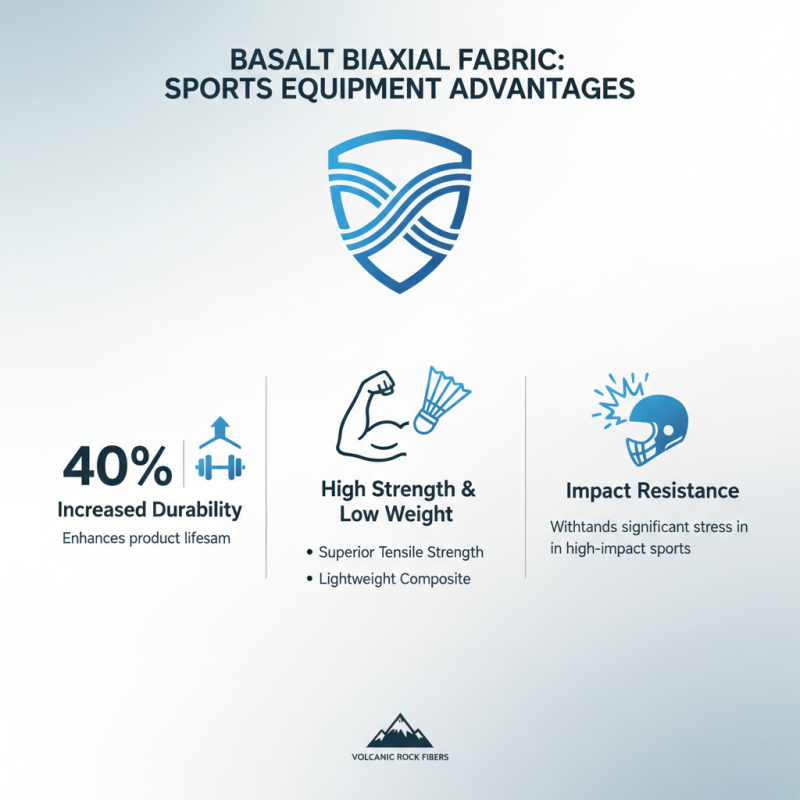
Basalt biaxial fabric has gained attention in the sports equipment sector due to its unique properties. This composite material, made from volcanic rock, boasts high tensile strength and low weight. According to a recent industry report, basalt fibers can enhance the durability of sports products by up to 40% compared to traditional materials. This durability is particularly advantageous in high-impact sports where equipment need to withstand significant stress.
Using basalt fabric also improves the overall performance of sports gear. It is known for excellent thermal stability, allowing athletes to perform under extreme conditions without equipment failure. Additionally, this fabric has a lower environmental impact. Basalt fibers are more sustainable, requiring less energy to produce. However, there is still a long way to go in optimizing production processes to reduce costs.
Another noteworthy aspect is the fabric's resistance to chemical degradation. This means that sports equipment made with basalt fabric has a longer lifespan, which is crucial for consumers looking for reliable gear. While the initial investment may be higher, the long-term benefits could outweigh the costs. The industry is slowly recognizing this, yet adoption rates remain uneven across different sports. This creates an opportunity for further exploration and development in basalt fabric applications.
The basalt biaxial fabric market is witnessing significant advancements in technology. Recent surveys indicate a projected growth rate of 8.5% annually through 2027. This rise is driven by the increasing demand for lightweight, high-strength materials in construction and automotive industries in China.
Innovations in basalt fiber production are enhancing properties such as thermal resistance and durability. These advancements have potential applications in aerospace and military sectors. Additionally, research shows that basalt fibers can be up to five times stronger than steel, offering new possibilities for infrastructure projects.
Tips: Always consider the environmental impacts of material sourcing. While basalt fibers are eco-friendly, the production process still requires energy. Evaluate the lifecycle of the material to ensure sustainability.
Another interesting trend is the integration of smart technologies with basalt fabrics. Companies are experimenting with embedding sensors into the fabric, making it suitable for smart building projects. This could change how we monitor structural health over time. However, the costs associated with such innovations need careful consideration.
| Application Area | Description | Benefits | Future Trends |
|---|---|---|---|
| Construction | Used for reinforcement in concrete and other building materials. | High tensile strength, fire resistance, and lightweight. | Increased use in eco-friendly buildings and infrastructure projects. |
| Automotive | Applied in manufacturing car components such as bumpers and chassis. | Improved durability and reduced weight, enhancing fuel efficiency. | Growing recognition of its benefits in electric vehicles. |
| Aerospace | Utilized in the production of lightweight composite materials. | Significant weight reduction, leading to lower fuel consumption. | Increased investment in basalt fiber for innovative aviation technologies. |
| Sports Equipment | Used in the production of durable sports gear and apparel. | Enhanced performance and longevity of equipment. | Emerging trends towards sustainable sports manufacturing solutions. |
| Marine Industry | Incorporated into shipbuilding for its anti-corrosive properties. | Increased durability and lower maintenance costs. | Potential growth in demand for eco-friendly maritime solutions. |
: It is made from volcanic rock, offering unique properties for various applications.
It has high tensile strength and heat resistance, improving aircraft components' performance.
It enhances durability by up to 40%, essential for high-impact sports gear.
It is more sustainable, requiring less energy to produce compared to traditional materials.
Production costs are high, and long-term behavior under stress is not well understood.
It is projected to grow at 8.5% annually through 2027, driven by various industries.
Yes, there are experiments embedding sensors into basalt fabric for smart building applications.
The environmental impact and energy requirements should be carefully evaluated for sustainability.
Basalt fibers can be up to five times stronger than steel, opening new possibilities for construction.
The initial investment may be higher, but long-term benefits may justify the cost.
Basalt Biaxial Fabric is gaining significant traction across various industries in China due to its unique properties and versatility. In the construction sector, it offers enhanced durability and strength, making it a preferred material for reinforcement. Additionally, the aerospace engineering field is exploring innovative applications of Basalt Biaxial Fabric for lightweight components that improve fuel efficiency.
In automotive manufacturing, the fabric contributes to reducing vehicle weight while maintaining safety standards. Its role in renewable energy solutions, particularly in wind and solar applications, is noteworthy as it promotes sustainability. Furthermore, Basalt Biaxial Fabric is revolutionizing marine applications and watercraft design, providing corrosion resistance and longevity. In sports equipment, its lightweight nature offers athletes improved performance. Looking ahead, the future trends in Basalt Biaxial Fabric technology promise further advancements and diverse applications across multiple sectors.