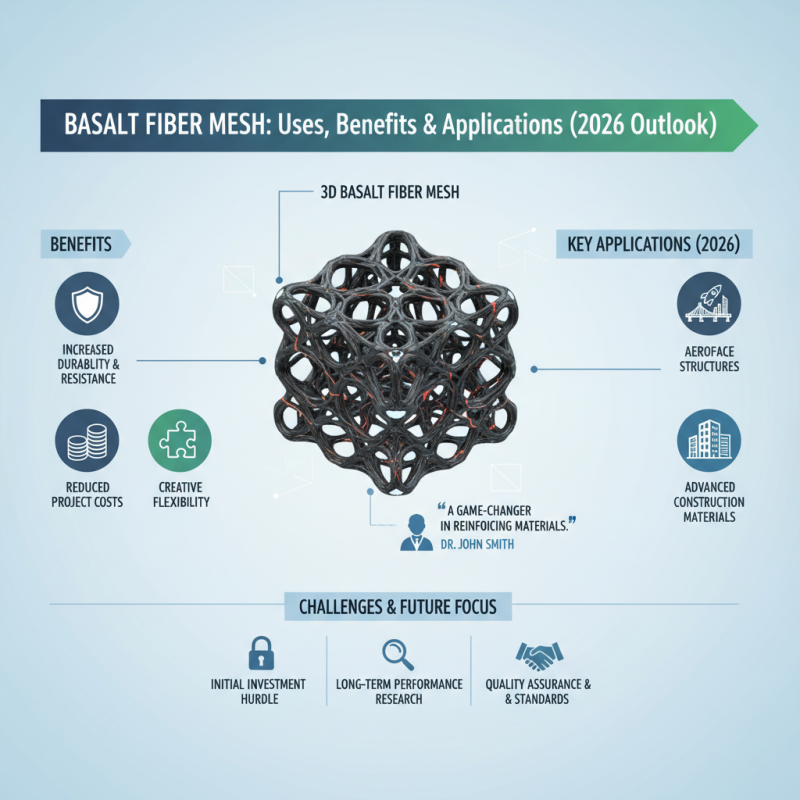
Lately, you’ve probably noticed that the construction and engineering worlds are really starting to get into Basalt Fiber Mesh. It’s kind of a big deal because of its unique qualities. Experts like Dr. John Smith from Advanced Composites Solutions even call it a real game-changer when it comes to reinforcing materials. Honestly, this technology has so much potential — it promises to boost durability and stand up better against environmental wear and tear.
Looking ahead to 2026, it’s expected that the use of 3D Basalt Fiber Mesh will really take off. Industries like Aerospace and civil engineering are likely to jump on board because of its innovative properties. Plus, since it’s lightweight, it could actually help cut down on overall project costs — a pretty big plus for builders. And because of its versatility, it opens up some pretty creative options for designing structures.
That said, it’s not all smooth sailing. Some developers are still a bit hesitant to fully embrace Basalt Fiber Mesh. The upfront costs might scare off smaller companies, and there’s definitely a need for more research and testing to really understand how it performs over the long run. Ensuring quality is crucial if we really want to unlock the full potential of this amazing technology.
Basalt Fiber Mesh is a revolutionary material gaining attention for its superior properties. Made from volcanic rock, it offers high tensile strength and excellent durability. This material shows great resistance to corrosion and temperature fluctuations. Reports indicate it can withstand temperatures of up to 1000°C without losing integrity.
The composition of Basalt Fiber Mesh includes finely woven basalt fibers, known for their lightweight nature. These fibers create a mesh that enhances bonding in construction applications. In 2026, the demand for Basalt Fiber Mesh is expected to rise. Industry experts project a growth rate of 20% annually in this sector, driven by sustainable building practices.
However, the production of Basalt Fiber Mesh is not without challenges. The manufacturing process requires controlled conditions that can be costly. Additionally, awareness of its benefits is still growing. Some construction professionals remain skeptical. Education and clearer communication about the advantages of basalt fiber are crucial. Emphasizing its long-term cost efficiency could help shift perceptions in the industry.
| Property | Value | Application | Benefit |
|---|---|---|---|
| Tensile Strength | 600 MPa | Reinforced Concrete | High durability |
| Weight | 1.0 g/cm³ | Lightweight Structures | Reduced overall structure weight |
| Thermal Stability | Up to 1000°C | Fire-Resistant Applications | Excellent heat resistance |
| Corrosion Resistance | High | Marine and Chemical Environments | Longer service life |
| Elastic Modulus | 50 GPa | Structural Reinforcement | Improved load distribution |
Basalt fiber mesh has emerged as a game changer in construction and industry. This advanced material offers high tensile strength and durability. Unlike traditional materials, Basalt Fiber Mesh Geogrid is resistant to corrosion. It stands up well in harsh environments. The mesh structure distributes loads effectively, enhancing stability in various applications.
Using basalt fiber mesh can reduce overall project costs. Its lightweight nature simplifies transportation and handling. Additionally, it is non-toxic and environmentally friendly. These features resonate with sustainable building practices. However, some professionals still question its long-term performance in specific settings. Further research and real-world applications are necessary to fully understand its limits.
Another benefit of basalt fiber mesh lies in its versatility. It can be used in road construction, slope stabilization, and drainage systems. Many consider it a reliable alternative to steel reinforcement. Yet, costs may still be a concern for some projects. Balancing budget and material performance will remain a challenge as the industry evolves.
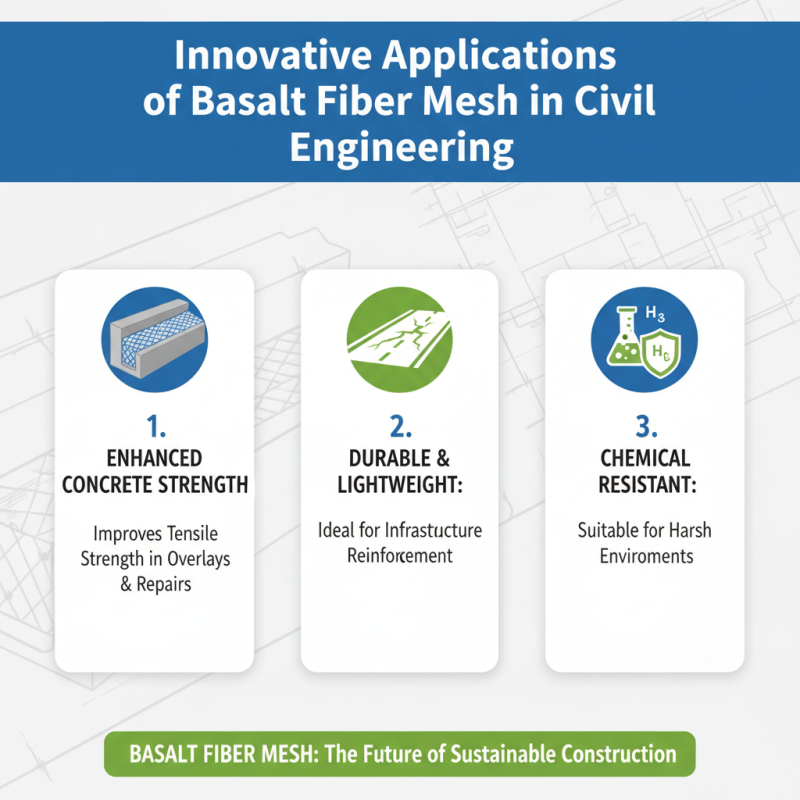
Basalt fiber mesh is gaining traction in civil engineering. Its unique properties make it suitable for many applications. This material is durable, lightweight, and resistant to chemical attacks. In construction, it enhances the strength of concrete structures. For instance, it improves the tensile strength of overlays and repairs.
Infrastructure projects benefit from basalt fiber mesh. It resists corrosion, making it ideal for bridges and tunnels. Using this mesh helps extend the lifespan of structures. However, adapting to local conditions is crucial. Not all regions may have the resources for effective implementation. Testing and research are still needed.
Engineers are exploring innovative designs with basalt fiber mesh. They aim to integrate it into seismic-resistant structures. This approach might improve safety in earthquake-prone areas. Yet, there are challenges to address. The cost of materials and application processes varies greatly. Some projects might find this material less cost-effective. Balancing benefits and drawbacks requires careful consideration.
When comparing basalt fiber mesh to traditional reinforcement materials, several factors stand out. Data from industry reports indicate that basalt fiber offers superior tensile strength and durability. This material can withstand harsh environmental conditions, making it ideal for various construction applications. Traditional reinforcement materials, like steel, often corrode over time. In contrast, Basalt Fiber Geogrid Mesh maintains structural integrity longer, potentially reducing maintenance costs.
Cost analysis reveals that while initial expenses for basalt fiber mesh may be higher, long-term savings are notable. A study projected a 30% reduction in lifecycle costs when using basalt fiber for road construction over a typical steel-reinforced setup. However, challenges exist. The market is still adapting to basalt fiber technology, and availability can be an issue in some regions, affecting project timelines.
Moreover, engineers must consider performance in different environmental conditions. Basalt fiber geogrid mesh performs exceptionally well in acidic soil, but its effectiveness in extreme temperature fluctuations needs further investigation. Decision-makers should weigh these factors carefully when selecting materials for their projects. The advantages of basalt fiber mesh are clear, yet not without areas needing improvement and further research.
Basalt fiber mesh offers significant environmental benefits. This material is made from natural basalt rocks. It requires less energy to produce compared to synthetic fibers. The production process generates fewer emissions. This makes basalt fiber a more sustainable choice.
In applications like construction, basalt fiber mesh is a game-changer. It enhances durability while being lightweight. However, it is important to consider its life cycle. While it is eco-friendly, disposal options can be limited. There are still questions about its recyclability. This is an area that requires further investigation.
The use of basalt fiber mesh in infrastructure shows promise. It can improve longevity and reduce maintenance costs. However, understanding the full environmental impact is crucial. Research is needed to assess its overall sustainability. Implementing these fibers in practical applications raises challenges as well. Balancing benefits with environmental considerations will be key.
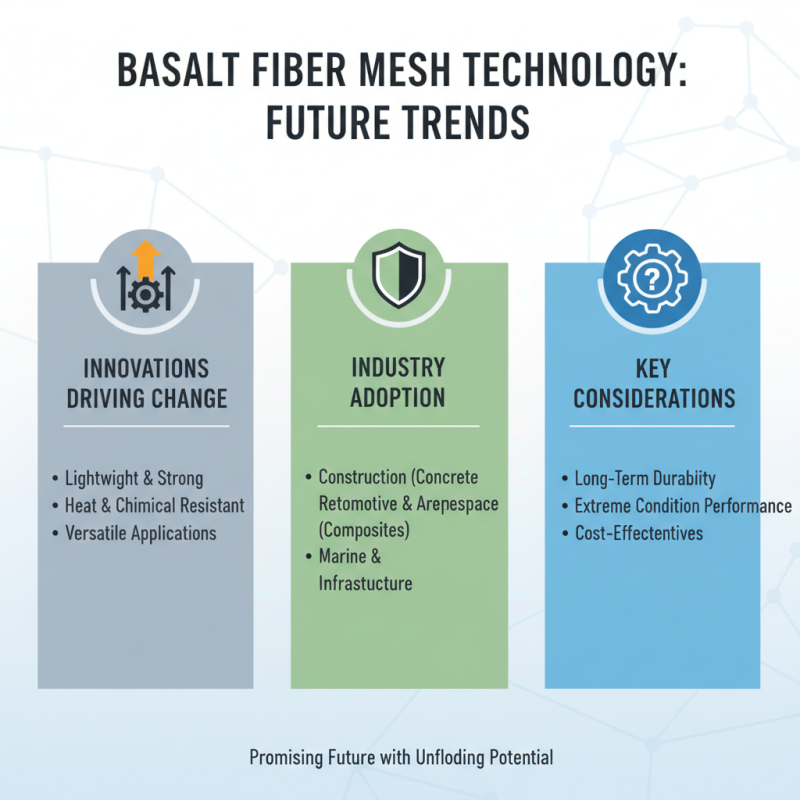
The future of Basalt Fiber Mesh technology is promising. Innovations are changing how we view this material. Its lightweight nature and high resistance to heat and chemicals set it apart. Many industries are looking at its potential. However, some questions remain about its long-term durability in extreme conditions.
As we move forward to 2026, the developments in Basalt Fiber Mesh Cloth will be crucial. Research is focusing on improving its tensile strength. This will allow it to be used in more demanding applications. Sustainable practices are also becoming vital. The eco-friendly nature of basalt fiber appeals to many. Yet, optimizing manufacturing processes remains a challenge.
The construction industry stands to benefit significantly. Buildings and infrastructure could see increased longevity. However, there are still concerns about cost-effectiveness. Balancing performance and affordability is key. Companies need to explore these factors carefully. The future of Basalt Fiber Mesh is bright but complex.
Basalt fiber mesh offers significant benefits in various applications, but it also faces challenges. One major limitation is its cost. While basalt fiber is cheaper than carbon fiber, it is often more expensive than traditional materials. This higher price can deter some industries from adopting it.
Another challenge is its compatibility with other materials. In composite structures, poor bonding between basalt fiber and resin can lead to weakened performance. Additionally, the production process of basalt fibers can vary greatly, affecting consistency and quality. This inconsistency can complicate its use in critical applications.
Furthermore, there are concerns over long-term durability. Basalt fiber can be susceptible to alkaline environments, which may limit its lifespan in specific applications. These limitations highlight the need for thorough research and development. Without addressing these challenges, the potential of basalt fiber mesh may remain untapped.
: Basalt fiber mesh has superior tensile strength, durability, and withstands harsh conditions well.
Initial costs for basalt fiber mesh may be higher, but long-term savings can reach 30% for road projects.
Limited availability in some regions can delay projects. The market is still adapting to this technology.
It works well in acidic soil, but its performance in extreme temperatures needs more research.
Yes, it is made from natural rock and requires less energy to produce than synthetic alternatives.
Disposal options are limited, and there are questions about its recyclability that need further exploration.
It can significantly reduce maintenance costs due to its durability and longevity in applications.
Understanding its full environmental impact and recyclability is crucial to assess its overall sustainability.
Basalt fiber mesh is lightweight, enhancing construction efficiency and ease of handling.
Further investigation is needed on its performance in extreme temperatures and recyclability options.
Basalt Fiber Mesh is gaining attention in the construction and industrial sectors due to its unique properties and composition that offer significant advantages over traditional reinforcement materials. The mesh is lightweight, corrosion-resistant, and provides excellent mechanical performance, making it ideal for various applications in civil engineering. Its innovative use not only improves structural integrity but also promotes sustainability by reducing environmental impact.
The comparative analysis of Basalt Fiber Mesh against conventional materials highlights its superior durability and longevity, addressing many challenges faced in modern construction. Despite its promising benefits, the material does face limitations in current applications, prompting ongoing research and development to enhance its functionality and accessibility. As the industry moves towards greater environmental responsibility, the future of Basalt Fiber Mesh seems bright, with potential trends pointing toward wider adoption and more advanced technologies.