
Why Reinforcement Bar Material Selection Is Critical for Explosion-Proof UAV Fuselages
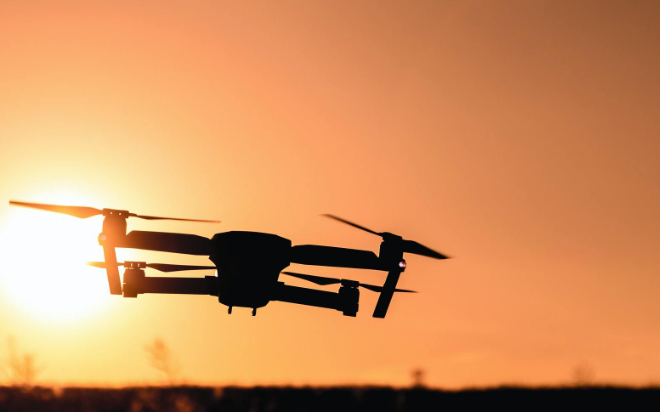
The rapid expansion of unmanned aerial vehicle (UAV) and drone technology into hazardous industrial environments — including oil & gas facilities, chemical plants, mining operations, and military zones — has created an unprecedented engineering challenge: how to build airframes and propeller blades that are simultaneously lightweight, structurally robust, non-conductive, non-magnetic, and explosion-proof. Traditional steel reinforcement bars simply cannot meet these demands. The solution lies in advanced Basalt Fiber Reinforced Polymer (BFRP) rebar — a material that is reshaping the aerospace composites industry.
Choosing the correct reinforcement bar type and size is not merely a technical specification exercise. It directly determines the structural integrity of the fuselage under blast overpressure, the electromagnetic transparency required for onboard sensors, the fatigue life of propeller blade root inserts, and the overall mission safety of the platform in ATEX/IECEx-classified zones. This guide provides a comprehensive technical and commercial overview of rebar types and sizes used in explosion-proof UAV/drone construction.
Key Insight: Non-Conductive BFRP Rebar Eliminates Ignition Risk
In Ex-Zone classified environments (Zone 0, Zone 1, Zone 2), any conductive metal component on a UAV represents a potential ignition source. Basalt FRP rebar is inherently non-conductive, non-magnetic, and spark-free — making it the only reinforcement material that satisfies both structural and explosion-proof safety requirements simultaneously.
Reinforcement Bar Types Used in Explosion-Proof UAV & Drone Structures
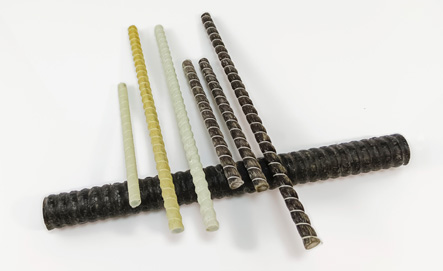
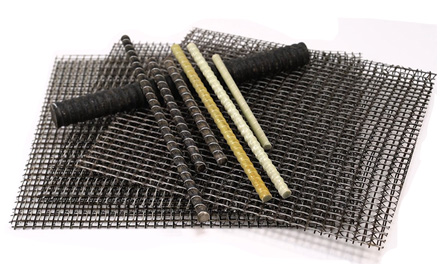
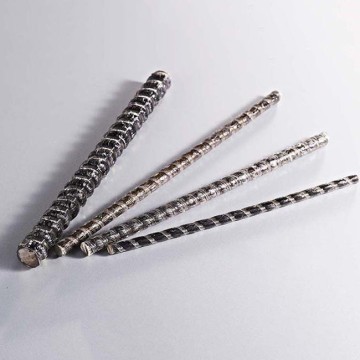
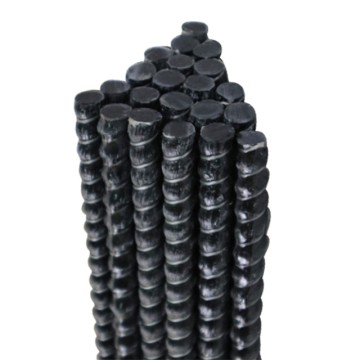
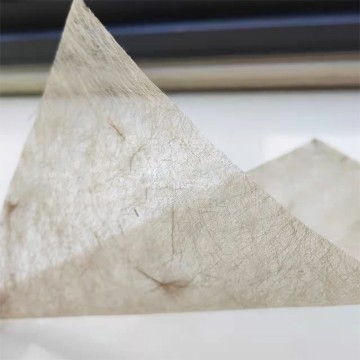
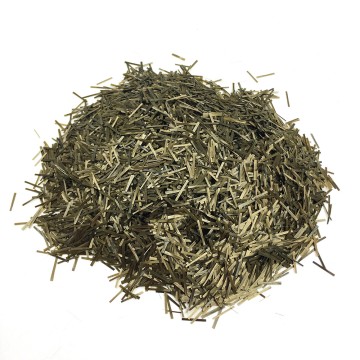
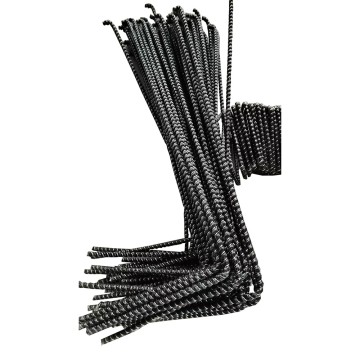
Modern explosion-proof drone fuselages and propeller blade assemblies utilize several distinct categories of reinforcement bars, each engineered for specific structural roles within the composite airframe:
Standard Rebar Sizes & Mechanical Properties for UAV Composite Applications
The following table summarizes the standard diameter range, tensile strength, and elastic modulus of BFRP rebar grades supplied by China Beihai for UAV/drone structural applications:
| Rebar Diameter | Cross-Section Area | Tensile Strength | Elastic Modulus | Primary UAV Application |
|---|---|---|---|---|
| Ø2 mm | 3.14 mm² | ≥1,200 MPa | ≥45 GPa | Propeller blade trailing edge insert |
| Ø4 mm | 12.57 mm² | ≥1,100 MPa | ≥46 GPa | Fuselage skin stiffener, blade spar |
| Ø6 mm | 28.27 mm² | ≥1,050 MPa | ≥48 GPa | Frame rib reinforcement, arm tube insert |
| Ø8 mm | 50.27 mm² | ≥1,000 MPa | ≥50 GPa | Landing gear strut core, motor mount ring |
| Ø10 mm | 78.54 mm² | ≥950 MPa | ≥50 GPa | Payload bay frame, blast shield bracket |
| Ø12 mm | 113.1 mm² | ≥900 MPa | ≥52 GPa | Heavy-lift fuselage main beam |
| Ø16 mm | 201.1 mm² | ≥850 MPa | ≥52 GPa | Ground station mast, Ex-rated enclosure |
Commercial & Industrial Landscape: BFRP Rebar in UAV Manufacturing
The global explosion-proof UAV market was valued at approximately USD 1.8 billion in 2023 and is projected to exceed USD 5.2 billion by 2030, driven by mandatory safety regulations in petrochemical, mining, and military sectors. Within this market, composite material selection — particularly the choice of reinforcement bar type — has become a critical differentiator between tier-1 and commodity drone manufacturers.
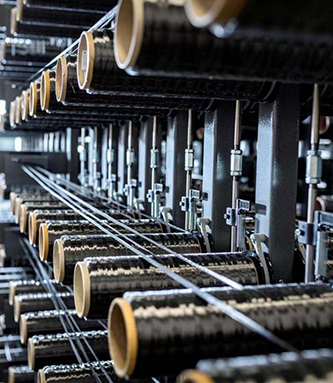
China currently accounts for over 70% of global basalt fiber production capacity, with leading manufacturers such as China Beihai Group (founded 2015, Jiujiang, Jiangxi Province) supplying BFRP rebar to aerospace composite fabricators across Asia, Europe, and North America. The shift from carbon fiber to basalt fiber rebar in explosion-proof applications is accelerating for three key commercial reasons:
- Cost advantage: BFRP rebar costs 40–60% less than equivalent-performance carbon fiber rods, reducing airframe BOM costs significantly.
- Regulatory compliance: BFRP is inherently non-conductive and non-magnetic, simplifying ATEX/IECEx certification processes for Zone 1 and Zone 2 UAVs.
- Supply chain resilience: Basalt rock is abundantly available globally, eliminating the geopolitical supply risks associated with carbon fiber precursor (PAN) sourcing.
Development Trends: Where BFRP Rebar Technology Is Heading
Ultra-Small Diameter Rebar (Sub-3mm)
Miniaturization of drone platforms for indoor inspection in confined Ex-spaces is driving demand for Ø2–3mm BFRP rods with tensile strength exceeding 1,400 MPa. New pultrusion die technologies are enabling production of these micro-rebar profiles at commercial scale.
Hybrid Basalt/Aramid Rebar Composites
Combining basalt fiber with aramid (Kevlar) fiber in a single rebar cross-section delivers improved impact absorption — critical for propeller blade roots that must withstand bird-strike and debris-impact loads in hazardous industrial environments.
High-Temperature BFRP Rebar (Up to 700°C)
Explosion-proof drones operating near furnaces, flare stacks, and hot process equipment require reinforcement bars that maintain structural integrity at elevated temperatures. Basalt fiber retains over 85% of its tensile strength at 400°C — far outperforming glass fiber alternatives.
Deep-Dive Application Scenarios: BFRP Rebar in UAV Structural Zones
1. Fuselage Shell & Frame Reinforcement
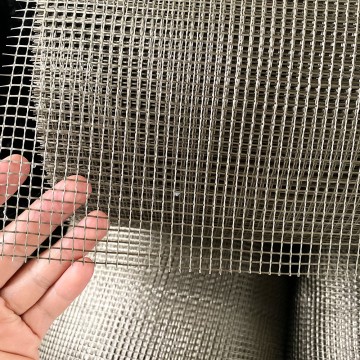
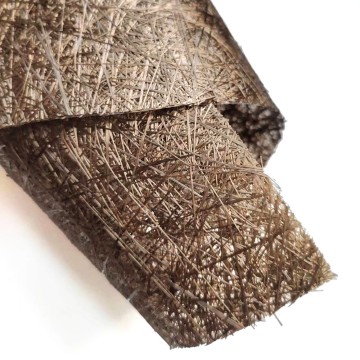
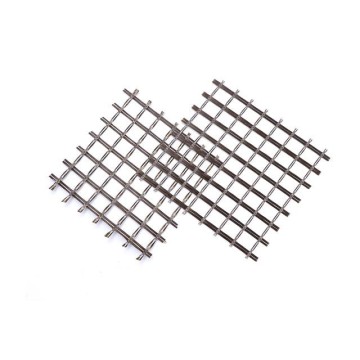
The fuselage of an explosion-proof drone must contain any internal battery fire or electrical fault without structural failure. BFRP mesh rebar (Type G, 50×50mm grid, Ø4mm) embedded in the inner skin of a carbon fiber/epoxy sandwich panel creates a secondary containment layer that absorbs blast energy through controlled delamination, preventing catastrophic fuselage rupture in Ex-Zone environments.
2. Propeller Blade Root Inserts & Spar Reinforcement
Propeller blade roots experience the highest combined bending, torsional, and centrifugal loads of any component on a multi-rotor UAV. Pultruded BFRP rods (Type P, Ø6–8mm) are used as unidirectional spar caps in composite blade constructions, providing high specific stiffness (E/ρ ratio) while eliminating any risk of electromagnetic interference with onboard navigation sensors — a critical requirement in GPS-denied industrial environments where radio-frequency transparency is essential.
3. Motor Mount & Arm Tube Assemblies
Motor mount rings and arm tubes in explosion-proof drones are subjected to high-frequency vibration loads. Helical BFRP rebar (Type H, Ø8mm) wound into the outer layers of filament-wound arm tubes provides excellent fatigue resistance under cyclic loading, with a demonstrated fatigue life exceeding 10 million cycles at 60% of ultimate tensile strength.
4. Landing Gear Struts & Shock Absorption Structures
Landing gear must absorb impact energy on uneven industrial terrain without generating sparks. BFRP straight rebar (Type S, Ø10–12mm) used as the core structural element in composite landing gear legs provides the required stiffness while the non-conductive, non-spark nature of basalt fiber ensures compliance with ATEX Directive 2014/34/EU.
5. Explosion-Proof Sensor Pod & Payload Bay Enclosures
Sensor pods carrying gas detection, thermal imaging, or chemical analysis equipment must be electromagnetically transparent to avoid interfering with sensor readings. BFRP rebar (any type, non-metallic) used in the structural frame of these enclosures ensures zero electromagnetic signature — unlike steel or even carbon fiber rebar which can induce eddy currents in nearby RF circuits.
Basalt Fiber Rebar for Reinforcement in Concrete Construction
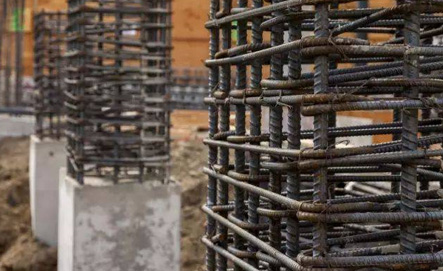
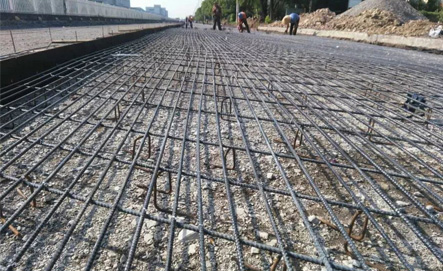
Beyond UAV applications, Basalt Fiber Rebar is a high-strength alternative to traditional steel bars used in a wide range of applications for reinforcing concrete structures. Its excellent performance makes it ideal for bridges, highways, buildings, and other infrastructure projects. The same non-conductive, non-magnetic, and corrosion-resistant properties that make BFRP rebar ideal for explosion-proof drones also make it the preferred choice for MRI room construction, power station flooring, and marine infrastructure where electromagnetic neutrality and long-term durability are paramount.
Explore All Reinforcement Solutions ›