



Basalt Fiber: Sparking a Materials Revolution in the Drone and Robotics Sectors
As drones slice through the sky to monitor wildfires, and intelligent robots execute repetitive tasks with precision on the factory floor, the efficient operation of this smart equipment is often underpinned by a "hardcore support" that is easily overlooked: a novel material derived from volcanic rock—Basalt Fiber. Though unassuming in appearance, its unique properties have made it the key to unlocking the performance limits of drones and robots, quietly driving a materials revolution within the realm of intelligent equipment.
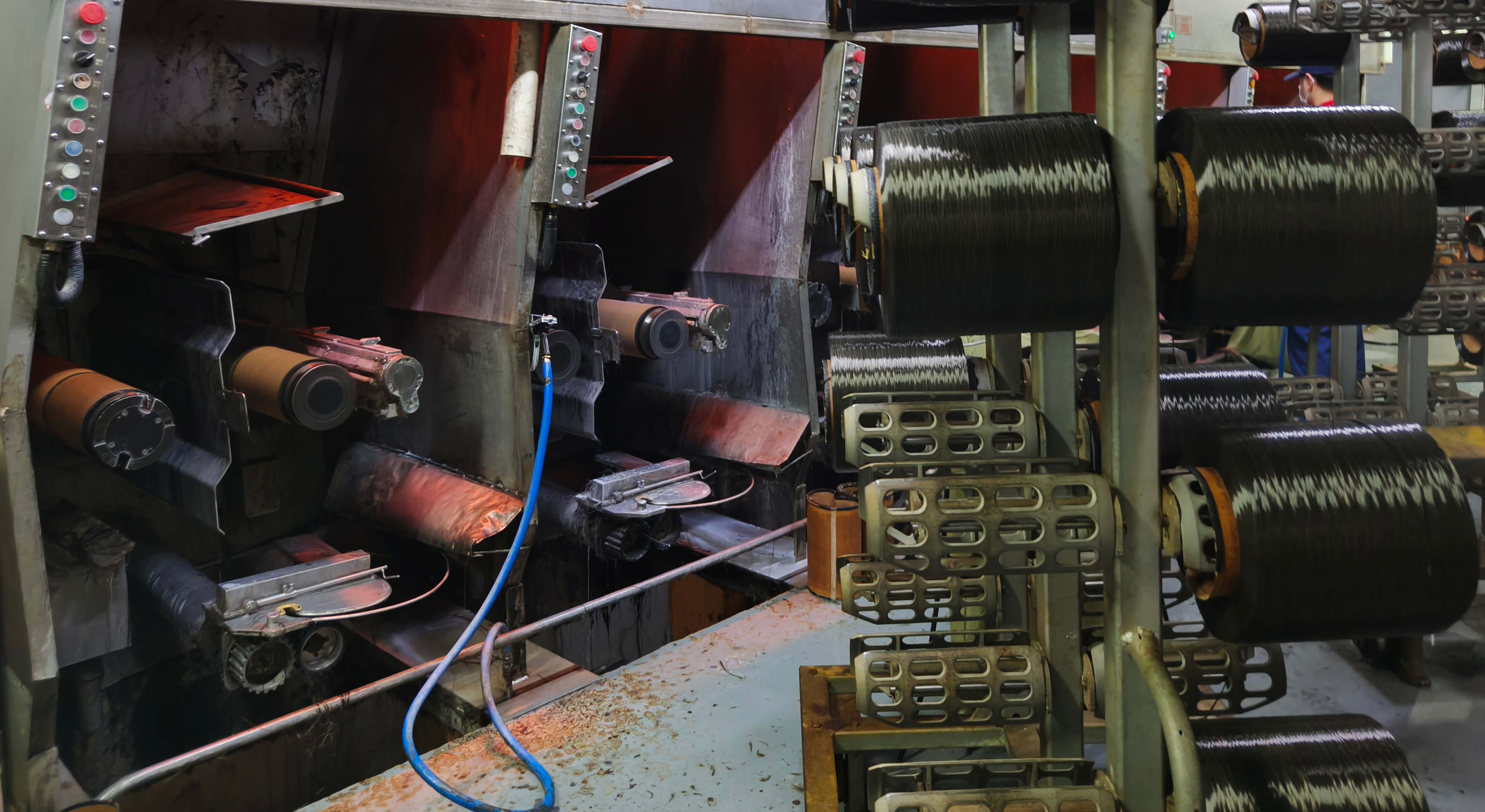
Produced by melting natural Basalt Rock at temperatures ranging from 1,450°C to 1,500°C and drawing it into fibers, this novel inorganic material boasts a multitude of advantages—including lightweight strength, weather resistance, corrosion resistance, and eco-friendliness—that are currently fueling a materials revolution in the drone and robotics industries. Today, let’s uncover its hidden capabilities!
Empowering Drones: Traveling Light for Breakthroughs in Endurance and Payload Capacity
For drones, "weight" directly dictates flight endurance and payload capacity—a core challenge that has long plagued the industry. The advent of basalt fiber offers a precise solution to this persistent dilemma.
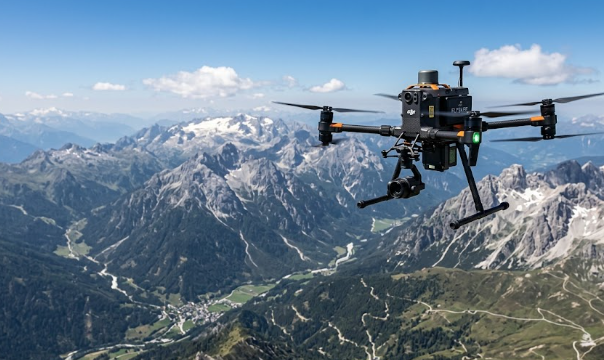
Ranked as the fourth major high-tech fiber—following carbon fiber and aramid—basalt fiber composites possess a density just one-quarter that of steel. When used to fabricate drone components such as fuselages, wings, and propellers, this material enables significant weight reduction while simultaneously maintaining structural integrity. The "Tianxuan Wing" hydrogen-electric drone, for instance, incorporates basalt fiber in 30% of its construction. This design achieves exceptional performance metrics: a takeoff weight of 30 kg and a payload capacity of 10 kg. Highly adaptable for critical applications—such as fire prevention, flood control, and power line inspection—the aircraft has already garnered inquiries from numerous clients. Another model, the "HongHu-140" drone, further demonstrates the power of basalt fiber composites; boasting a maximum takeoff weight of 130 kg and a payload capacity of 30 kg, it achieves a flight endurance of over four hours while cruising at speeds between 100 and 120 km/h.
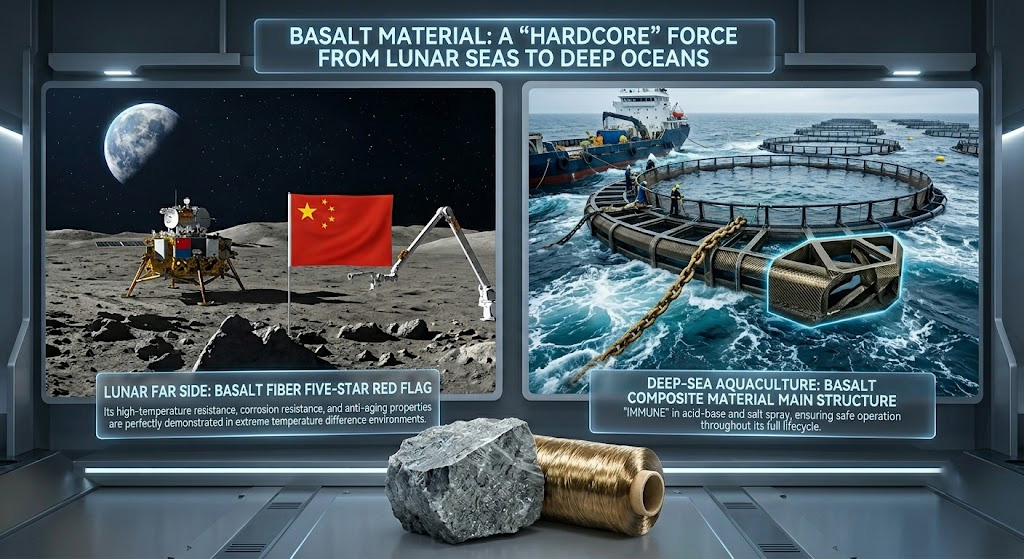
Beyond the advantages of lightweight design, the inherent durability and ruggedness of basalt fiber also enable drones to perform effectively in a wider range of extreme operating environments. It operates stably across a wide temperature range of -200°C to 600°C and exhibits exceptional resistance to acids, alkalis, and salt spray. Even when deployed in harsh environments—such as offshore oil and gas platforms or mining ruins—it effectively safeguards internal electronic components, thereby extending their operational lifespan. In the context of emergency monitoring within high-risk zones, drones equipped with basalt fiber composite casings not only achieve a weight reduction of 40% to 50% but also boast outstanding explosion-proof and corrosion-resistant properties. In scenarios such as chemical plant leak detection and mine collapse rescue operations, these drones have successfully completed deployment within five minutes and precisely pinpointed hazard sources within 15 minutes—all without a single human casualty.
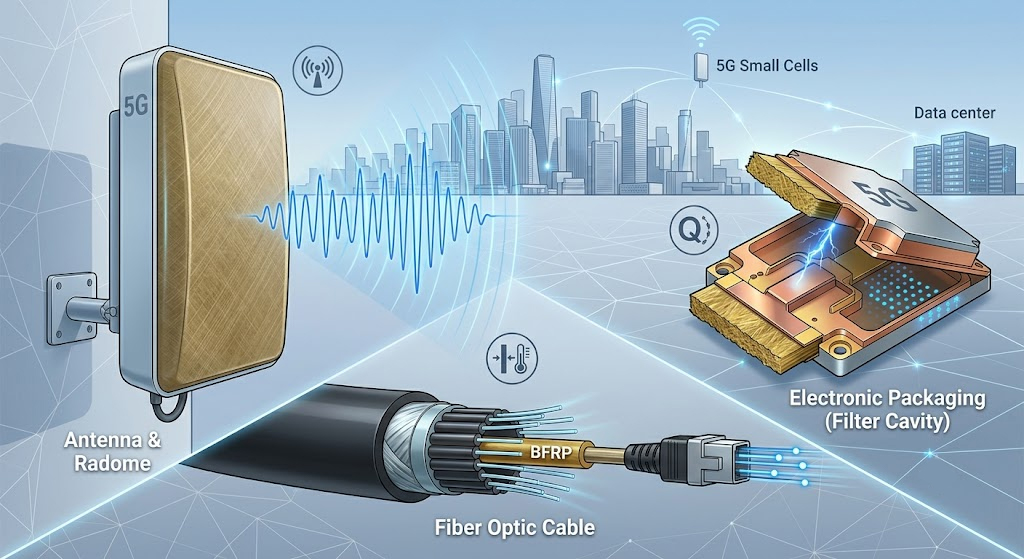
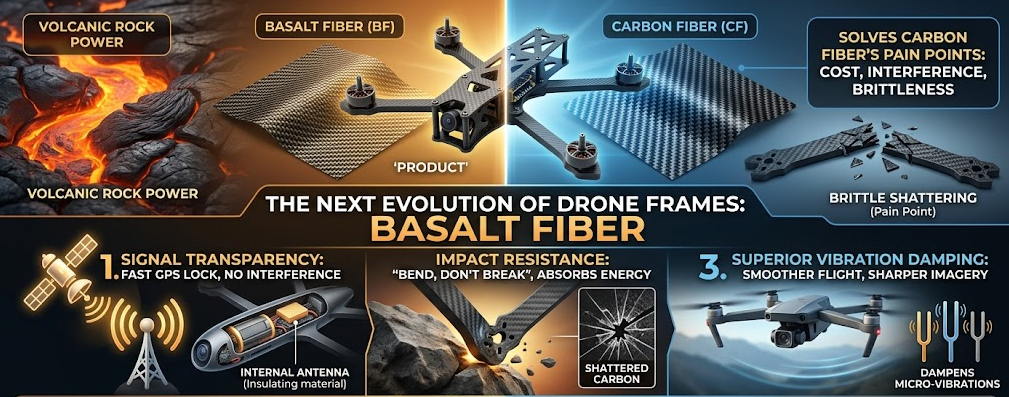
Furthermore, basalt fiber possesses unique dielectric and electromagnetic wave-transparent properties. This offers distinct advantages in the manufacturing of critical components—such as drone radomes and 5G antenna covers—effectively enhancing the drone's anti-interference capabilities and ensuring stable data transmission. Compared to expensive carbon fiber, basalt fiber costs only one-tenth to one-seventh as much; this significant cost-performance advantage makes it a premium alternative to carbon fiber within the drone industry.

Empowering Robotics: Precision, Efficiency, Durability, and Eco-Friendliness Combined
In the field of robotics, basalt fiber also demonstrates immense potential for application. It performs particularly well in specialized niches—such as smart healthcare and industrial inspection—where the demands for lightweight design and structural stability are exceptionally high.
In the realm of smart healthcare robotics, basalt fiber composites are utilized to fabricate key components for intelligent wheelchairs and assistive braces. This not only significantly reduces the weight of the equipment—thereby enhancing its portability—but also leverages the material's superior mechanical properties to ensure structural integrity and durability, better meeting the specific needs of the elderly and individuals with mobility impairments. For industrial robots that require frequent movement and operation, lightweight basalt fiber components help reduce energy consumption while boosting motion agility and response speed. Additionally, the material's exceptional resistance to aging and corrosion minimizes wear and tear on equipment operating in harsh industrial environments, thereby lowering maintenance costs.
The eco-friendly nature of basalt fiber stands out as one of its most compelling features. Unlike traditional materials, the production of basalt fiber generates virtually no "three wastes" (waste gas, waste water, or solid waste). Furthermore, once a product reaches the end of its lifecycle, the material can naturally biodegrade within the environment, ensuring absolutely no environmental pollution. Amidst the global trend toward green development, this eco-friendly material undoubtedly offers a new direction for the sustainable growth of the robotics industry.