


Basalt Fiber Industry Achieves High-End Breakthroughs Driven by Quality Standards
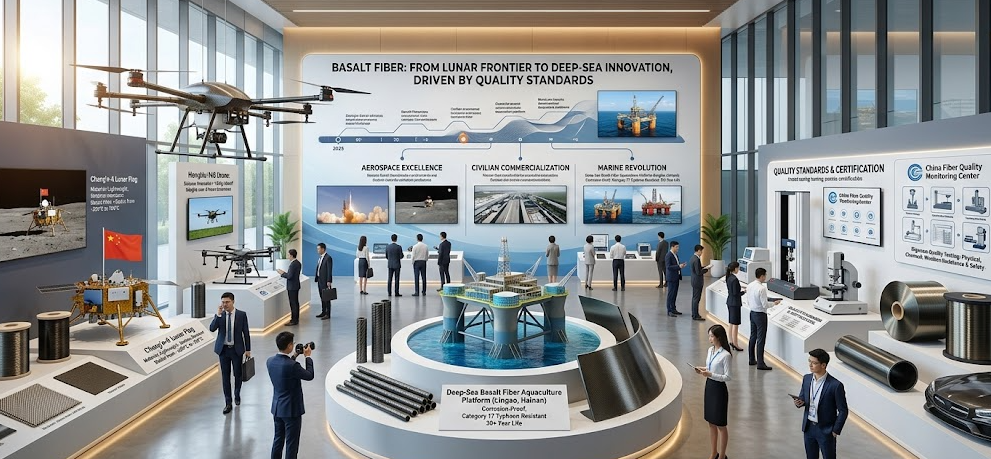
Recently, with the successful realization of major applications—such as the Chang'e-6 lunar exploration mission and the world's first deep-sea basalt fiber aquaculture platform—basalt fiber is rapidly accelerating its transformation from a laboratory research outcome into a strategic new material with tangible industrial productivity. Possessing the combined advantages of being eco-friendly, low-carbon, lightweight, high-strength, weather-resistant, and corrosion-proof, basalt fiber is now—bolstered by a comprehensive system of quality monitoring and standards—achieving breakthroughs in Aerospace-grade applications and widespread commercialization in civilian sectors, thereby continuously enhancing the industry's overall competitiveness.
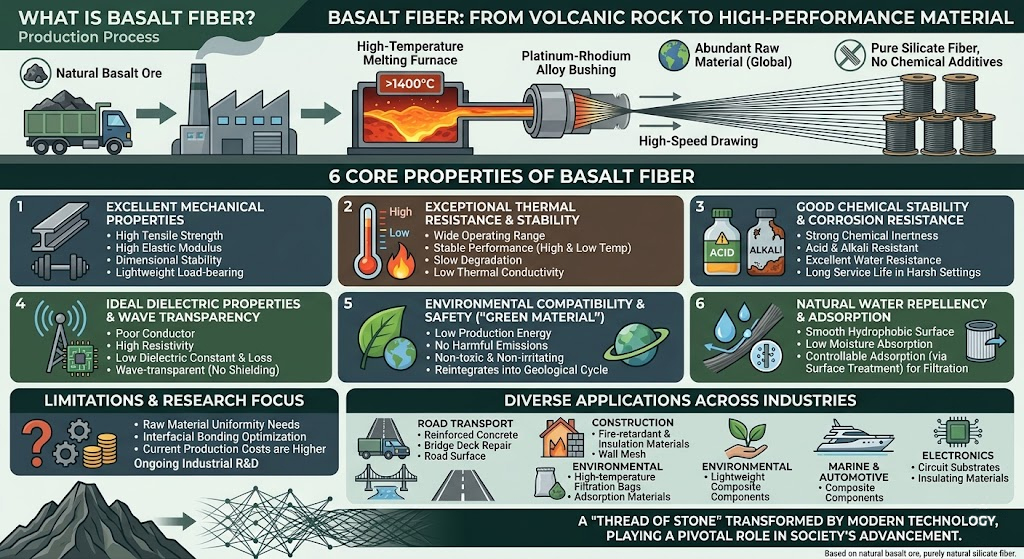
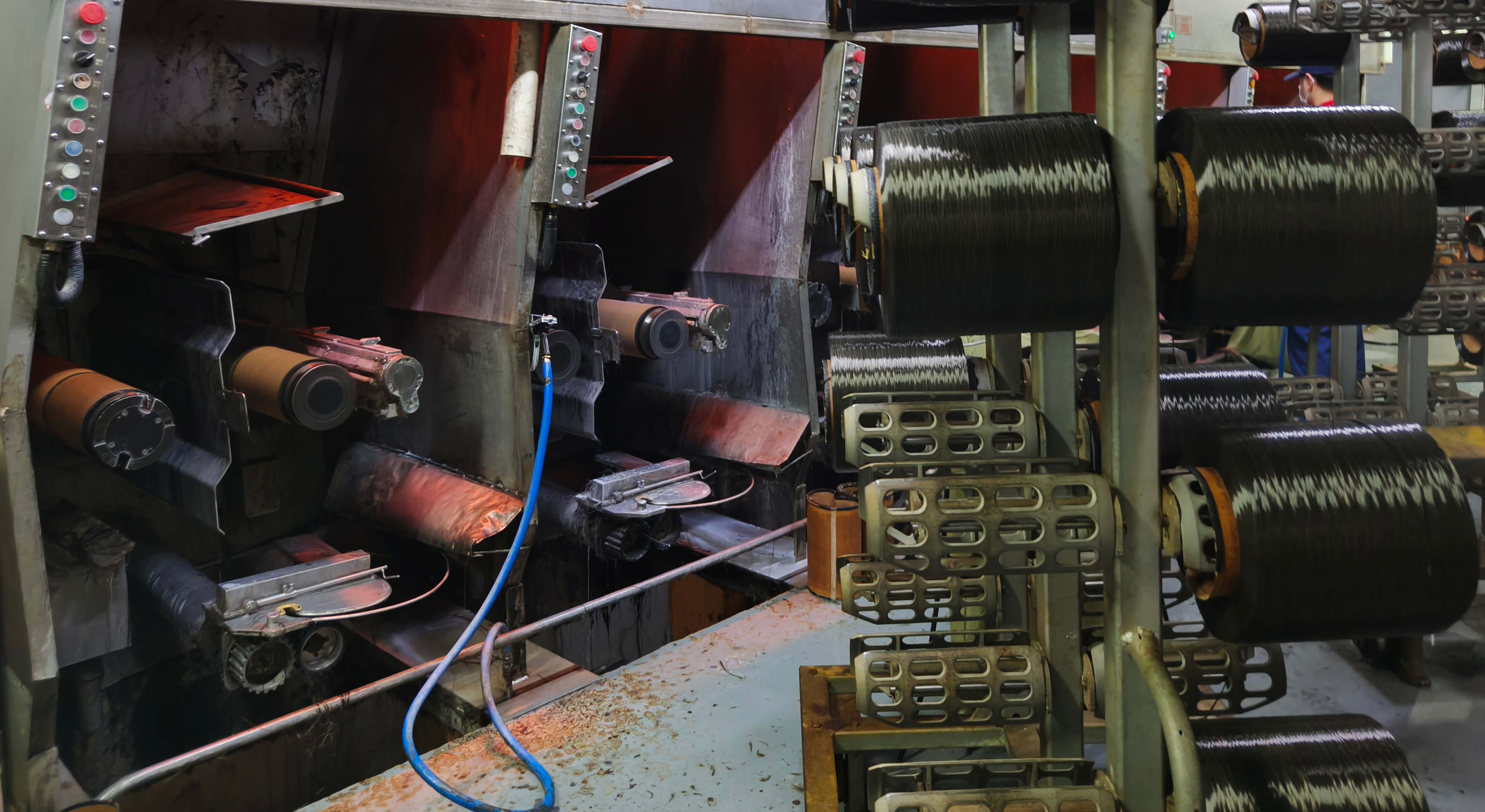
Basalt fiber is a high-performance inorganic fiber material produced from natural basalt ore. It boasts outstanding characteristics such as stability across a wide temperature range, radiation resistance, corrosion resistance, and eco-friendliness. Designated as a strategic green new material for priority national development, it is widely applicable across critical sectors including aerospace, marine engineering, high-end equipment manufacturing, and new energy. It stands as one of the core materials supporting the transformation and upgrading of my country's manufacturing industry, as well as the implementation of its environmental protection strategies.
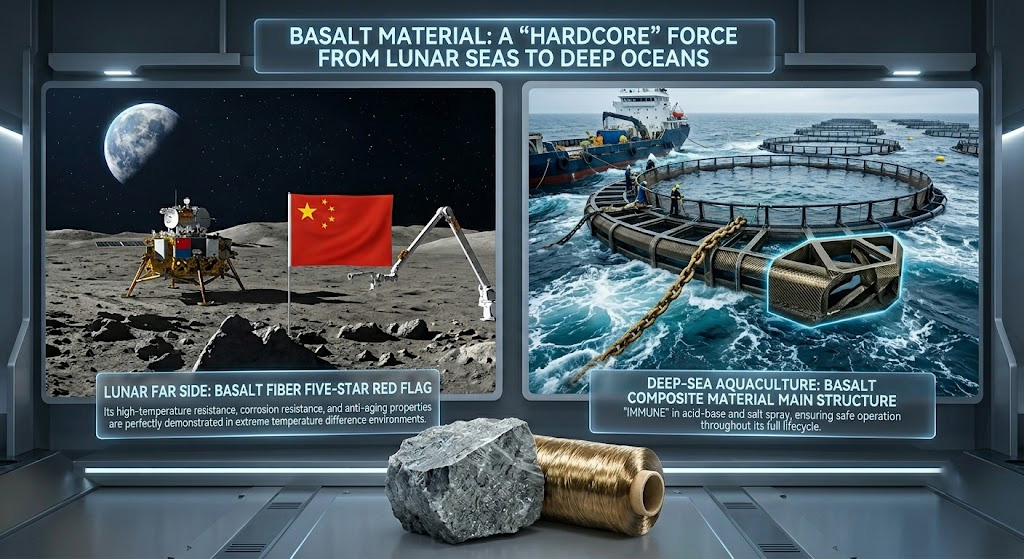
In June 2025, the Chang'e-6 probe successfully completed its mission to collect samples from the far side of the Moon and return them to Earth; notably, a lightweight national flag carried aboard the probe's lander was successfully unfurled on the lunar surface. The core threads used to manufacture this flag—which weighed a mere 11.3 grams—were made from domestically produced, high-performance basalt fiber material. This material maintains stable performance across an extreme temperature range of -269°C to 700°C and possesses exceptional resistance to space radiation and corrosion, making it perfectly suited to the complex and harsh operating conditions found on the lunar surface.
According to technical experts from the China Fiber Quality Monitoring Center, the Chemical composition of basalt ore is highly similar to that of lunar soil, making it inherently compatible with extreme extraterrestrial environments. This successful application represents not only a monumental breakthrough for domestically produced basalt fiber materials in aerospace-grade scenarios—thereby breaking the nation's reliance on foreign sources for high-end specialty fiber materials—but also accumulates vital practical experience for my country's future efforts in the in-situ utilization of extraterrestrial resources. Furthermore, it marks the official entry of my country's independently developed high-performance fiber materials into the ranks of top-tier national strategic applications.
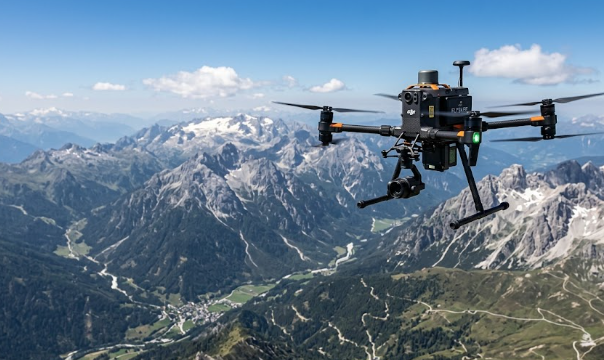
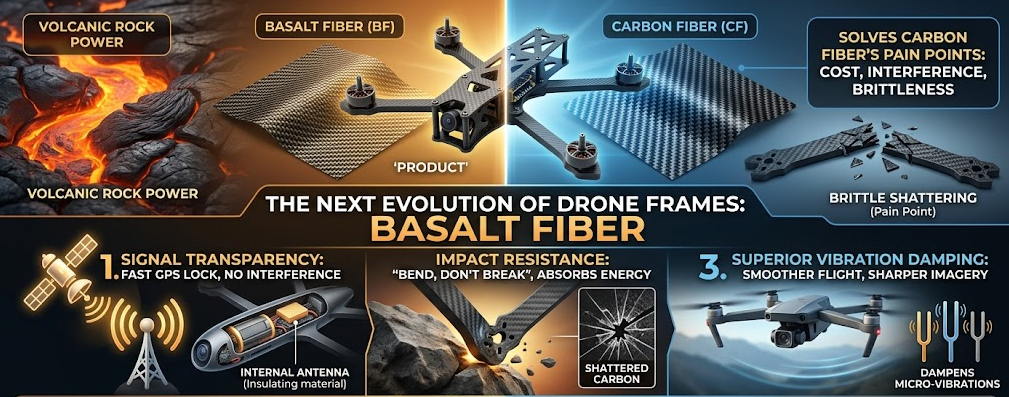
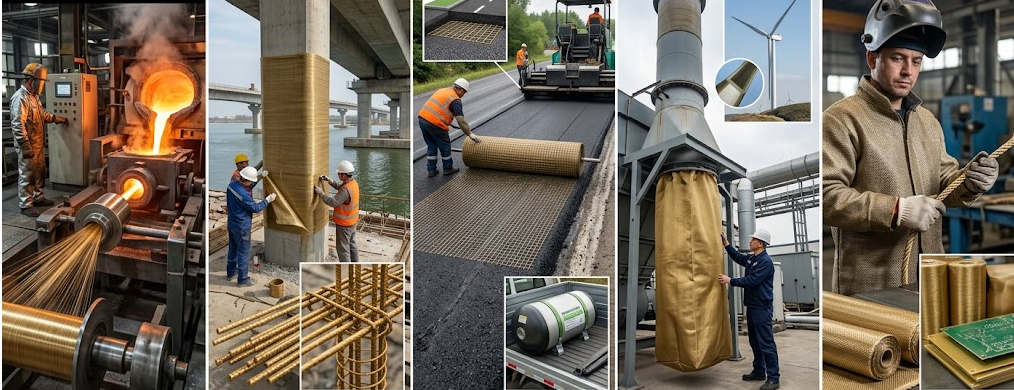
While continuing to deepen its engagement in the high-end aerospace sector, the basalt fiber industry is simultaneously accelerating the commercialization and large-scale application of its products in civilian markets. Leveraging its advantages in both cost-effectiveness and high performance, basalt fiber is emerging as a pivotal supporting material for the lightweighting of equipment and the green upgrading of engineering projects. In the field of high-end equipment, basalt fiber composites boast a density just one-quarter that of steel and a cost significantly lower than that of carbon fiber, offering distinct advantages in terms of lightweight design and economic efficiency. The "HongHu-140" drone—developed by an enterprise in Sichuan—utilizes a fuselage and propeller structure made of basalt fiber, achieving a maximum takeoff weight of 130 kilograms and an endurance exceeding four hours. It is now widely deployed in public welfare sectors such as agricultural plant protection, power line inspection, and emergency rescue operations.
In the realm of marine engineering, December 2025 marked the official launch of the world's first deep-sea aquaculture floating platform constructed from basalt fiber composites in Lingao, Hainan. Weighing only one-third as much as traditional steel platforms, this innovative structure is capable of withstanding super typhoons of Category 17 intensity and boasts a designed service life exceeding 30 years. It effectively resolves critical issues associated with traditional marine equipment—such as corrosion, aging, high maintenance costs, and poor wind resistance—thereby offering a novel technical solution for the green, low-carbon, safe, and efficient development of the modern marine fishery industry.
The clustered development of industrial ecosystems serves as a robust foundation for the practical application of technologies and the expansion of usage scenarios. As a leading domestic hub for the integrated research, development, and production of basalt fiber, Sichuan has established a comprehensive industrial ecosystem comprising "industrial research institutes + upstream and downstream supporting enterprises + hundreds of distinct end-use products." This value chain spans the entire spectrum from raw material preparation and composite material processing to final product application. Relevant products have been successfully deployed in key national projects—such as the Chengdu Tianfu International Airport and large-scale photovoltaic bases in Xinjiang—continuously amplifying the industry's demonstration effect.
The high-quality development of any industry is inextricably linked to the rigid support and precise empowerment provided by a robust quality standard system. As the authoritative technical institution responsible for fiber quality monitoring in my country, the China Fiber Quality Monitoring Center remains steadfastly focused on addressing the industry's critical pain points and meeting the demands of high-end applications within the basalt fiber sector. By fully leveraging its roles in quality leadership, standards empowerment, and technical support, the Center continuously refines its testing and evaluation systems for key performance indicators—including physical properties, chemical stability, weather resistance, and safety—thereby bridging gaps in industry standards and regulating production quality levels. Ultimately, this provides a solid foundation of quality assurance and technical support for the industry's technological iteration, product upgrading, and application expansion.