You know, as cities keep growing and our populations swell, the world of urban infrastructure is really stepping up its game—especially when it comes to bridges. Looking ahead to 2025, we’re definitely going to see some pretty exciting progress in Bridge Construction. These structures aren’t just pretty landmarks; they’re absolutely vital for safety and longevity, and it’s more important than ever to get them right. After all, a sturdy bridge isn’t just about technical specs — it’s about protecting the folks who rely on them every day.
As we gear up for 2025, folks like engineers, project managers, and construction companies really need to buckle down on best practices. That means using innovative materials, leveraging new tech, and doubling down on inspections to catch potential issues early. Collaboration is also key—getting government folks, local communities, and everyone involved on the same page helps make sure safety and quality stay front and center.
All in all, this isn’t just about the nuts and bolts of how we build bridges. It’s also about taking a proactive, informed approach—thinking ahead and planning wisely. Building resilient, reliable bridges in the future isn’t something one person can do alone; it’s about a shared commitment to doing things right and choosing sustainable practices that really make a difference for society as a whole.

Bridge Construction Safety Standards: Current Guidelines for 2025
In 2025, bridge construction safety standards will significantly focus on integrating advanced technology and rigorous guidelines to ensure the highest levels of safety and quality. According to the latest report from the American Society of Civil Engineers (ASCE), infrastructure investments must prioritize not only the strength and durability of materials but also adhere to updated safety protocols. These protocols emphasize regular inspections, the use of high-performance composites, and innovative monitoring systems that can detect structural weaknesses in real-time, which contribute to a substantial reduction in accidents during and after construction.
To improve safety in bridge construction, it's crucial to implement a safety management system that aligns with current best practices. This includes conducting thorough risk assessments and engaging in continuous training for all personnel involved in the project. Encouraging a culture of safety can lead to more effective communication about hazards and proper procedures.
Tips for ensuring safety in bridge construction:
1. Prioritize the adoption of smart technologies like drones and sensors for regular monitoring of construction sites to identify potential safety issues early on.
2. Foster an inclusive safety culture by involving all team members in safety meetings and discussions, allowing for a diverse range of perspectives and solutions.
3. Ensure that all equipment is regularly maintained and inspected to prevent operational failures that could jeopardize worker safety or project integrity.
How to Ensure Safety and Quality in Bridge Construction in 2025 - Bridge Construction Safety Standards: Current Guidelines for 2025
| Guideline Category | Description | Compliance Requirement | Inspection Frequency | Responsible Party |
| Material Quality | Ensure all materials meet specified safety and quality standards. | Mandatory testing and certification. | Before construction begins and quarterly thereafter. | Material Supplier |
| Design Review | Review and approval of bridge design by qualified engineers. | Submission of design documents and modifications. | At design completion and any significant modification. | Design Engineer |
| Safety Training | Training for all personnel on safety protocols and emergency procedures. | Completion of safety training program. | Before starting work and annually thereafter. | Construction Manager |
| Site Inspections | Regular inspections to ensure compliance with safety and construction standards. | Daily inspections and detailed reports. | Daily | Site Supervisor |
| Quality Assurance | Implement a quality assurance program to monitor construction processes. | Regular audits and testing phases. | Bi-monthly | Quality Control Officer |
Emerging Technologies in Bridge Engineering: Enhancing Quality and Safety
In the realm of bridge construction, ensuring safety and quality is paramount. Emerging technologies play a pivotal role in enhancing these aspects, with innovations such as advanced materials, real-time monitoring systems, and artificial intelligence revolutionizing traditional practices. For instance, the incorporation of smart sensors allows for continuous monitoring of structural integrity, detecting potential issues before they escalate into serious problems. These sensors can provide invaluable data regarding stress levels, temperature changes, and even vibrations, ensuring that maintenance can be performed proactively.
Tips for implementing these technologies include investing in ongoing training for engineers and construction teams to familiarize them with new tools and methodologies. Additionally, fostering collaboration between technology providers and construction firms can lead to more effective integration of innovations.
Another critical aspect is to prioritize continuous assessment and adaptation of safety protocols, ensuring that they evolve alongside emerging technologies.
Moreover, the use of 3D modeling and simulation software can facilitate better planning and visualization of bridge projects. This technology not only saves time and resources but also minimizes risks by allowing project managers to foresee potential challenges and address them in the design phase. Embracing these cutting-edge technologies will undoubtedly enhance the overall quality and safety of bridge construction, paving the way for more resilient infrastructure in the years to come.
The Role of Material Quality in Ensuring Safe Bridge Structures
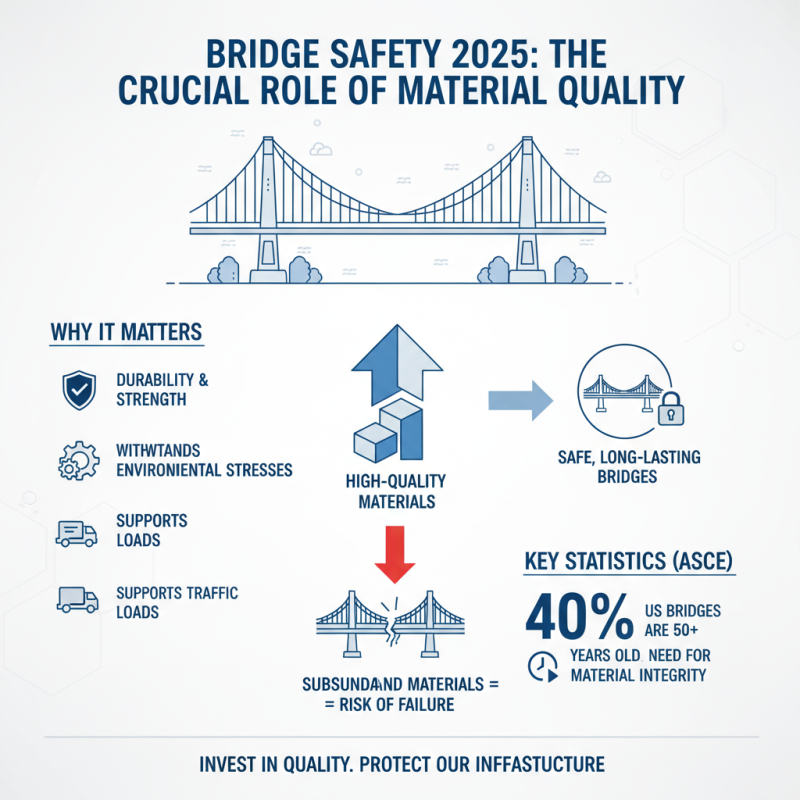
The role of material quality in ensuring safe bridge structures cannot be overstated, especially as we approach the challenges of bridge construction in 2025. High-quality materials are vital for creating Durable structures that can withstand environmental stresses, traffic loads, and the test of time. According to the American Society of Civil Engineers (ASCE), about 40% of bridges in the United States are at least 50 years old, necessitating a significant focus on material integrity to extend their lifespan and ensure safety. Substandard materials can lead to structural failures, increasing the risk of accidents and costly repairs.
Recognizing the importance of material quality, a study from the Federal Highway Administration emphasizes that using advanced materials such as high-performance concrete and weathering steel can significantly enhance a bridge's resilience and longevity. These materials have been shown to reduce maintenance needs by up to 30% over a structure’s lifecycle. Furthermore, innovative techniques like corrosion-resistant coatings can triple the lifespan of steel elements in challenging environments. Ensuring these high standards of material quality not only helps in constructing safer bridges but also results in long-term economic benefits by minimizing repair costs and downtime. As we look forward to 2025, the meticulous selection and use of superior materials will be crucial for the future of safe and efficient bridge construction.
Impact of Sustainability Practices on Bridge Safety and Longevity
In 2025, the integration of sustainability practices in bridge construction presents a pivotal opportunity to enhance both safety and longevity. Sustainable materials, such as recycled steel and eco-friendly concrete, demonstrate significant potential for improving structural integrity while reducing environmental impact. These materials often exhibit superior durability, which is crucial for the long-term stability of bridges exposed to varying environmental conditions. By prioritizing sustainable choices, engineers can create infrastructures that not only last longer but also maintain safety standards throughout their lifespan.
Furthermore, the design and construction processes can benefit from advanced technologies like Building Information Modeling (BIM) and Life Cycle Assessment (LCA). Employing these methodologies enables engineers to simulate the entire lifecycle of a bridge, evaluating its performance under different scenarios and identifying potential failure points before construction begins. This proactive approach ensures that sustainability is woven into the very fabric of bridge design, addressing both safety concerns and resource management. In doing so, the bridge construction industry can move towards a future where infrastructure is resilient, environmentally responsible, and fundamentally secure, paving the way for smarter cities and safer transit networks.
Data-Driven Approaches: Using AI for Predictive Maintenance in Bridges
The use of artificial intelligence (AI) in bridge construction and maintenance has emerged as a vital strategy for enhancing safety and quality standards, especially in the context of increasing infrastructure demands by 2025. Predictive maintenance, powered by AI, allows engineers to analyze vast amounts of data generated by sensors embedded in bridges, helping to foresee potential failures before they occur.
According to a report by the American Society of Civil Engineers, about 42% of bridges in the United States are over 50 years old, which necessitates advanced maintenance solutions to mitigate risks associated with aging infrastructure.
Furthermore, a study published in the Journal of Infrastructure Systems highlights that AI-driven predictive analytics can reduce maintenance costs by up to 30% while extending the lifespan of critical structures. By continuously monitoring structural health through real-time data collection, AI algorithms can identify degradation patterns that may not be visible during standard inspections. This proactive approach not only enhances safety but also ensures a more efficient allocation of resources, ultimately improving the quality of bridge infrastructure.
As the construction industry moves towards data-driven methodologies, the integration of AI into predictive maintenance practices will be crucial. The National Bridge Inventory data reveals that over 7% of bridges currently require immediate repair, emphasizing the urgency for implementing such innovative solutions. By 2025, leveraging AI in bridge maintenance will not only ensure the longevity of these structures but also protect public safety and investment in infrastructure.
Training and Certification Standards for Bridge Construction Workers
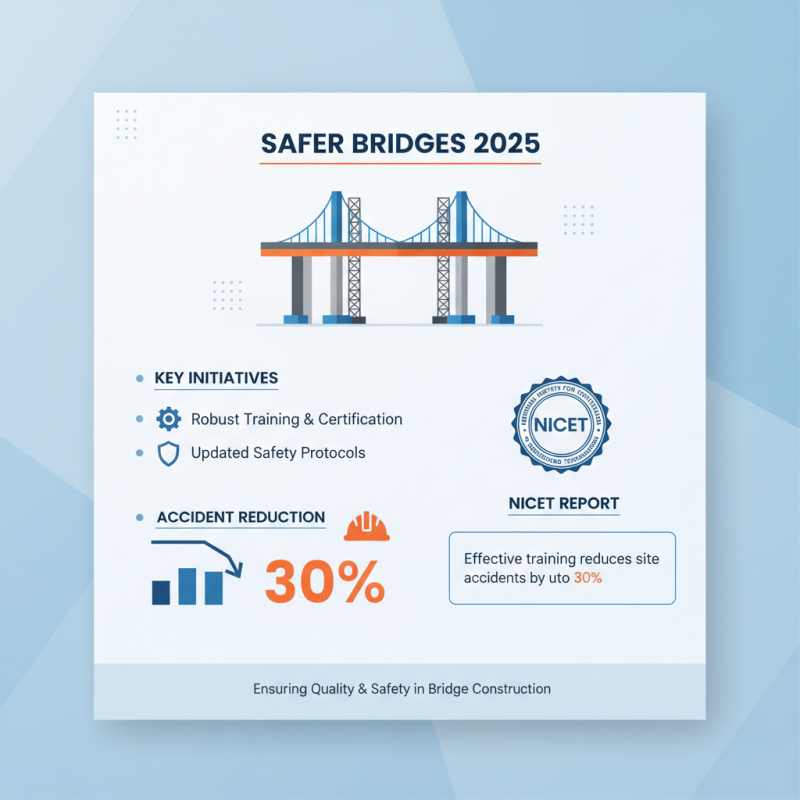
In 2025, ensuring safety and quality in bridge construction hinges significantly on robust training and certification standards for construction workers. According to a recent report by the National Institute for Certification in Engineering Technologies (NICET), effective training can reduce construction site accidents by up to 30%. This statistic underscores the necessity for comprehensive educational programs tailored specifically for bridge construction. Training should encompass not only the technical skills required for construction but also emphasize safety protocols that adhere to updated industry standards.
Moreover, the construction industry is increasingly moving towards standardized certification processes to affirm the competency of workers. A study published by the American Society of Civil Engineers (ASCE) indicates that certified workers demonstrate a 40% higher adherence to safety regulations compared to their non-certified counterparts. Implementing uniform certification standards across the industry ensures that all workers possess the essential skills to manage the complexities and risks associated with bridge construction, thereby enhancing overall project quality and safety. The focus on continuous professional development will also prepare workers to adapt to evolving technologies and methodologies in the field, contributing to more resilient infrastructure.
Regulatory Framework: Compliance with National and International Safety Codes
In bridge construction, adhering to regulatory frameworks that comply with both national and international safety codes is paramount for ensuring safety and quality. Effective regulation not only safeguards structural integrity but also protects the lives of workers and the public. Countries often develop their codes based on recognized international standards, ensuring a harmonized approach to safety that can significantly reduce risks associated with construction activities. By following these established guidelines, construction teams can effectively mitigate potential hazards throughout the project lifecycle.
**Tips for Compliance:** Familiarize yourself with both local codes and standards set by international bodies such as the International Organization for Standardization (ISO) to ensure comprehensive coverage of safety regulations. Regular training sessions for workers regarding these standards can help reinforce compliance and make safety an integral part of the bridge construction culture.
Moreover, continuous monitoring and inspection of the construction site are vital. Implementing periodic audits can help identify any deviations from established safety codes early on, allowing for corrective measures to be taken before issues escalate. Regularly updating safety protocols to align with evolving regulations not only enhances safety but also fosters a reputation for high-quality construction practices within the industry.
Bridge Construction Safety and Quality Compliance Data (2025)
Innovative Utilization of Basalt Reinforcing Bars: A Data-Driven Analysis of Their Impact on Infrastructure Resilience and Longevity
The innovative utilization of basalt reinforcing bars (rebars) is revolutionizing infrastructure projects by significantly enhancing resilience and longevity. These rebars are crafted from continuous spiral ribbing of basalt strips, treated with a highly durable polymeric compound, rendering them exceptionally resistant to corrosion and aggressive chemical substances. This inherent durability showcases a remarkable advantage over traditional materials, as studies indicate that constructions incorporating basalt rebars exhibit a lifespan that greatly exceeds similar structures utilizing conventional reinforcing materials. For instance, research highlights that structures with basalt reinforcement can last up to 50% longer, effectively shifting the paradigm of material selection in civil engineering.
The lightweight nature of basalt rebars not only simplifies transportation and installation but also contributes to overall structural efficiency. This advantage aligns with a growing emphasis on sustainability in construction practices, as lighter materials facilitate reduced resource consumption during both the construction phase and in long-term structural maintenance. Data from industry reports indicate that the incorporation of basalt materials can reduce life-cycle costs by as much as 30%, due to diminished repair and replacement needs over time.
Furthermore, the data-driven analysis of basalt rebars reveals the potential for enhanced resilience against harsh environments, which is increasingly vital in the context of climate change and extreme weather events. As cities face mounting challenges related to infrastructure durability, the strategic implementation of basalt rebar not only meets current engineering standards but also sets a new benchmark for future-proof construction methodologies. The findings underscore a transformative shift in how construction professionals can approach resilience and sustainability in their projects, ultimately leading to safer and more enduring infrastructure solutions.
FAQS
: In 2025, key focuses include integrating advanced technology, adhering to updated safety protocols, conducting regular inspections, using high-performance materials, and implementing innovative monitoring systems to detect structural weaknesses in real time.
A safety management system can improve safety by aligning with best practices, conducting thorough risk assessments, and ensuring continuous training for all personnel, which fosters effective communication about hazards and proper safety procedures.
AI enhances bridge maintenance by enabling predictive maintenance through data analysis from sensors, allowing engineers to foresee potential failures, thereby reducing maintenance costs, extending structure lifespans, and improving safety.
The use of smart technologies, such as drones and sensors, allows for regular monitoring of construction sites to identify potential safety issues early, thereby enhancing overall safety on-site.
Effective training can reduce construction site accidents by up to 30% by ensuring that workers are knowledgeable about technical skills and safety protocols specific to bridge construction.
Certification standards are important as they affirm workers' competency, with studies showing that certified workers demonstrate significantly higher adherence to safety regulations compared to non-certified counterparts.
Continuous professional development prepares workers to adapt to evolving technologies and methodologies, contributing to safer practices and more resilient infrastructure projects.
Regular maintenance and inspections help identify and address structural issues before they lead to failures or accidents, thereby ensuring the safety of both workers and the public.
Predictive analytics can reduce maintenance costs by up to 30%, improve resource allocation, and enhance the identification of degradation patterns that may be undetectable during regular inspections.
Fostering an inclusive safety culture allows for diverse perspectives and solutions in safety discussions, leading to more effective communication and proactive risk management on construction sites.
Conclusion
In the realm of Bridge Construction, ensuring safety and quality is paramount as we approach 2025. Current guidelines emphasize adherence to established safety standards that govern the construction process, while emerging technologies play a crucial role in enhancing both quality and safety. The selection of high-quality materials remains a vital factor in creating safe and durable bridge structures, and the integration of sustainability practices contributes positively to the longevity of these infrastructures.
Moreover, the advent of data-driven approaches, particularly the application of AI for predictive maintenance, is set to revolutionize the way we monitor bridge health over time. Training and certification standards for construction workers are essential to maintaining a skilled workforce, while regulatory frameworks ensure compliance with both national and international safety codes. By combining these elements, the future of Bridge Construction can be navigated with safety and quality as top priorities.