Leave Your Message
0%

These days, in our fast-changing industrial world, there’s a real push for Durable materials. Companies across different industries are starting to see how much product longevity and performance depend on resisting wear and tear. This has really pushed

Top 2025 Abrasion Resistance Materials for Durability and Performance

Current Trends in Abrasion Resistance Materials for 2025

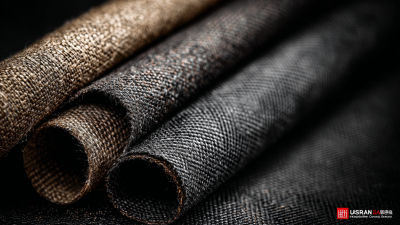
As we move toward 2025, the field of Abrasion Resistance materials is rapidly evolving, driven by advancements in technology and the increasing demand for high-performance applications. One major trend is the development of compositesthat combine multiple materials to enhance durability while minimizing weight. These innovative composites leverage the strengths of different substances, ensuring that they can withstand harsh environments, resist wear and tear, and improve overall performance in industries ranging from Construction to automotive manufacturing.

Another significant trend is the implementation of sustainable practices in the production of abrasion-resistant materials. With a growing emphasis on environmental responsibility, manufacturers are exploring bio-based alternatives and recycling methodologies that reduce waste while maintaining material efficacy. This shift not only contributes to sustainability efforts but also pushes the boundaries of what can be achieved with traditional materials, leading to breakthroughs in longevity and efficiency. As a result, the industry is likely to see a rise in eco-friendly products that do not compromise on performance but rather enhance it through innovative engineering solutions.

Key Properties that Define Abrasion Resistance in Materials

The ability of a material to resist wear and tear, known as abrasion resistance, is crucial in determining its durability and performance across various applications. Several key properties define abrasion resistance, with hardness being one of the most significant. Hardness refers to a material's resistance to deformation or penetration, making it essential in environments where friction and impact are prevalent. Materials with high hardness levels typically demonstrate superior performance in applications such as flooring, protective coatings, and industrial components.

Another critical property influencing abrasion resistance is toughness. This term describes a material's ability to absorb energy and withstand sudden impact without fracturing. Toughness is particularly important for materials used in construction and heavy machinery, where unexpected loads can occur. Additionally, the microstructure of a material, including factors like grain size and distribution, can significantly affect its abrasion resistance. Fine-grained materials often exhibit improved wear resistance, as their microstructural features can impede the movement of wear particles during abrasion, leading to longer-lasting performance in demanding situations.

Top 2025 Abrasion Resistance Materials for Durability and Performance

Top Industries Utilizing Advanced Abrasion Resistance Materials

Top 2025 Abrasion Resistance Materials for Durability and Performance

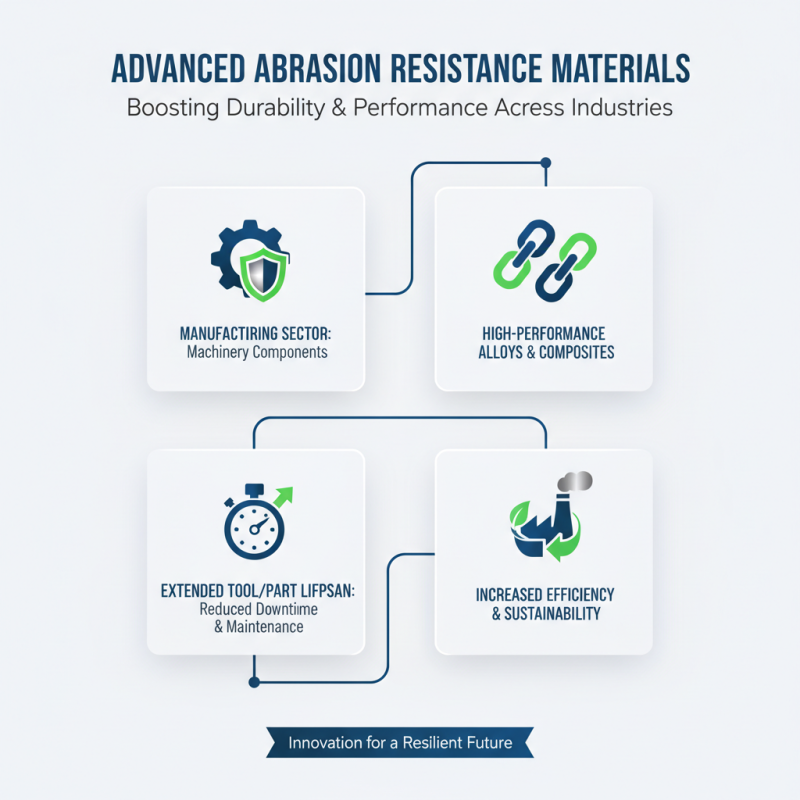
Advanced abrasion resistance materials are increasingly being utilized across various industries, driven by the need for durability and enhanced performance. In the manufacturing sector, these materials play a vital role in the production of machinery components that are subject to wear and tear. By incorporating high-performance alloys and composite materials, manufacturers can significantly extend the lifespan of critical tools and parts, leading to reduced downtime and maintenance costs. This not only improves efficiency but also supports sustainable practices by minimizing resource use.

The construction industry is another key area benefiting from the advancements in abrasion resistance materials. Equipment and machinery exposed to harsh conditions, such as heavy machinery or concrete mixers, require components that can withstand extreme wear. Utilizing high-strength polymers and reinforced materials ensures that these machines maintain their operational integrity, even in the most demanding environments. Additionally, the use of such materials in construction projects helps to meet increased safety standards and regulations, further enhancing performance and reliability on job sites.

Comparative Analysis of Leading Abrasion Resistant Materials

In the ever-evolving landscape of materials science, the demand for abrasion-resistant materials has escalated, particularly in industries such as manufacturing, construction, and transportation. A comparative analysis of leading abrasion-resistant materials reveals significant advancements in their durability and performance capabilities. According to the latest data from the Global Materials Research Group, the market for abrasion-resistant materials is projected to reach $25 billion by 2025, with an annual growth rate of 7.5%. This growth is driven by the increasing need for longevity in high-traffic applications.

Among the materials analyzed, ultra-high-molecular-weight polyethylene (UHMWPE) stands out due to its remarkable wear resistance and low friction properties. In a recent study published in the Journal of Materials Science, UHMWPE demonstrated a wear rate that was up to 20 times lower than that of traditional materials in abrasive environments. Similarly, ceramic matrix composites are gaining traction, particularly in applications requiring extreme resistance to wear and heat. A report from the Advanced Ceramics Association highlighted their potential to withstand temperatures exceeding 1,500°C while maintaining structural integrity under abrasive conditions.

Furthermore, steel alloys, particularly those enhanced with innovation in metallurgy processes, have shown significant improvements in performance metrics. An investigation by the Institute of Abrasion Studies revealed that modern alloy treatments can increase hardness by as much as 40% compared to conventional steel, leading to enhanced lifespan in abrasive applications. As industries continue to prioritize the durability of materials, these leading options will play a crucial role in shaping efficient and resilient production practices over the next few years.

Top 2025 Abrasion Resistance Materials for Durability and Performance

Material Abrasion Resistance (mg loss) Tensile Strength (MPa) Temperature Stability (°C) Applications
Polyurethane 40 25-30 -30 to 80 Conveyor belts, protective coatings
Ceramic Composites 20 300-400 200-1200 Aerospace, military applications
High-Density Polyethylene (HDPE) 60 20-35 -60 to 80 Pipes, industrial containers
Steel Alloys 15 500-700 -20 to 600 Construction, mining equipment
Aramid Fibers 30 400-600 -50 to 200 Body armor, ropes

Innovative Manufacturing Techniques for Enhanced Durability

Top 2025 Abrasion Resistance Materials for Durability and Performance

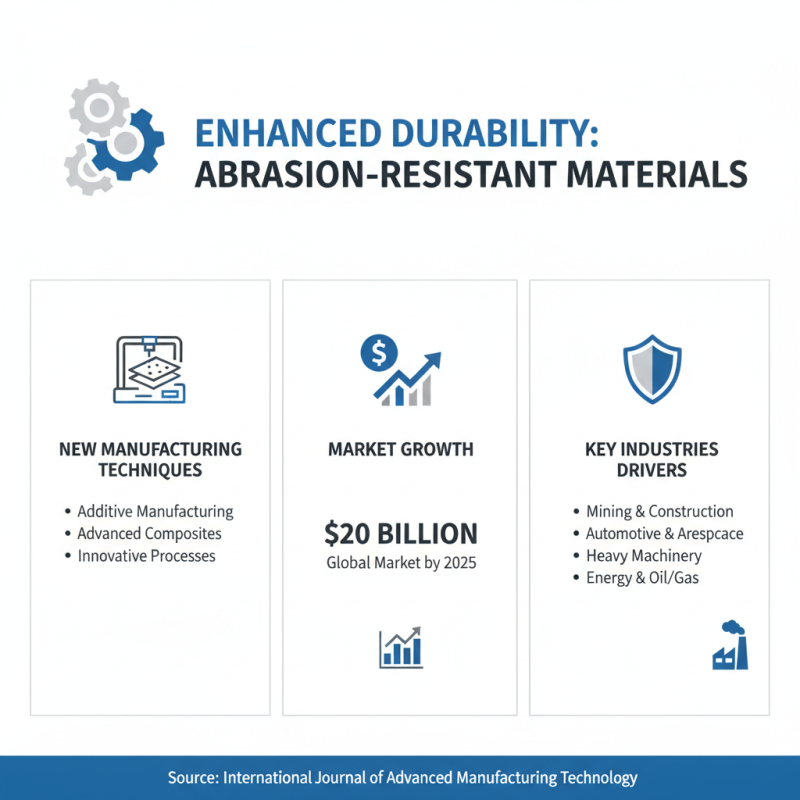
The pursuit of enhanced durability in abrasion-resistant materials has led to significant advancements in manufacturing techniques. Research indicates that innovative processes, such as additive manufacturing and advanced composites, are revolutionizing the way these materials are produced. According to a report by the International Journal of Advanced Manufacturing Technology, the global market for abrasion-resistant materials is expected to reach $20 billion by 2025, driven primarily by industries requiring robust performance under harsh conditions.

One prominent technique making waves in the industry is selective laser sintering (SLS), which enables the creation of complex geometries with optimized material distribution. This method not only increases the strength of the end product but also minimizes waste, addressing sustainability concerns. Additionally, the integration of nanotechnology to create hybrid materials has shown a remarkable increase in wear resistance, with some compounds exhibiting a 30% improvement in performance metrics compared to traditional materials, as reported by the Journal of Materials Science. These innovative manufacturing techniques are setting new standards for durability and performance, opening up new avenues for applications across various sectors, including automotive, aerospace, and construction.

Future Developments in Abrasion Resistance Technology

The continuous evolution in abrasion resistance technology is paving the way for advanced materials that promise enhanced durability and performance. Researchers are exploring new composites that combine lightweight characteristics with superior strength, offering improved resistance to wear and tear. These innovations are essential in industries ranging from aerospace to manufacturing, where the longevity of materials directly impacts operational efficiency and cost-effectiveness. The adoption of nanotechnology is also on the rise, enabling the development of coatings that provide exceptional protection against abrasives while maintaining minimal weight.

In addition to new material formulations, future developments are likely to include smart technologies that monitor and respond to wear in real time. This predictive maintenance approach could significantly extend the lifecycle of equipment and structures by alerting users to potential failures before they occur. Machine learning algorithms may also play a key role in optimizing designs based on performance data, allowing for tailored solutions that adapt to specific applications and environments. As these advancements unfold, the focus will remain on creating sustainable solutions that not only enhance durability but also address environmental concerns through responsible material sourcing and processing practices.

Case Studies: Successful Applications of Abrasion Resistant Materials

In the realm of engineering and manufacturing, the importance of abrasion-resistant materials cannot be overstated. Many industries have successfully implemented these materials to enhance product longevity and performance. For instance, in the mining sector, the use of high-performance ceramics has revolutionized the durability of equipment components. These ceramics withstand the harsh conditions of abrasive environments, reducing maintenance costs and downtime significantly. A notable case study highlighted the implementation of specialized liners in high-wear areas, which extended the lifespan of machinery by over 50%, showcasing a remarkable return on investment.

In the automotive industry, the adoption of advanced composite materials has proven vital for components exposed to wear and tear. A leading car manufacturer implemented a new composite for brake pads, which not only improved the wear characteristics but also offered better heat dissipation. This case demonstrates the potential for abrasion-resistant materials to improve safety and performance, ultimately leading to enhanced user satisfaction.

Tips: When selecting abrasion-resistant materials, consider the specific environmental conditions they will face. Conduct thorough testing under representative conditions to ensure optimal performance. Additionally, collaborating with experts in material science can provide insights into innovative solutions tailored to your application’s needs. Adopting a proactive approach in maintenance can also preserve the integrity and functionality of these advanced materials.

Revolutionizing Construction: The Benefits of Alkali Resistance Basalt Chopped Strands for Enhanced Structural Integrity

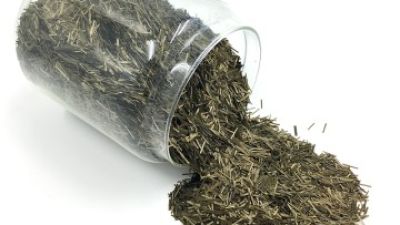
Alkali Resistance Basalt Chopped Strands are ushering in a new era in construction materials, greatly enhancing structural integrity across various applications. These fibers, made from basalt—an abundant volcanic rock—are processed at extremely high temperatures (1450 to 1500°C) to create continuous strands that are remarkably resilient and durable. Their unique properties place them between high-strength S-glass fibers and alkali-free E-glass fibers, making them an optimal choice for reinforcing composites used in diverse industrial sectors.

The application of basalt fiber chopped strands in reinforced composites has shown promising results in several industry reports. For instance, a comparative analysis revealed that composites reinforced with basalt fibers exhibit improved tensile strength by up to 25% and better thermal stability than their fiberglass counterparts. This makes them ideal for demanding environments such as automotive industries, where lightweight and robust materials are essential. Furthermore, their alkali resistance significantly enhances the lifespan of concrete structures by mitigating degradation effects, thereby contributing to sustainability in construction practices.

Moreover, the versatility of basalt fiber makes it suitable for a wide range of applications beyond construction, including thermal insulation materials and high-temperature filter fabrics. This adaptability, coupled with its natural origin, positions basalt fiber as a green alternative in composite materials, aligning with the increasing demand for environmentally friendly construction options. As the industry continues to evolve, basalt fibers are set to revolutionize how we approach structural integrity and material performance in construction projects.

FAQS

: What industries are increasingly utilizing advanced abrasion resistance materials?

: Industries such as manufacturing, construction, and transportation are increasingly utilizing advanced abrasion resistance materials to enhance durability and performance.

How do advanced abrasion resistance materials improve manufacturing processes?

These materials extend the lifespan of machinery components, leading to reduced downtime and maintenance costs, thereby improving overall efficiency and supporting sustainable practices.

What materials are commonly used for abrasion resistance in the construction industry?

High-strength polymers and reinforced materials are commonly used, as they ensure machinery can withstand extreme wear in harsh construction conditions.

What is the projected market growth for abrasion-resistant materials?

The market for abrasion-resistant materials is projected to reach $25 billion by 2025, with an annual growth rate of 7.5%, driven by the need for longevity in high-traffic applications.

What are the benefits of ultra-high-molecular-weight polyethylene (UHMWPE)?

UHMWPE offers remarkable wear resistance and low friction properties, with a wear rate up to 20 times lower than traditional materials in abrasive environments.

How do modern steel alloys enhance performance in abrasive applications?

Modern alloy treatments can increase hardness by as much as 40%, leading to a significantly longer lifespan in abrasive environments compared to conventional steel.

What innovative manufacturing techniques are improving the durability of abrasion-resistant materials?

Techniques such as additive manufacturing, selective laser sintering (SLS), and nanotechnology integration are enhancing the durability and performance of these materials.

Why is sustainability a concern in the production of abrasion-resistant materials?

Innovative manufacturing processes, such as SLS, minimize waste and improve strength, addressing sustainability concerns while producing robust materials.

What performance improvements have been seen with hybrid materials developed through nanotechnology?

Hybrid materials developed through nanotechnology have demonstrated up to a 30% improvement in wear resistance compared to traditional materials.

In what sectors are the advancements in abrasion-resistant materials particularly impactful?

Advancements are particularly impactful in sectors such as automotive, aerospace, and construction, where robust performance under harsh conditions is essential.

Conclusion

The article "Top 2025 Abrasion Resistance Materials for Durability and Performance" explores the evolving landscape of abrasion resistance materials set to dominate in 2025. It highlights current trends in the development of these materials, identifying key properties that enhance their effectiveness. Various industries are increasingly adopting advanced abrasion resistance solutions to improve performance and longevity in demanding applications.

The article also provides a comparative analysis of leading materials known for their abrasion resistance, along with innovative manufacturing techniques that can further enhance durability. It discusses future developments in technology aimed at improving abrasion resistance and presents case studies showcasing successful applications of these materials, demonstrating their critical role in various sectors. Overall, abrasion resistance remains a vital focus for achieving enhanced durability and performance in material applications.
Sophie

Sophie

Sophie is a dedicated marketing professional at Jiujiang Beihai Glass Fiber Co., Ltd. (Project Four), where she leverages her extensive knowledge of the company's products to enhance brand visibility and drive customer engagement. With a strong focus on innovation and quality, she plays a pivotal......
Previous Innovative Approaches for Utilizing Basalt Cleavage in Modern Applications