You know, abrasion resistanceplays a huge role in lots of industries. Basically, it’s all about how well materials can handle friction and wear over time — pretty crucial when you think about it. John Smith, who's kind of a big name over at Materials Solutions Inc., points out, "If a product doesn’t have good Abrasion Resistance, it’s probably not gonna last very long." His words really highlight just how important this property is in manufacturing and design.
Now, imagine what happens if tools or equipment don’t have enough abrasion resistance — they quickly wear out, which means higher costs for replacements and more downtime at work. And in some high-stakes environments, crappy abrasion resistance can even be a safety concern. These issues just go to show why choosing the right materials, ones that hold up under stress, is so critical.
In a world that’s all about durability and lasting quality, understanding abrasion resistance is more than just a technical detail — it’s essential for shaping how we design products and pick materials. Of course, we also need to be honest about the flaws in what’s available today and keep pushing for better solutions. Improving abrasion resistance? That’s what keeps driving innovation across different industries and makes everything better in the long run.
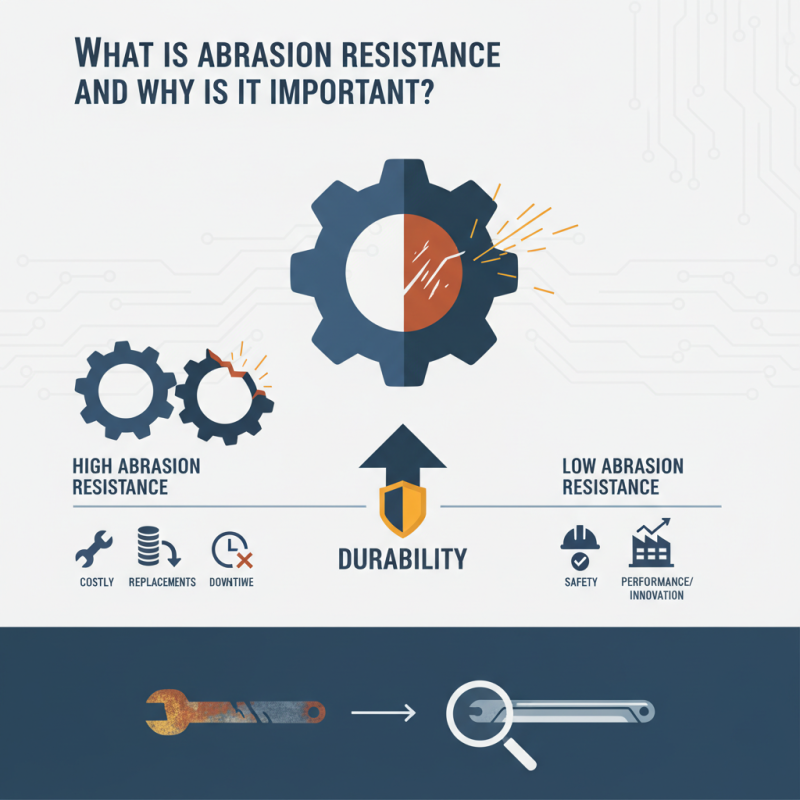
What Is Abrasion Resistance?
Abrasion resistance refers to a material's ability to withstand wear and tear. It is crucial in many industries, from textiles to Construction. When a surface is exposed to friction, it can degrade quickly. High abrasion resistance slows down this process. For example, flooring materials in high-traffic areas must be durable.
Materials that lack abrasion resistance can lead to costly repairs. Think of the countless hours spent replacing worn-out surfaces. This creates frustration for both workers and managers. Additionally, the choice of materials affects overall performance. It's vital to evaluate both abrasion resistance and Chemical Resistance in decision-making.
In practical applications, various tests measure this property. Some materials perform well initially but degrade over time. Reflecting on this, we realize that not all solutions last. As we seek sustainable choices, understanding these characteristics is essential. Every choice carries implications for future usage and maintenance.
Abrasion Resistance of Different Materials
Importance of Abrasion Resistance in Materials
Abrasion resistance is a critical property for many materials. This feature is particularly vital in industries like construction, manufacturing, and textiles. It determines how well a material can withstand wear and tear. When materials don’t have adequate abrasion resistance, they can deteriorate quickly. This can lead to increased costs and frequent replacements.
Consider the flooring in a busy warehouse. Without strong abrasion resistance, the surface can wear down within months. This not only affects the appearance but also poses safety risks. Workers might slip or trip on uneven surfaces. Similarly, components in machinery that lack abrasion resistance can fail prematurely. This could disrupt operations and lead to costly downtime.
In textiles, abrasion resistance plays a role in clothing durability. Fabrics that snag easily do not last long in the market. This creates consumer dissatisfaction and impacts brand reputation. However, achieving high abrasion resistance often compromises comfort or flexibility. It's a delicate balance, prompting materials scientists to constantly seek improvements. The quest for the ideal material continues, as it is neither simple nor straightforward.
Factors Affecting Abrasion Resistance
Abrasion resistance is essential, especially in industries that rely on durable materials. Several factors influence this property. One key aspect is the material's hardness. Harder materials usually show improved resistance to wear and tear. For example, a report from the Materials Research Society highlights that materials with a hardness above 60 HRC exhibit significantly greater abrasion resistance.
Another factor to consider is the surface finish. Rough surfaces can wear down faster than smooth ones. A study conducted by the Journal of Protective Coatings reported that surface treatments can enhance abrasion resistance by up to 50%. Additionally, the environmental conditions play a critical role. High humidity can weaken materials, making them prone to abrasion.
It's also important to consider the potential for corrosion. Corrosion Resistance directly affects the longevity of materials in abrasive environments. A report from Corrosion Science indicated that components with both high abrasion and corrosion resistance can last 20% longer than those lacking this dual capability. Manufacturers often need to evaluate these factors to improve product durability effectively.
Common Applications Requiring High Abrasion Resistance
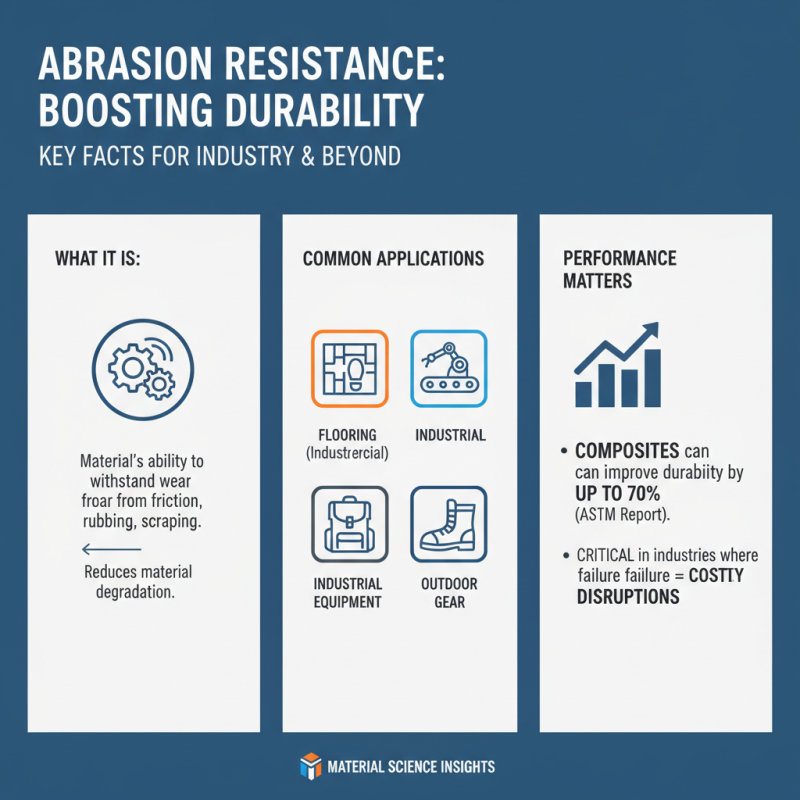
Abrasion resistance is a critical property for materials used in various industries. It refers to a material’s ability to withstand wear from friction, rubbing, or scraping. Common applications demanding high abrasion resistance include flooring, industrial equipment, and outdoor gear. According to a report by the ASTM, certain composites can improve durability by up to 70%. This factor is key in industries where failure can lead to costly disruptions.
Flooring in high-traffic areas requires materials with high abrasion resistance. For instance, commercial buildings often use specific polymers. These materials can endure heavy foot traffic without significant damage. Heavy construction equipment can also benefit from abrasion-resistant coatings. Such coatings prolong equipment life, reducing replacements and repairs.
Tip: Always consider the environmental conditions. High humidity levels can affect material performance. Evaluate the specific wear conditions for your application. Continuous monitoring can help identify wear patterns. Use quality standards to assess material suitability. Remember, not all materials are created equal. Prioritize trials and assessments for optimal choices.
Testing Methods for Measuring Abrasion Resistance
Abrasion resistance is crucial in various industries. To quantify this, several testing methods have been developed. One common method is the Taber abrasion test. This involves rubbing a sample against a standard abrasive wheel. According to industry reports, materials tested by this method show a significant range of wear resistance.
Another prominent method is the ASTM D4060 test. It measures the ability of a flooring material to withstand wear. Results often reveal that some materials can lose up to 50% of their thickness after just a few hundred cycles. Maintaining a threshold of durability is essential to ensure safety and longevity. Furthermore, incorporating Fire Resistance properties can enhance the overall performance of materials tested for abrasion.
Some innovative testing has introduced accelerated wear conditions. This mimics real-world scenarios. For example, simulating heavy foot traffic on surfaces can provide insightful data. Interestingly, even established materials can fail under unexpected stress levels, highlighting the need for further exploration. Understanding these testing methods helps in selecting the right materials for any application. Enhanced abrasion resistance not only improves performance but also boosts safety in environments where fire resistance is critical.
Comparison of Abrasion Resistance in Different Materials
Abrasion resistance is a key property in many industries. Different materials exhibit varying levels of resistance to wear and tear. For example, metals typically show better abrasion resistance compared to plastics. A study from the Journal of Materials Science indicates that hard metals can have a wear resistance rating up to 3.5 times higher than softer materials.
When comparing materials, ceramics rank high for their durability. They can withstand significant abrasion while maintaining structural integrity. According to research from the Ceramic Industry Association, advanced ceramics reduce wear in critical applications by 70%. This makes them suitable for environments like mining and manufacturing.
In contrast, some polymers, while lighter, struggle under abrasive conditions. They may provide flexibility but often lack the necessary toughness. Recent tests show that polyurethanes can wear down 40% faster than certain metallic alloys. Understanding these differences is crucial for selecting appropriate materials in production and construction. Each choice impacts performance and longevity.
What is Abrasion Resistance and Why is it Important? - Comparison of Abrasion Resistance in Different Materials
| Material | Abrasion Resistance (Rating) | Typical Applications | Advantages | Disadvantages |
| Rubber | High | Tires, conveyor belts | Excellent flexibility, shock absorption | Can degrade under UV exposure |
| Nylon | Moderate | Textiles, ropes | Strong, lightweight | Can absorb moisture and stain easily |
| Polyester | High | Clothing, upholstery | Durable, resistant to stretching and shrinking | Can be less breathable than natural fibers |
| Steel | Very High | Construction, manufacturing | Incredibly strong and durable | Susceptible to rust without proper treatment |
| Ceramics | Extremely High | Tiles, kitchenware | Very hard and wear-resistant | Brittle and can break or chip |
Future Trends in Abrasion Resistance Technology
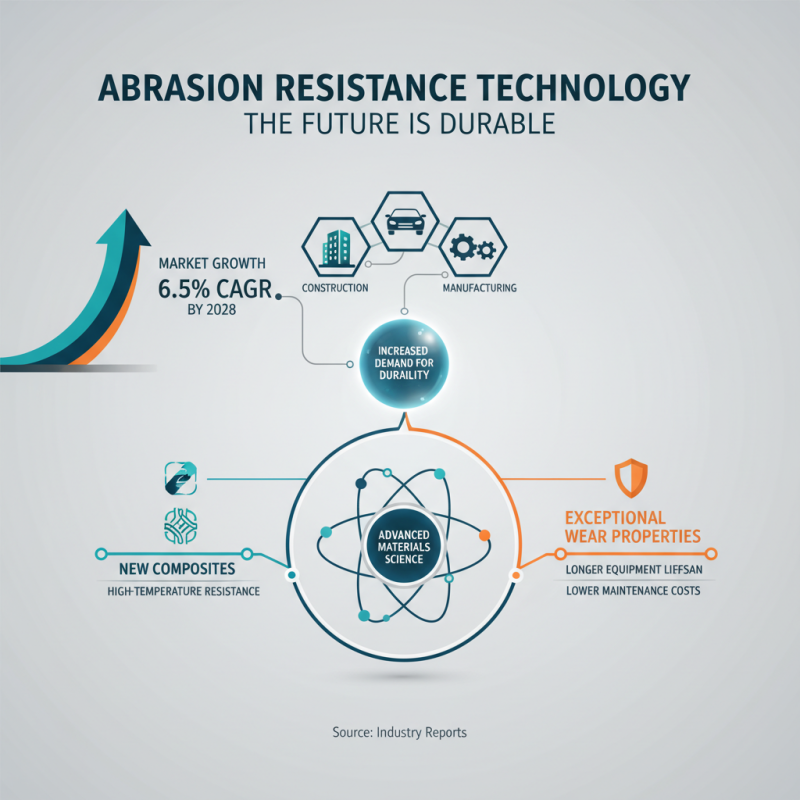
The future of abrasion resistance technology is rapidly evolving, driven by advancements in materials science. Industry reports suggest the market for abrasion resistant materials is expected to grow at a CAGR of 6.5% by 2028. This growth aligns with the need for durable materials in sectors like construction, automotive, and manufacturing. As demands for high-temperature resistance increase, manufacturers are exploring new composites. These materials exhibit exceptional wear properties, ensuring longer lifespans for equipment and lower maintenance costs.
Innovative techniques are also emerging, such as nano-coating applications. These coatings enhance surface properties significantly. They improve scratch and impact resistance while maintaining flexibility. Reports indicate that nano-coatings can reduce friction by up to 50%. However, challenges remain in large-scale production and application. Ensuring uniformity across surfaces without compromising other features is still a concern. As technology progresses, the emphasis on sustainability is also growing. Efforts to create eco-friendly abrasion resistant materials are underway, but achieving effectiveness while being environmentally conscious is a tough balance to strike.
Precision in developing these technologies is crucial. Companies need to focus on collaborative research to address issues related to performance under extreme conditions. The incorporation of advanced testing methods will help ensure that future materials meet the diverse requirements of various industries. Balancing durability and adaptability will be vital in shaping the future landscape of abrasion resistance technology.
Optimizing Fire-Resistant Composite Materials with Alkali Resistance E-Glass Basalt Fiber: Insights from Industry Performance Reports
The advancements in composite materials have increasingly focused on enhancing fire resistance and alkali resistance, particularly with the incorporation of E-Glass and basalt fibers. Industry performance reports highlight that basalt fiber offers superior thermal stability and strength due to its high-temperature processing, which involves melting basalt rock into fibers. This continuous fiber material not only maintains structural integrity under extreme heat but also exhibits impressive alkali resistance, making it suitable for various applications in construction and aerospace.
Basalt Fiber Direct Roving, specifically, stands out due to its production process, which involves drawing fibers from molten basalt without the need for twisting or intermediate bundling. According to recent industry data, this method results in a product that is not only lightweight but also possesses a tensile strength that is comparable to that of traditional glass fibers, with added benefits of enhanced impact resistance. Furthermore, it significantly reduces the weight of composite structures while ensuring higher durability and longevity, an essential criterion in industries that demand both performance and cost-effectiveness.
In practical applications, composite materials reinforced with basalt fibers demonstrate improved fire resistance characteristics, making them ideal for environments where fire safety is paramount. According to performance reports, structures utilizing these optimized composites show a remarkable ability to withstand elevated temperatures without compromising their mechanical properties. As industries continue to seek sustainable and high-performance materials, the integration of alkali-resistant basalt fibers into composite formulations is likely to become a standard practice, paving the way for safer and more resilient structures.
FAQS
: The service usually lasts around one hour. Some may need more time depending on individual needs.
Most users find weekly sessions beneficial. Others might prefer bi-weekly sessions based on their schedules.
Some may experience mild discomfort or fatigue. It's essential to listen to your body and adjust accordingly.
Mixing different treatments is possible but should be discussed beforehand. Communication with professionals is vital for safety.
Comfortable clothing is recommended. Tight clothes might restrict movement or cause discomfort during the process.
There are no strict age limits, but minors should have parental consent. Communication is key for everyone's understanding.
Yes, cancellations can be made, but advance notice is preferable. Last-minute changes can be challenging for planning.
Results vary for each person. Consistency is crucial, and patience is often necessary to see progress.
Arrive hydrated and avoid heavy meals beforehand. Being relaxed can help enhance the overall experience.
It's important to assess your personal needs and goals. Consulting with professionals can provide valuable guidance.
Conclusion
Abrasion resistance refers to the ability of a material to withstand wear and tear caused by friction or contact with other surfaces. This property is crucial in various industries, as it directly impacts the longevity and performance of materials used in manufacturing, construction, and textiles. Factors affecting abrasion resistance include material composition, surface texture, and environmental conditions. High abrasion resistance is particularly important in applications such as flooring, conveyor belts, and protective gear, where durability is essential.
Testing methods for measuring abrasion resistance vary, including the Taber abrasion test and the ASTM D4060 standard, allowing for comparisons across different materials. As technology advances, innovations in materials science continue to enhance abrasion resistance, improving performance and expanding applications. By understanding and optimizing abrasion resistance, industries can ensure greater efficiency and reduced maintenance costs in their operations.