



Bidding Farewell to Steel and Concrete? Basalt Fiber Is Sparking a "Materials Revolution" in Low-Altitude Infrastructure.
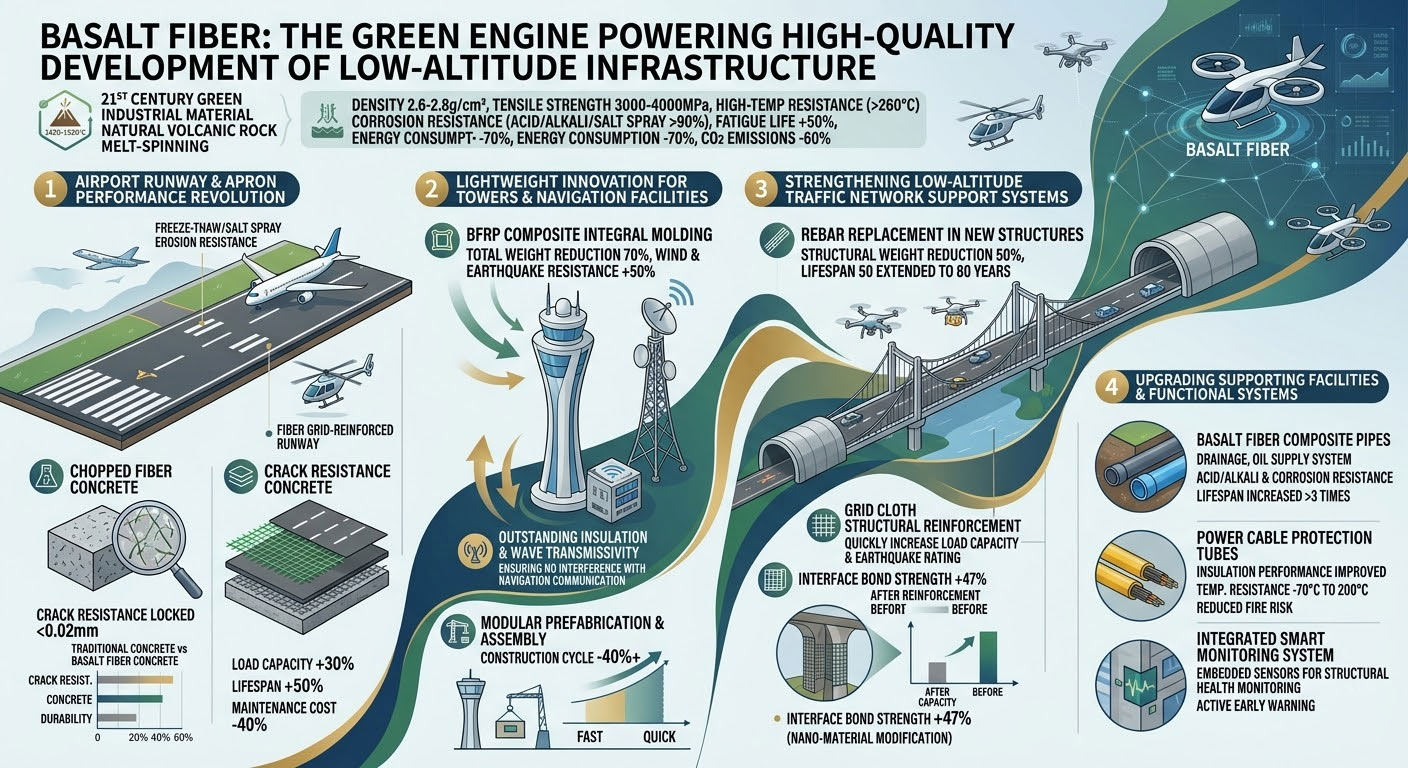
Against the backdrop of the accelerating rise of the "low-altitude economy," the construction of infrastructure—such as drone take-off and landing sites, general aviation airports, low-altitude logistics hubs, and navigation and communication towers—is witnessing an explosive surge in demand. These facilities must not only meet core requirements for Lightweight design, high strength, and longevity, but also adapt to complex operating conditions involving extreme climates, marine salt spray, and high-frequency usage, all while aligning with a green and low-carbon development trajectory. As a "green industrial material of the 21st century," basalt fiber is produced solely from natural volcanic rock through a process of melting and drawing at temperatures ranging from 1,450°C to 1,550°C. Its unique performance advantages perfectly match the rigorous demands of low-altitude infrastructure, and it is currently empowering infrastructure upgrades through a variety of technical pathways. Compared to traditional materials such as steel and concrete, basalt fiber possesses a density of only 2.6–2.8 g/cm³ and a tensile strength reaching 3,000–4,000 MPa. It combines excellent high-temperature resistance (withstanding continuous use temperatures exceeding 260°C, with short-term tolerance for temperatures above 300°C), corrosion resistance (maintaining over 90% of its performance in acidic, alkaline, and salt-spray environments), and superior electrical insulation and electromagnetic wave transparency. Furthermore, its fatigue life is more than 50% longer than that of traditional materials, while its production process consumes 70% less energy and generates 60% less carbon dioxide emissions than steel production, making it an ideal material for driving the high-quality development of low-altitude infrastructure.
The core pathways through which basalt fiber empowers low-altitude infrastructure construction revolve around four key areas. By leveraging material innovation and process adaptation, it achieves the multifaceted objectives of enhancing infrastructure performance, optimizing costs, and extending service life.
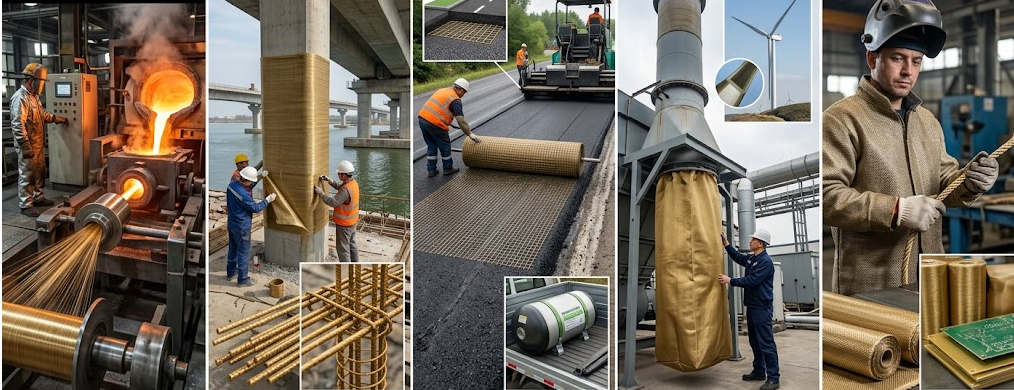
The first of these areas is the revolutionary enhancement of Airport Runways and aprons—a critical component in ensuring safe take-off and landing operations within the low-altitude economy. Traditional runways are susceptible to issues such as cracking and subsidence caused by freeze-thaw cycles, heavy loads, and high-frequency aircraft movements; moreover, maintenance costs for such runways are particularly exorbitant in extreme environments, such as high-altitude plateaus and coastal regions.Basalt fiber achieves technological advancement through two core approaches: First, by incorporating chopped basalt fibers—at a volume ratio of 0.3%—into concrete, a three-dimensional crack-arresting network is formed. This effectively confines pavement cracks to within 0.02 mm, thereby significantly enhancing crack resistance. Second, by laying basalt fiber grids within the runway's base or surface layers to replace traditional steel reinforcement mesh, the pavement's resistance to deformation and overall structural integrity are further bolstered. To accommodate the diverse requirements of different operational environments, a hybrid reinforcement strategy combining "basalt fibers and rubber granules" can also be employed. When the rubber granule content reaches 10%, the concrete's compressive strength increases by 27.5%, its flexural strength rises by 19.6%, and its freeze-thaw resistance improves concurrently by 11.1%. This solution effectively resolves critical issues such as freeze-thaw damage at high-altitude airports and salt-fog corrosion at coastal airports. Practical applications have demonstrated that airport runways utilizing this technology experience a 30% increase in load-bearing capacity and a 50% extension in fatigue life; furthermore, the maintenance cycle is extended from the traditional five years to ten years. At one international airport where this technology was implemented, the runway's service life was extended by 30%, and maintenance costs were reduced by 40%, resulting in a significant enhancement of operational efficiency.
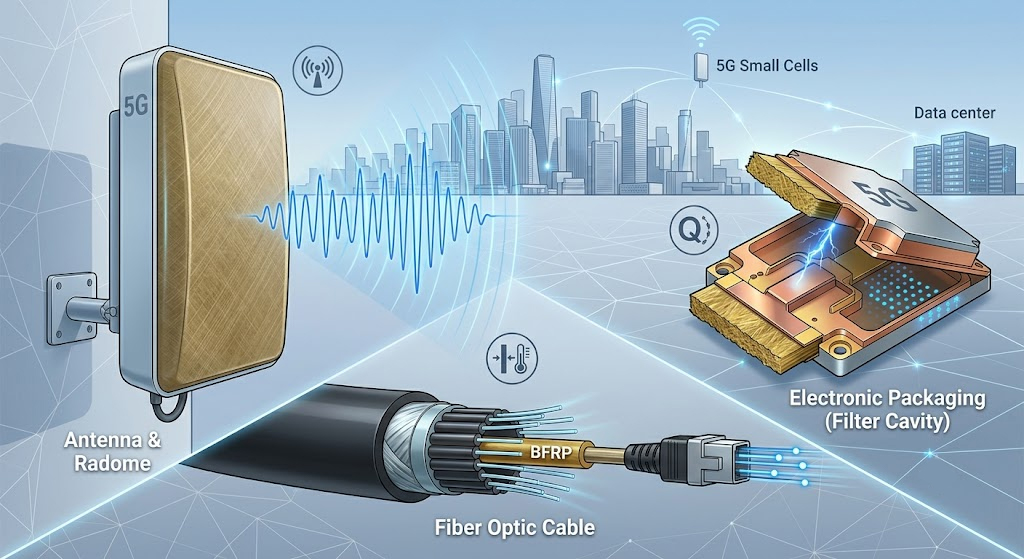
The second area of innovation involves the lightweighting of air traffic control towers and navigation facilities. As the "nerve centers" of low-altitude air traffic, these facilities must not only ensure structural stability—including resistance to wind and seismic activity—but also possess excellent electromagnetic compatibility to prevent interference with navigation and communication signals. Concurrently, the inherent challenges associated with high-altitude construction—specifically the difficulties involved and the extended project timelines—urgently require resolution. Basalt fiber technology achieves a breakthrough in this domain through the application of integral molding techniques for composite materials. By utilizing Basalt Fiber Reinforced Polymer (BFRP) composites to replace traditional reinforced concrete structures, the overall weight of a control tower can be reduced by 70%, while its resistance to wind and seismic forces is simultaneously enhanced by 50%. Moreover, the material's exceptional electrical insulation and electromagnetic wave transparency ensure that it does not interfere with the normal operation of electronic equipment, such as radar and communication systems. For critical load-bearing nodes within the structure, a "basalt fiber-aluminum alloy hybrid system" can be adopted; in this configuration, aluminum alloys are used to reinforce the load-bearing capacity of the nodes, while the main structural components are constructed from BFRP to ensure lightweighting and corrosion resistance, thereby achieving an optimal balance between performance and safety. Furthermore, the integration of a modular design philosophy allows for the core components of basalt fiber control towers to be prefabricated in a factory setting, requiring only on-site assembly and splicing. This approach significantly shortens the construction cycle—by over 40%—while simultaneously mitigating the risks associated with high-altitude work and reducing overall construction safety hazards. In regions with maritime climates, the resistance of these towers and associated navigation facilities to salt-spray corrosion is particularly outstanding, enabling them to complete a 20-year service life without exhibiting signs of significant aging. Following the adoption of a basalt fiber control tower at a general aviation airport, not only was the construction timeline drastically reduced, but the total lifecycle cost was also lowered by 35%, thereby demonstrating substantial economic and technical value.
The third key aspect is the strengthening of the support infrastructure for low-altitude traffic networks. This encompasses facilities such as bridges, tunnels, and viaducts that connect various takeoff/landing points and logistics hubs. These structures are required to withstand high-frequency traffic loads; moreover, as some are situated underground or in coastal areas, they face extremely stringent requirements regarding load-bearing capacity, impermeability, and durability. Basalt fiber contributes to this effort primarily through two pathways: rebar replacement and structural reinforcement. In new construction projects, the complete substitution of traditional steel rebar with basalt fiber rebar—particularly in critical components such as bridge main girders and tunnel linings—can reduce structural weight by 50% and increase load-bearing capacity by 60%. Furthermore, it extends the service life from the traditional 50 years to 80 years and eliminates the need for cathodic protection (typically required for steel rebar), thereby significantly reducing long-term maintenance costs. For the renovation and expansion of aging infrastructure, the application of basalt fiber mesh for structural reinforcement allows for the rapid enhancement of existing facilities' load-bearing capacity and seismic resistance, effectively addressing the performance deficiencies that might otherwise hinder their compatibility with the demands of the low-altitude economy. To further optimize interfacial bonding performance, a "basalt fiber–nanomaterial synergistic reinforcement" technique can be employed; by utilizing nanomaterials to modify the surface of the fibers, the interfacial bond strength between the fibers and the concrete is increased by 47%, thereby ensuring the maximization of the reinforcement effect. In a viaduct renovation project for a low-altitude logistics hub, the application of basalt fiber reinforcement successfully upgraded the bridge's seismic resistance rating from Grade 7 to Grade 9, fully meeting the demands of high-frequency traffic from low-altitude logistics vehicles. Concurrently, the renovation costs were reduced by 40%, and the service life was extended by 50%, thereby achieving an efficient and effective upgrade of the aging facility. Finally, there is the upgrading of ancillary facilities and functional systems. Although these facilities do not constitute the core load-bearing structures, they directly impact the overall operational efficiency and safety of low-altitude infrastructure; examples include airport drainage pipelines, fuel supply systems, and protective conduits for power cables. Through composite modification technologies, basalt fiber has been utilized to develop basalt fiber composite pipelines. When deployed in airport drainage and fuel supply systems, their exceptional resistance to acids, alkalis, and corrosion extends pipeline service life by more than threefold.
Furthermore, they eliminate leakage issues caused by corrosive media, thereby significantly reducing operation and maintenance risks. In the realm of power cable protection, basalt fiber cable conduits demonstrate significantly superior insulation properties compared to traditional piping materials; their temperature resistance range has been expanded from 70°C to 200°C, effectively mitigating fire risks in high-temperature environments. Additionally, they exhibit excellent resistance to impact and aging, making them well-suited for complex outdoor environments. A more forward-looking application involves the deep integration of basalt fiber with smart materials—specifically, by embedding sensors during the component manufacturing process to enable structural health monitoring. This capability allows for the real-time capture of data such as stress variations and temperature fluctuations within the facilities, facilitating timely warnings regarding potential safety hazards. Ultimately, this drives the transformation of low-altitude infrastructure from a model of "passive maintenance" to one of "proactive warning," thereby further enhancing operational safety and reliability.