








What are the advantages of basalt fiber?
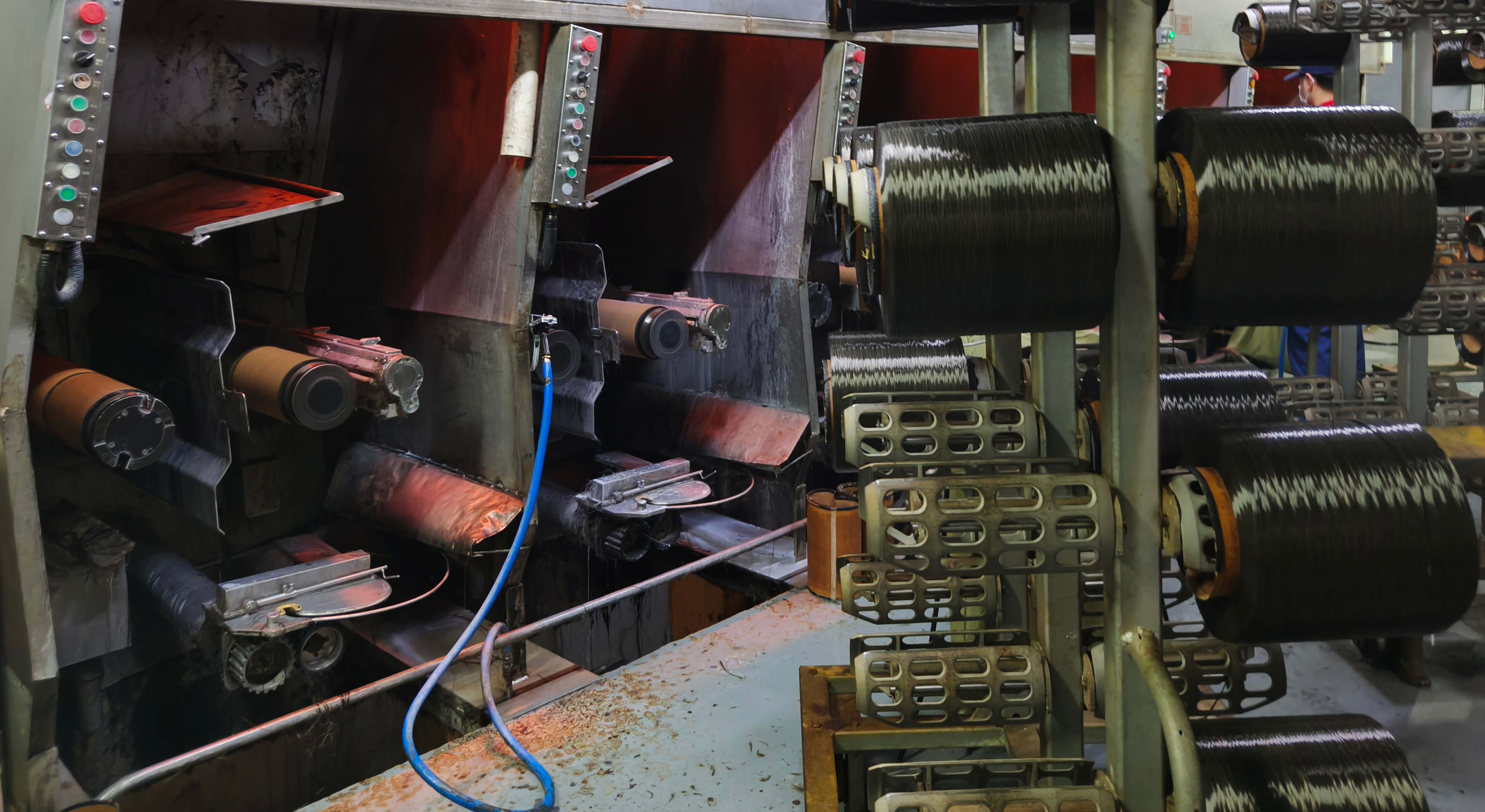
We first need to understand what it is. Simply put, basalt fiberis a continuous fiber produced using natural basalt ore as a high-grade raw material; after undergoing high-temperature melting, it is rapidly drawn through platinum-rhodium alloy bushings. Its raw material sources are abundant and found almost everywhere across the globe. Fundamentally, it is a purely natural silicate fiber; its production process involves no added Chemical auxiliaries, a fact that endows it with certain unique intrinsic characteristics.
Next, I will outline several core properties of Basalt Fiber point by point.
1. Excellent Mechanical Properties
Basalt fiber demonstrates outstanding mechanical strength. It possesses a very high tensile strength, comparable to that of various common reinforcing fibers. Its elastic modulus—an indicator of its resistance to elastic deformation—also ranks at a high level. This means that composite components reinforced with basalt fiber can effectively resist fracture and avoid excessive deformation when subjected to external forces, thereby exhibiting excellent dimensional stability. This combination of high strength and high modulus makes it particularly valuable for applications involving lightweight, load-bearing structures.
2. Exceptional Thermal Resistance and Stability
This constitutes a highly significant advantage of basalt fiber. It boasts a wide operating temperature range, capable of withstanding high temperatures while maintaining stable performance even in low-temperature environments. Specifically, it offers an impressive range for long-term use, with an even higher tolerance for short-term heat exposure. Unlike certain organic fibers, it does not melt or burn at high temperatures, and the degradation of its physical and mechanical properties occurs relatively slowly. Furthermore, it possesses a relatively low thermal conductivity, providing a degree of thermal insulation and heat-retention capability. These characteristics make it well-suited for applications where specific requirements regarding thermal resistance must be met.
3. Good Chemical Stability and Corrosion Resistance
Thanks to its inherent silicate nature, basalt fiber exhibits strong chemical inertness when exposed to chemical media. It demonstrates robust resistance to both acidic and alkaline solutions; notably, its stability in alkaline environments surpasses that of certain other inorganic fibers in its class. It also possesses excellent water resistance, ensuring that its performance does not readily degrade in humid or submerged environments. This formidable corrosion resistance allows it to function reliably over extended periods in harsh settings—such as those found in the chemical processing or marine industries—thereby extending the service life of composite products.
4. Ideal Dielectric Properties and Wave Transparency
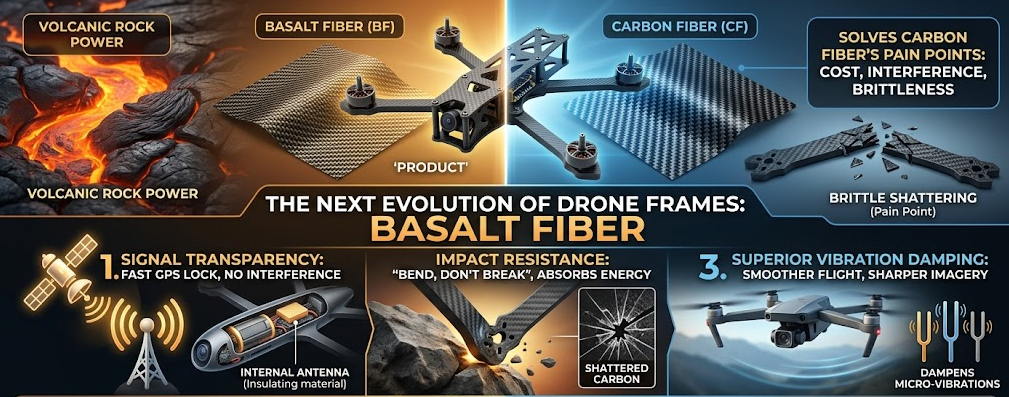
Basalt fiber is a poor conductor of electricity, possessing high volume resistivity and surface resistivity, as well as low dielectric constants and dielectric loss tangents. This renders it "transparent" to electromagnetic waves, exhibiting excellent wave-transmission properties. This characteristic is crucial in fields requiring electromagnetic shielding or wave transparency—for instance, in certain components of communication equipment.
5. User-Satisfying Environmental Compatibility and Safety
From raw materials to finished products, the entire lifecycle of basalt fiber is characterized by its eco-friendliness. Its production consumes relatively low energy and generates no harmful gas emissions. The product itself is non-toxic, odorless, and non-irritating upon contact with human skin; furthermore, it does not generate dust harmful to human health during either production or use. Upon disposal, it can be directly reintegrated into the natural geological cycle without causing pollution, making it a quintessential "green" material.
6. Natural Water Repellency and Adsorption Capabilities
Basalt fiber features a smooth surface with an inherent hydrophobic tendency, resulting in an extremely low moisture absorption rate. This ensures that materials fabricated from it maintain stable performance even in humid environments. When subjected to specialized surface treatments, its specific surface area can be significantly increased, enabling it to exhibit excellent adsorption capabilities for certain substances—a feature that opens up possibilities for its application in fields such as filtration and environmental protection.
Of course, no material is without its limitations. Basalt fiber does possess certain constraints; for instance, its production process demands a high degree of uniformity in raw material composition, meaning that the properties of basalt derived from different mineral sources may exhibit variability. Additionally, the interfacial bonding strength between the fiber and resin matrices often requires further optimization through surface treatments. Furthermore, its current production costs remain somewhat higher than those of certain other fibers produced on a massive industrial scale. Addressing these specific areas constitutes a primary focus for ongoing research and industrialization efforts within relevant sectors.
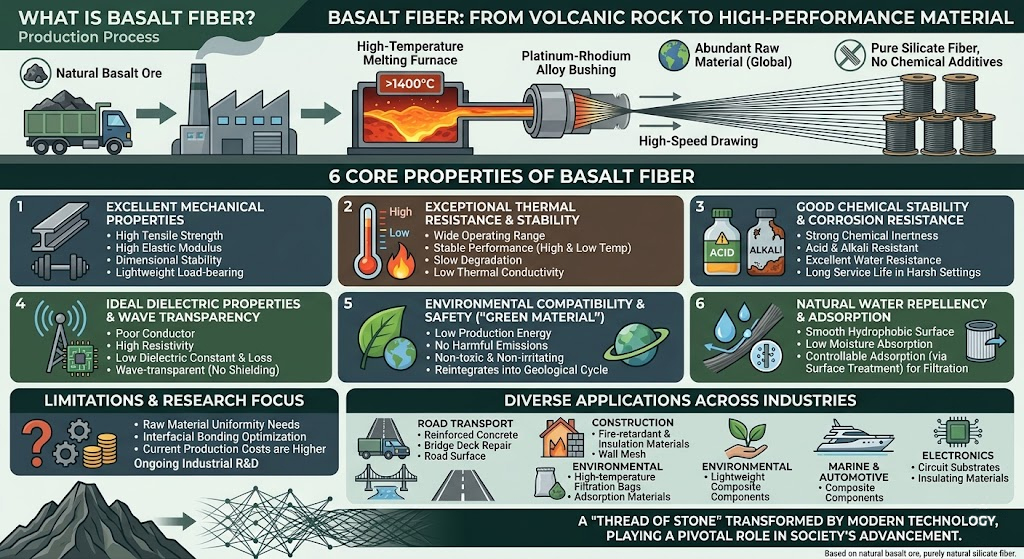
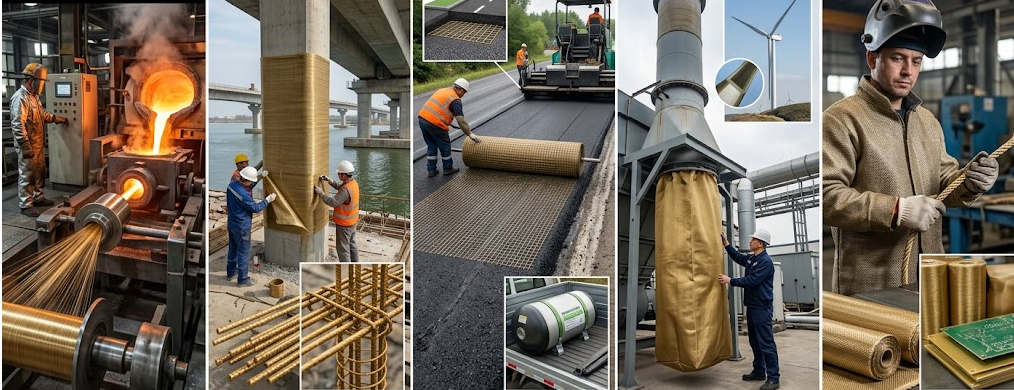
In summary, basalt fiber integrates a multitude of superior characteristics—including high strength, exceptional thermal resistance, corrosion resistance, electrical insulation properties, and environmental friendliness—into a single material. These characteristics have enabled it to find utility across a wide range of fields: in road transport, it is used to reinforce concrete and to repair and strengthen bridge decks and road surfaces; in construction, it is employed in the production of fire-retardant and thermal-insulating materials, as well as wall reinforcement mesh; in environmental protection, it is utilized to manufacture high-temperature filtration bags and adsorption materials; in the marine and automotive sectors, it is used to fabricate lightweight composite components; and in the electronics and electrical industries, it serves in the creation of circuit substrates, insulating materials, and more. Its application prospects continue to broaden as the underlying technology matures.
As a high-performance fiber "transformed" from volcanic rock, basalt fiber is steadily carving out a distinct niche for itself within the world of engineering materials, thanks to its unique combination of properties. It demonstrates how nature's bounty can be harnessed—through the power of modern technology—and transformed into novel materials that serve the advancement of society. Looking ahead, as preparation techniques continue to improve and application research deepens, we can anticipate seeing this "thread of stone" play an increasingly pivotal role in an even wider array of scenarios.