








From Bridge Reinforcement to Automotive Lightweighting
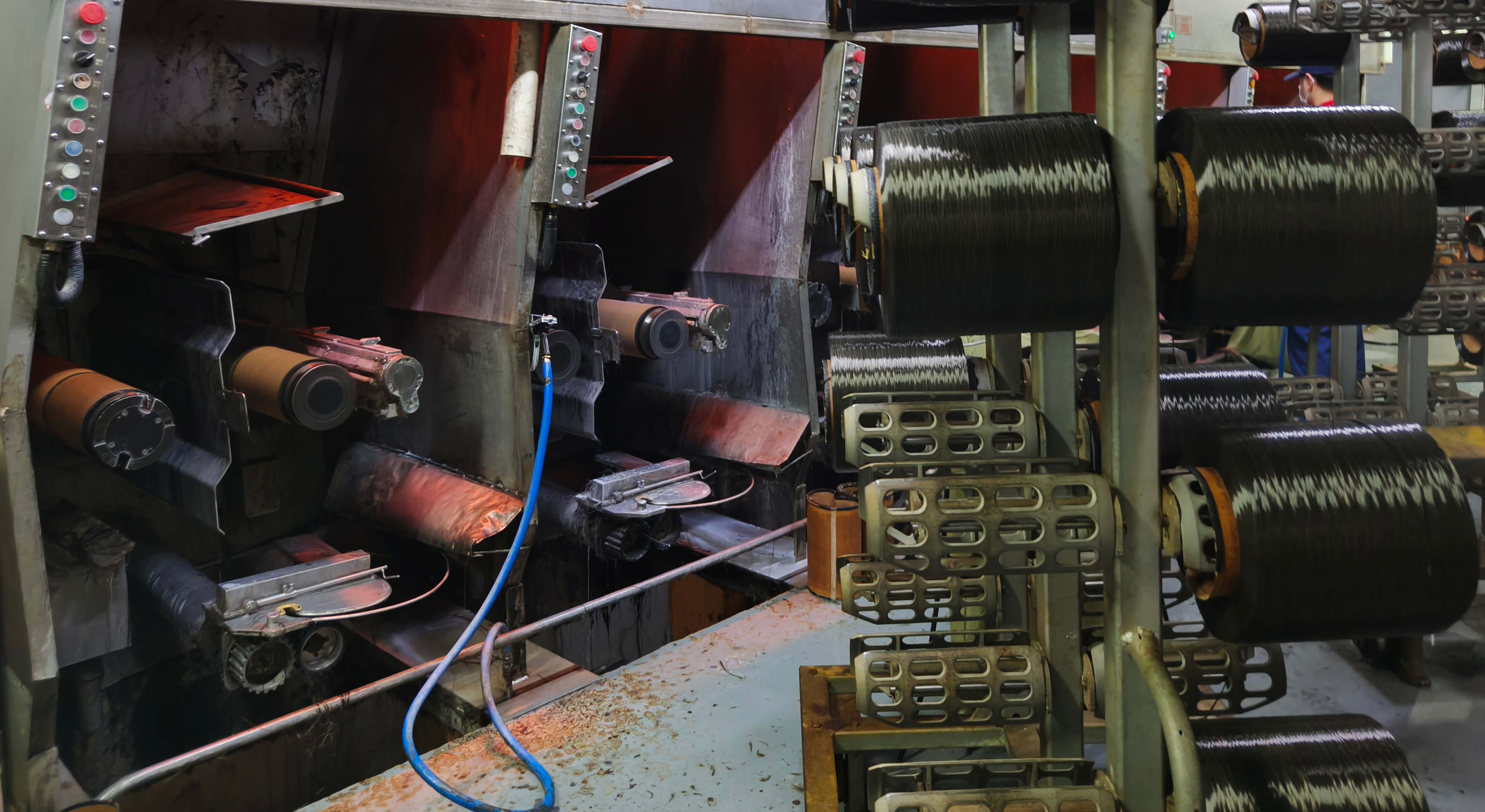
Basalt fiberis a continuous filament produced from natural basalt ore; the ore is subjected to high-temperature melting and then rapidly drawn through a platinum-rhodium alloy bushing. Its color typically presents as a golden-brown hue. Basalt ore itself is a common rock formed following volcanic eruptions, and it is both abundant in reserves and widely distributed throughout the Earth's crust. Transforming this common stone into a high-Performance Fiber exemplifies the ingenuity of modern materials science.
In terms of Chemical composition, basalt fiber consists primarily of oxides—such as silicon dioxide, aluminum oxide, calcium oxide, and magnesium oxide—and is classified as a silicate fiber. Its production process is characterized by its eco-friendliness. The basalt ore is heated to a molten state within high-temperature furnaces; throughout this entire process, no chemical reagents are added, nor are any harmful waste gases generated, while the resulting slag can be recycled and reused. Compared to certain synthetic fibers that require complex chemical processes for their preparation, the manufacturing process for basalt fiber is relatively straightforward and consumes less energy.
The performance characteristics of basalt fiber fall between those of high-strength glass fiber and carbon fiber; it integrates a multitude of superior properties, thereby finding practical application across a wide array of fields.

I. Applications in Civil Engineering, Construction, and Infrastructure
This sector represents one of the most extensive areas of application for basalt fiber, primarily leveraging its high strength and corrosion resistance to reinforce composite materials, thereby serving as a substitute for—or a supplement to—traditional construction materials.
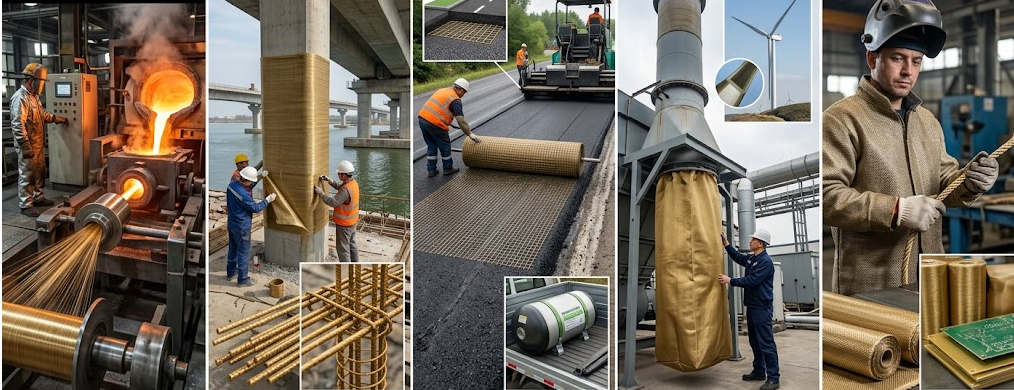
1. Structural Reinforcement and Repair: By weaving basalt fibers into fabrics or fabricating them into plates—and subsequently bonding them with specialized adhesives—the material can be utilized to reinforce structural elements such as concrete beams, columns, slabs, and walls. This method of reinforcement effectively enhances a structure's load-bearing capacity, seismic resistance, and durability; moreover, it facilitates convenient construction without significantly increasing the original structure's self-weight or volume. For bridges, buildings, tunnels, and other structures requiring strengthening due to aging, damage, or increased load requirements, this offers a highly effective remedial solution.
2. Reinforcement Bar Substitution: Basalt fiber reinforcement bars (re-bars) are rod-shaped materials formed by compounding basalt fibers with a resin matrix. It is completely immune to corrosion by chloride ions, acids, alkalis, and salts, and does not rust; therefore, it serves as an ideal substitute for traditional steel reinforcement in concrete structures located in seaports, cross-sea bridges, coastal buildings, saline-alkali land projects, and chemical industrial environments. It fundamentally prevents the issues of concrete cracking and structural damage caused by the corrosion of steel reinforcement.
3. Concrete Reinforcement: Chopped basalt fibers can be incorporated into concrete to provide micro-reinforcement. They effectively control plastic shrinkage in fresh concrete and drying shrinkage cracks in hardened concrete, while enhancing the material's toughness, impact resistance, and fatigue resistance, thereby improving its overall durability.
4. Building Thermal Insulation: Basalt fibers can be manufactured into cotton-like, board-like, or felt-like products, offering excellent thermal insulation, soundproofing, and fire-retardant properties. When used as exterior wall insulation, fire barriers, or pipe insulation layers, the material is non-combustible, highly heat-resistant, chemically stable, and boasts a long service life.
II. Applications in Road and Transportation Engineering
1. Road Reinforcement: Incorporating basalt fibers into asphalt concrete significantly enhances the asphalt pavement's resistance to high-temperature rutting and low-temperature cracking, reduces reflective cracks, and extends the road's service life. Similarly, adding fibers to cement concrete pavements improves their crack resistance and durability.
2. Composite Pipes and Utility Tunnels: Composite pipes reinforced via basalt fiber winding offer numerous advantages—including light weight, high strength, corrosion resistance, and smooth inner walls with low flow resistance. They are suitable for use in municipal water supply and drainage systems, petrochemical transport pipelines, cable protection conduits, and integrated urban utility tunnel systems.
3. Lightweight Automotive Components: Basalt fiber composites can be utilized to manufacture non-load-bearing or secondary load-bearing automotive components, such as body panels, interior trim, and compressed gas cylinders. The resulting weight reduction contributes to lower energy consumption, while the material's inherent flame-retardant properties enhance vehicle safety.
III. Applications in Environmental Protection and Energy
1. High-Temperature Flue Gas Filtration: Leveraging its exceptional resistance to high temperatures and chemical corrosion, basalt fiber can be processed into filter bags or filter felts. These products are widely used in industries such as power generation, metallurgy, cement production, and waste incineration for the high-temperature dust removal and purification of flue gases. It effectively captures dust and maintains a long service life even under harsh operating conditions.
2. Friction and Sealing Materials: Basalt fiber serves as a reinforcing agent in the manufacture of friction materials—such as brake pads and clutch facings—as well as various sealing materials, including gaskets and packing ropes. The heat resistance and stability it provides help maintain a consistent friction coefficient while minimizing wear and thermal fade.
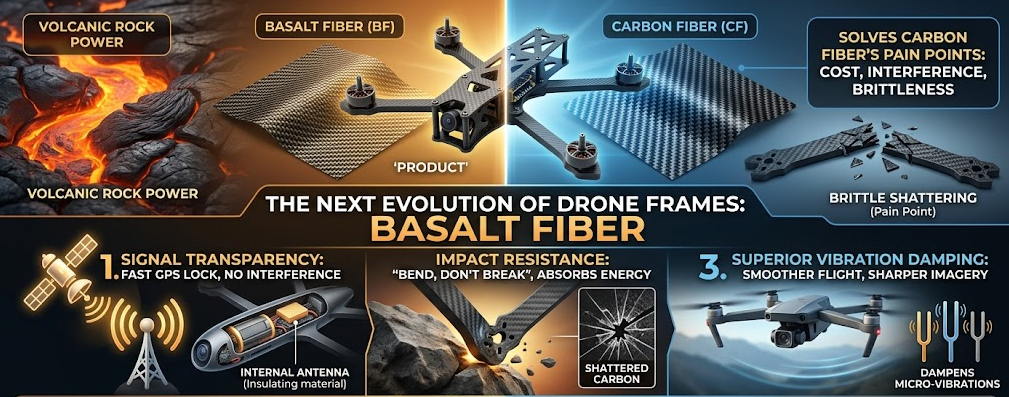
3. New Energy Equipment: In the field of wind power generation, basalt fiber composites are utilized to manufacture specific components of wind turbine blades. Their excellent fatigue strength and vibration-damping properties have a positive impact on blade performance. They are also employed in the insulation and structural reinforcement of certain power infrastructure facilities.
IV. Applications in Industrial and Protective Sectors
1. Industrial Corrosion Resistance and Heat Protection: Basalt fiber fabrics and composites are used to fabricate high-temperature conveyor belts, protective curtains, and expansion joints, as well as linings for storage tanks and vessels exposed to corrosive media. In high-temperature industrial environments, they serve as safety and protective products, such as welding spark shields and fire blankets.
2. Specialty Fabrics and Ropes: Basalt fiber can be spun into yarn and woven into fabric. This fabric possesses specialized flame-retardant, high-temperature-resistant, and thermal/acoustic insulation properties, making it ideal for manufacturing protective clothing for firefighters, welders, and metallurgical workers, as well as flame-retardant interior furnishings for theaters and vehicles. Ropes and cables manufactured from this material also exhibit high tensile strength and weather resistance.
3. Electrical and Electronic Insulation: Basalt fiber demonstrates excellent electrical insulation properties, making it suitable for manufacturing circuit boards, insulation panels, and electrical enclosures; it maintains stable insulation characteristics even in humid environments.
V. Exploration in Other Emerging Fields
Researchers continue to explore the broader potential of basalt fiber. For instance, leveraging its biocompatibility and stability, they are investigating its potential for use in specialized non-medical functional materials. By utilizing its porous structure, they are developing adsorption and filtration materials for water treatment applications. Furthermore, in the aerospace sector, they are assessing its feasibility as a reinforcing agent in composite materials for specific non-load-bearing structures or internal functional components. As a green, high-performance material derived from natural ores, basalt fiber has successfully transitioned from the laboratory into widespread engineering practice, thanks to its comprehensive mechanical properties, exceptional stability, excellent durability, and environmentally friendly production process. It plays an increasingly vital role in structural reinforcement, serving as a substitute for traditional corrosion-prone materials, enhancing the performance of composite materials, and meeting the demands of specialized operating conditions. With the continuous advancement of preparation technologies and the optimization of cost controls, the scope of basalt fiber applications is poised to expand further, offering a reliable new material option across numerous industrial sectors. Its development aligns perfectly with the modern industrial world's growing requirements regarding material performance, sustainability, and environmental compatibility.