







From Rock to "Armor": How Does Basalt Fiber Establish Its Foothold?
In the vast realm of materials science, there exists a unique type of fiber material—one not born of complex Chemical synthesis, but derived directly from ancient, hard rock: basalt. This material is basalt fiber—a high-performance inorganic fiber that, thanks to its distinctive origins and exceptional comprehensive properties, is quietly emerging as a prominent player across numerous industrial sectors.
I. What Is Basalt Fiber?
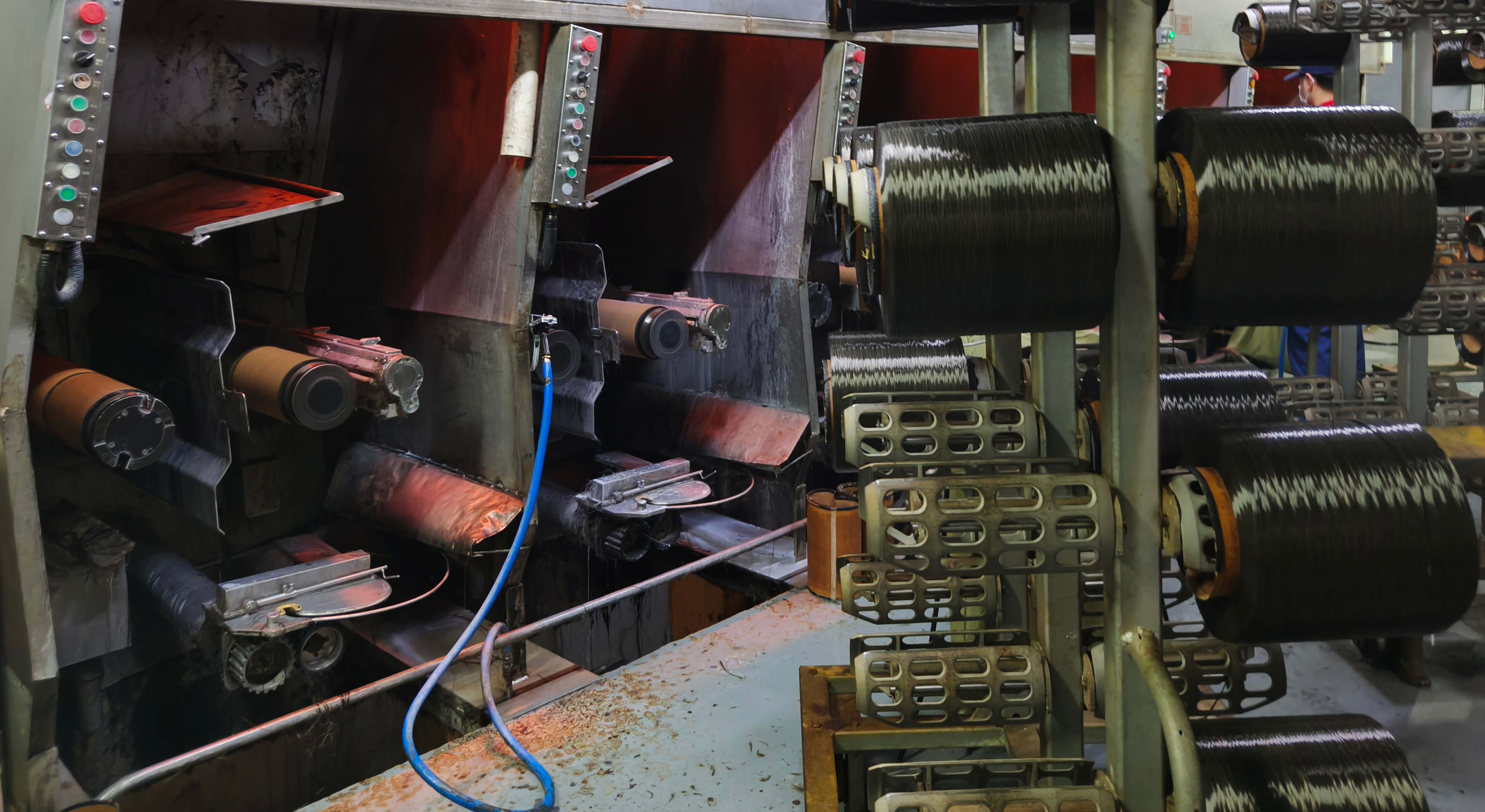
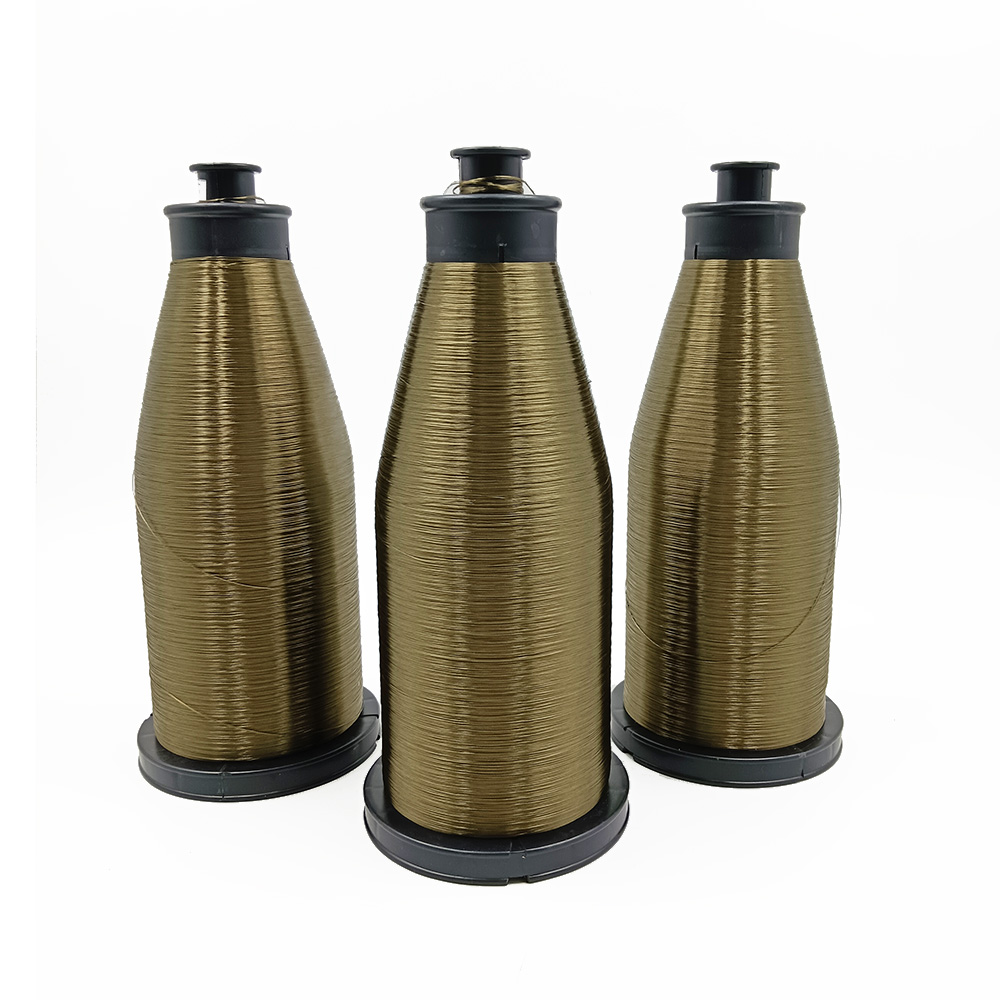
As the name suggests, basalt fiberis a continuous fiber produced using natural volcanic rock—basalt ore—as its high-standard raw material. Its production process can be vividly described as "turning stone into thread." Strictly selected and crushed basalt ore is fed into specialized high-temperature melting furnaces, where it is liquefied at temperatures exceeding 1,400 degrees Celsius. Subsequently, the molten basalt liquid is drawn at high speed through tiny orifices in a platinum-rhodium alloy bushing to form extremely fine, continuous fibers. This process bears similarities to the production of cotton candy or Glass Fiber; however, the inherent purity of its raw material endows the final product with unique properties.
In essence, basalt fiber is a silicate fiber; its chemical composition mirrors that of the original basalt ore, consisting primarily of oxides such as silicon dioxide, aluminum oxide, calcium oxide, and magnesium oxide. This composition naturally endows it with exceptional chemical stability, high-temperature resistance, and environmental friendliness. Furthermore, the entire production process generates no harmful emissions, and discarded fibers are naturally biodegradable, allowing them to return harmlessly to the earth.
II. Interpreting the Core Parameters and Properties of Basalt Fiber
To gain a comprehensive understanding of basalt fiber, it is essential to examine its key performance parameters from multiple perspectives. These parameters serve as the scientific basis for its application across various fields.
1. Mechanical Properties
Tensile Strength: This is a critical metric for assessing a fiber's resistance to being pulled apart. Basalt fiber exhibits high tensile strength—typically falling within a specific numerical range—often surpassing that of many traditional glass fibers. This superior strength enables it to perform exceptionally well in structural applications requiring enhanced load-bearing capacity or tensile resistance.
Elastic Modulus: This parameter indicates a fiber's resistance to elastic deformation—essentially, its "stiffness." Basalt fiber possesses a high elastic modulus; this implies that under load, its deformation is relatively minimal, thereby providing superior dimensional stability and structural support.
Elongation at Break: This refers to the percentage of elongation exhibited by the fiber at the point of fracture. Basalt fiber exhibits a moderate elongation at break, indicating that it possesses a balance of both strength and toughness, and is not a purely brittle material.
2. Physical and Chemical Stability Parameters
Thermal Resistance: This constitutes one of the most prominent advantages of basalt fiber. It boasts a wide operating temperature range, capable of maintaining its performance over extended periods in both cryogenic and high-temperature environments. It features a high softening point and an even higher melting point; it neither burns nor emits smoke at elevated temperatures, offering fire-retardant and thermal insulation properties that meet user expectations. Corrosion Resistance: Basalt fiber demonstrates excellent resistance to chemical media such as acids and alkalis. Particularly in alkaline environments, its stability significantly surpasses that of ordinary glass fibers (E-glass); this attribute ensures long-term durability when utilized as a reinforcing material within alkaline matrices, such as cement concrete.
Moisture Absorption: Basalt fiber exhibits an extremely low moisture absorption rate, absorbing virtually no water. This characteristic guarantees that its performance does not degrade in humid environments and ensures stable electrical insulation properties, while also preventing the deterioration of composite material performance often associated with water absorption.
3. Functionality and Compatibility Parameters
Thermal Conductivity: Basalt fiber itself serves as an effective thermal insulator, characterized by a low thermal conductivity coefficient. When fabricated into felts, fabrics, or composite materials, it effectively impedes heat transfer.
Dielectric Properties: It possesses excellent electrical insulation properties, rendering it suitable for applications within specific electrical insulation fields.
Adhesion to Matrix: In composite materials, the bond strength between the fiber and the matrix—such as resin or concrete—is of paramount importance. The surface characteristics of basalt fiber facilitate excellent wettability and adhesion with a wide variety of polymer and cement-based matrices, thereby enabling effective stress transfer and fulfilling its intended reinforcing function.
III. Diversified Application Scenarios for Basalt Fiber
Based on the performance parameters outlined above, the applications of basalt fiber are continuously expanding, primarily penetrating the following sectors:
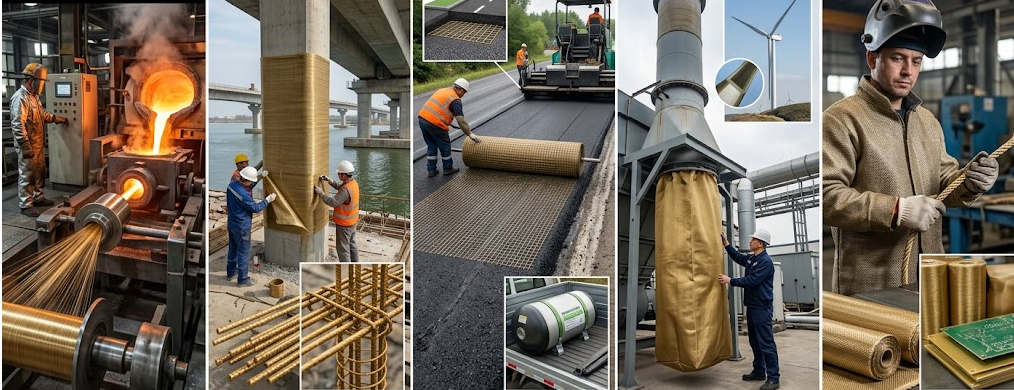
1. Transportation and Infrastructure Construction: Leveraging its high strength and corrosion resistance, basalt fiber can be fabricated into reinforcing bars, mesh fabrics, and similar products. These are utilized to reinforce bridges, roads, seawalls, and tunnel linings—serving as a partial substitute for steel rebar—thereby effectively addressing the persistent challenge of corrosion. In the automotive and shipbuilding industries, it is employed to manufacture lightweight, high-strength composite components, contributing to weight reduction and energy conservation.
2. Architecture and Fire Safety: Its non-combustible and high-temperature-resistant properties make it an ideal material for manufacturing fire curtains, fire blankets, thermal insulation sleeves for high-temperature pipelines, and building insulation panels. When utilized as anti-crack reinforcement mesh within concrete structures, it significantly enhances the building's resistance to cracking and overall durability.
3. Environmental Protection and Industrial Applications: Basalt fiber filter bags or felts—distinguished by their exceptional resistance to high temperatures and chemical corrosion—are deployed for dust removal and purification in harsh environments, such as in the filtration of high-temperature flue gases and chemical products. Furthermore, woven basalt fabrics can serve as the reinforcing layer for flexible hoses used in the conveyance of corrosive liquids or gases.
4. Other Specialized Fields: In the realm of sports and leisure, it is utilized in the manufacture of items such as fishing rods and bicycle frames. In the electronics and electrical sector, it is applied in components requiring specific insulation and dimensional stability, such as circuit board substrates.

IV. Outlook: Opportunities and Challenges Coexist
As an emerging high-performance material, basalt fiber enjoys widely optimistic prospects for future development. Sourced from abundant natural mineral deposits, its production process is relatively eco-friendly, and its product lifecycle is environmentally benign—aligning perfectly with the principles of sustainable development. Its inherent characteristic of being "derived from nature and returning to nature," coupled with its comprehensive "multi-functional" performance capabilities, constitutes its core innovative competitive advantage.
However, its development also faces certain challenges. For instance, managing energy consumption during large-scale production, further enhancing process stability, optimizing product costs, and undertaking deep-level customized development tailored to specific application scenarios are all critical areas requiring continuous research and technological breakthroughs. In the future, as production technologies continue to advance and applied research deepens, the performance parameters of basalt fiber are expected to undergo further optimization, while its costs will become increasingly reasonable. Consequently, it is poised to displace traditional materials on a broader stage, offering the industrial manufacturing sector and daily life alike a material choice that is more robust, safe, and eco-friendly.
In summary, basalt fiber is no longer merely a latent potential hidden deep within the rocks; through the application of modern technology, it has been drawn into strands to become the very "sinews and bones of the earth." With its array of solid and reliable performance characteristics, it is writing a legendary saga—transforming from volcanic rock into a high-tech material—and stands as a silent yet steadfast pillar, supporting countless innovations and construction projects throughout modern society.