



Basalt Fiber for Green Infrastructure and Carbon Fiber for Lightweight Aviation: High-Performance Fibers Reshaping the Industrial Landscape
Basalt Fiber: Natural Weather Resistance Empowers Infrastructure with "Strong Foundation and High Efficiency"
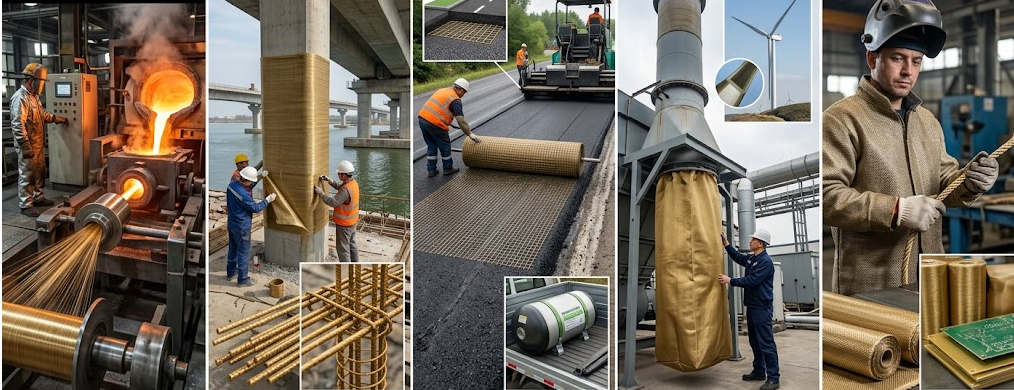
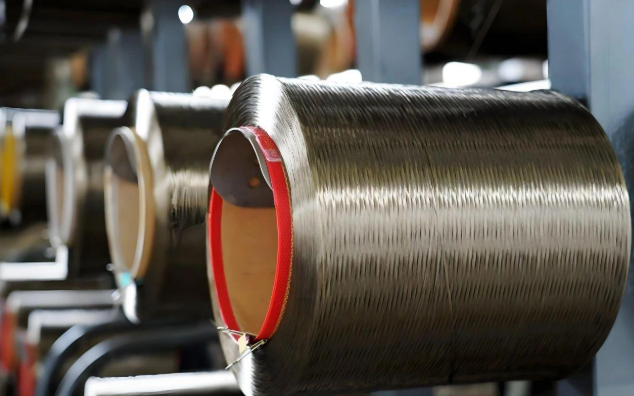
Basalt fiberis made from natural Basalt Rock melted and drawn into filaments at a high temperature of 1450-1500°C. It possesses a triple combination of properties:acid and alkali resistance, anti-aging, and High Strength. Its performance is perfectly suited to the core demands of infrastructure: "long life, low maintenance, and green operation." It has achieved large-scale breakthroughs in scenarios such as bridge reinforcement, road engineering, and marine infrastructure.
1. Core Properties: A "Natural Fit" for Infrastructure
Compared to traditional fibers used in infrastructure (e.g., glass fiber, steel rebar), basalt fiber's unique advantages are evident in three areas:
-
Extreme Environment Tolerance: It has a long-term service temperature range from -269°C to 700°C and can withstand instantaneous temperatures of 1200°C. In acidic and alkaline environments with a pH of 2-12, its strength retention rate exceeds 90%, which is significantly better than glass fiber (which loses 30% of its strength in pH 4-9 environments).
-
Balanced Mechanical Properties: Its tensile strength reaches 3500-4800 MPa (3-4 times that of ordinary steel rebar), and its elastic modulus is 80-110 GPa. Its density is only 2.6-2.8 g/cm³, about 1/3 of steel, combining strength with lightweighting.
-
Green Lifecycle: The raw material is natural rock, the production process uses no toxic additives, and it can naturally degrade after disposal. Its full lifecycle carbon footprint is 40% lower than that of glass fiber, aligning with the "Dual Carbon" requirements for infrastructure.
2. Infrastructure Breakthroughs: From "Reinforcement and Repair" to "New Construction Upgrades"
Basalt fiber has expanded from traditional infrastructure reinforcement to structural enhancement in new construction projects, forming a complete application chain:
-
Bridge Reinforcement: Extends service life and reduces maintenance costs.
Traditional bridge reinforcement relies on steel plate bonding (prone to corrosion) or ordinary FRP (poor weather resistance). Basalt fiber-reinforced polymer (BFRP) composite materials solve the "corrosion-insufficient load-bearing" problem with two solutions: "BFRP rebar replacing steel rebar" and "BFRP fabric adhesive reinforcement." For example, a cross-river bridge used BFRP rebar to replace traditional steel rebar in its deck paving layer. This not only reduced weight by 40% but also prevented steel rebar rust caused by river salt, extending the bridge's service life from an estimated 50 years to 100 years and reducing annual maintenance costs by 60%. Another old concrete bridge was reinforced by bonding a 2mm-thick BFRP fabric, which increased its bending capacity by 35% and shortened the reinforcement period from 15 to 7 days, minimizing traffic disruption.
-
Road Engineering: Improves crack resistance and meets heavy-load demands.
Adding basalt fiber (0.3%-0.5% by weight) to the base layer of highways and heavy-haul roads can inhibit crack propagation through the fiber's "bridging effect." This improves the road surface's crack resistance by 25% and its rutting resistance by 30%. After applying this technology, a coal transport line in Shanxi Province saw its road service life extend from 5 to 8 years, reducing annual maintenance investment by over 2 million yuan. In addition, basalt fiber is used to reinforce permeable pavements. Its weather resistance ensures that the permeable structure does not become brittle under temperature changes from -30°C to 60°C, and its permeability rate remains above 80% for the long term, contributing to the construction of "sponge cities."
-
Marine Infrastructure: Resists salt spray corrosion and lowers construction costs.
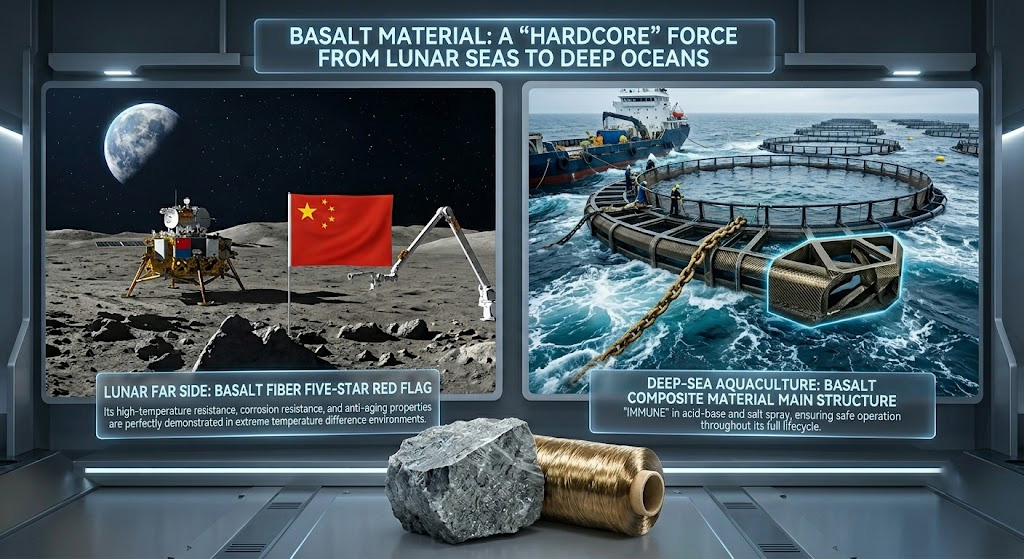
Marine terminals, cross-sea tunnels, and other structures are long-term exposed to high salt spray and tidal erosion. Traditional steel structures require frequent rust removal and painting (with an annual maintenance cost of over 10 yuan/m²). However, basalt fiber composite profiles (such as BFRP pipes and piles) have a strength retention rate of 95% after 1000 hours in a salt spray environment and require no anti-corrosion maintenance. A marine ranch pier in Shenzhen used BFRP piles instead of steel piles. Although the cost per pile was 15% higher, the total lifecycle cost (over 50 years) was reduced by 40%, while also preventing marine pollution caused by steel pile corrosion.
3. Multi-Industry Expansion: From Infrastructure to New Energy and Protective Fields
Basalt fiber's performance advantages are also penetrating into new energy and high-end protective fields, creating a "one material, multiple uses" application landscape:
-
New Energy: Wind turbine blades use a hybrid reinforcement of basalt and glass fibers, which reduces costs by 50% compared to a full carbon fiber solution. It also improves resistance to sand erosion by 40%, making it suitable for high-sand environments in northwest China and Central Asia. In addition, BFRP profiles for photovoltaic mounts reduce weight by 60%, and their corrosion resistance extends the mount's lifespan from 10 to 25 years, lowering the operation and maintenance costs of solar farms.
-
Protective Equipment: Fire blankets made of basalt fiber can withstand temperatures of 1200°C and effectively block fire spread in building fires without releasing toxic gases. Bulletproof vests made of basalt fiber fabric have a surface density of only 200 g/m² and achieve a bulletproof rating of NIJ IIIA, with a weight 20% lighter than aramid bulletproof vests.
Carbon Fiber: Lightweighting Advantages Lead the "Efficiency and Carbon Reduction" of Aviation
With a "specific strength 6 times that of steel and a density only 1/4 of steel," carbon fiber has become a key material in the aerospace industry for solving the conflict between "weight reduction, energy efficiency, and emission reduction." Its applications are continually deepening, from aircraft structural components to engine parts, while also expanding into new energy vehicles and high-end equipment, driving the lightweight upgrade of multiple industries.
1. Core Properties: The "Core Low-Carbon Material" for Aviation
The aviation industry's demand for "lightweight, high reliability, and fatigue resistance" aligns perfectly with the properties of carbon fiber:
-
Extreme Lightweighting: T800-grade carbon fiber has a density of 1.7 g/cm³, only 60% of aluminum alloy (2.8 g/cm³). Using it for aircraft structural components can achieve a 30%-50% weight reduction, directly lowering fuel consumption (aviation data shows that for every 1% of weight reduction, annual fuel consumption decreases by 0.7%-1%).
-
High Fatigue Resistance: The fatigue life of carbon fiber composites can reach 10⁷ cycles, which is 3-5 times that of aluminum alloys. This reduces the frequency of maintenance and replacement for aircraft structural components and extends the service life of the entire aircraft.
-
Strong Designability: By adjusting the fiber lay-up angles (0°/±45°/90°), the mechanical properties of components can be customized and optimized to meet the demands of complex load-bearing structures like fuselages and wings.
2. Aviation Breakthroughs: From "Structural Components" to "Engine Parts"
The application of carbon fiber in aviation has been upgraded from non-load-bearing components (like interior panels) to main load-bearing components and is even extending to high-temperature engine parts, becoming a core driver of aircraft efficiency improvements:
-
Aircraft Structural Components: Reduces weight and fuel consumption, extends flight range.
The Boeing 787 Dreamliner uses carbon fiber composite materials for major load-bearing structures like the fuselage and wings, with composites making up 50% of the aircraft's weight. This results in a 15% total weight reduction (about 2.3 tons), a 20% improvement in fuel efficiency, and an extended range from the traditional 12,000 km to 15,000 km. The Airbus A350 XWB's carbon fiber wing uses a "one-piece molding" process, reducing the number of parts from 1,500 for traditional aluminum alloy wings to 800. This not only reduces weight by 40% but also lowers assembly errors, improving flight stability.
In the domestic large aircraft sector, the subsequent improved version of the C919 plans to increase the use of carbon fiber composite materials from 12% to 25%, focusing on components such as the main wing beam and tail. This is expected to reduce the aircraft's weight by 8% and annual fuel consumption by 600 tons per aircraft, aligning with the low-carbon needs of the domestic aviation industry.
-
Engine Parts: High-temperature upgrades, breaking performance bottlenecks.
Traditional aviation engine components rely on high-temperature alloys (such as nickel-based alloys), which are heavy and have a limited temperature resistance (around 1100°C). However, carbon fiber-reinforced ceramic matrix composites (C/C-SiC) can withstand temperatures of 1600°C while reducing weight by 40%. GE Aviation's GE9X engine uses carbon fiber composite fan blades, reducing the weight per blade from 3.5 kg for aluminum alloy to 2.1 kg. The fan diameter reaches 3.4 meters, improving the thrust-to-weight ratio by 15%. Pratt & Whitney's PW1100G engine uses a carbon fiber composite fan case, reducing weight by 30% while increasing impact resistance by 25%, which reduces the risk of damage caused by foreign object ingestion.
3. Multi-Industry Expansion: From Aviation to the Lightweighting Revolution in Automobiles and High-End Equipment
Carbon fiber's lightweighting advantages are radiating across multiple industries, driving performance upgrades in new energy vehicles and high-end equipment:
-
New Energy Vehicles: The carbon fiber monocoque body of the Tesla Cybertruck reduces weight by 30%, extending the range from 480 km to 650 km. The carbon fiber roof and underbody shields of the NIO ET7 reduce the vehicle's weight by 50 kg, shorten the braking distance by 0.5 meters, and increase the body's torsional stiffness (up to 50,000 N·m/°), improving handling performance.
-
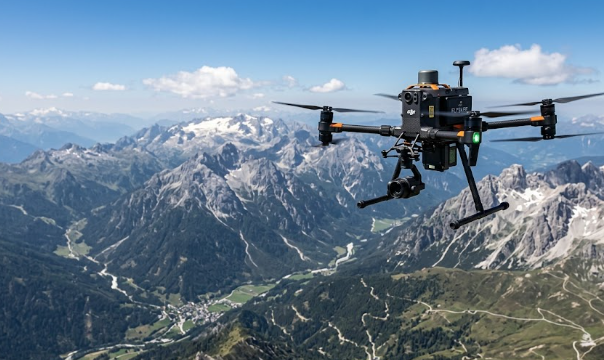
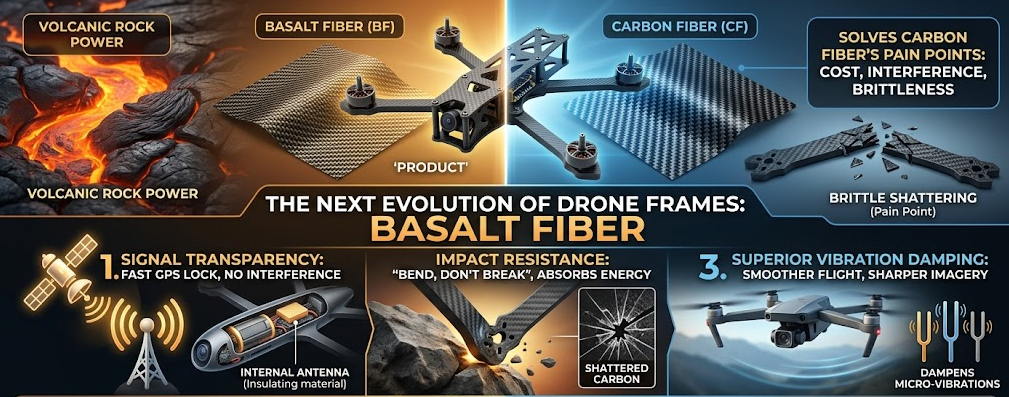
High-End Equipment: Industrial robot arms made of carbon fiber composites reduce weight by 60% and lower motion inertia by 50%, improving positioning accuracy from ±0.1mm to ±0.05mm. This meets the high-precision assembly requirements of 3C electronics and automotive components. The use of carbon fiber composites for drone fuselages extends flight time from 1 hour to 2.5 hours, which can meet the needs of long-duration inspections and logistics delivery.
