


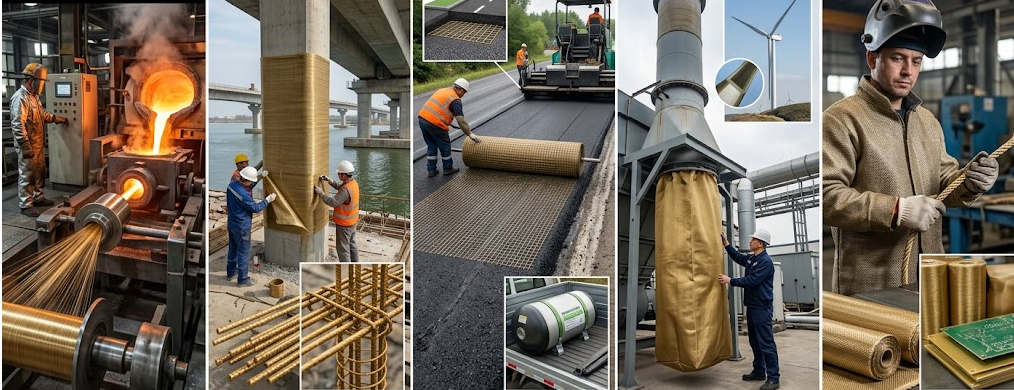
From Earth to Moon How China's Basalt Fiber Technology is Redefining Aerospace Light-Weighting
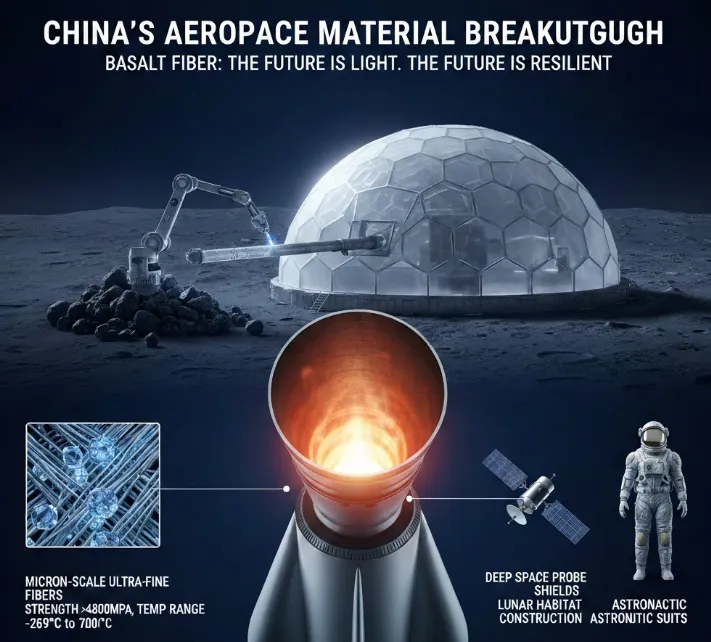
Against the backdrop of surging demand for Lightweight, high-temperature resistant materials in the aerospace field, China'sbasalt fiberindustry has achieved a breakthrough in mass production technology for micron-scale ultra-fine fibers, with performance indicators highly aligned with the needs of aerospace infrastructure. This provides disruptive solutions for deep space exploration, spacecraft protection, and lunar base Construction.
I. Technological Breakthroughs: Mass Production and Performance Leap of Micron-Scale Ultra-Fine Fibers
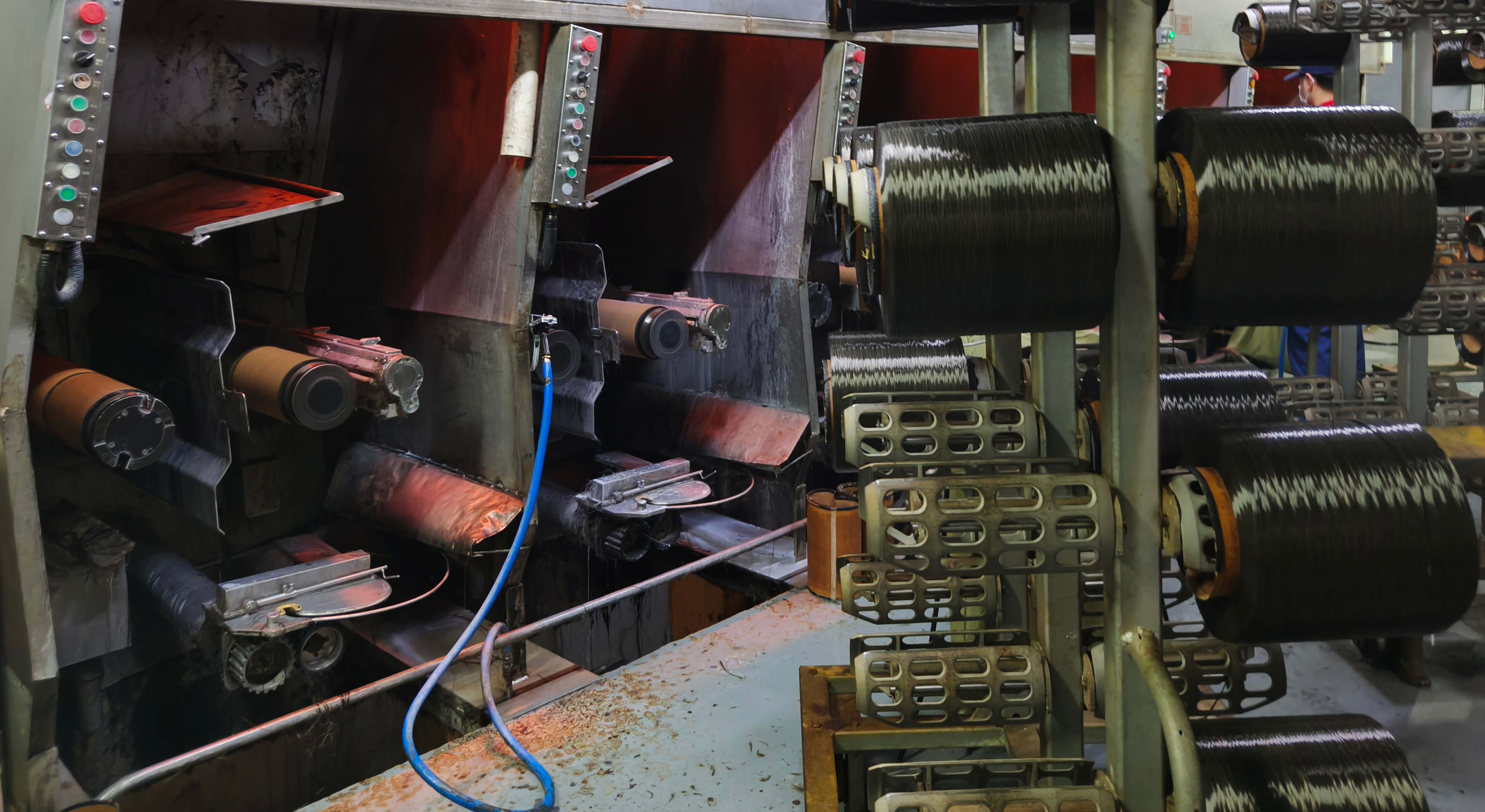
Basalt fiber is made from natural basalt ore through high-temperature melting and drawing at 1450-1500℃. The core technological breakthroughs are reflected in three aspects:
1. Stable Mass Production Technology of Ultra-Fine Fibers
Innovative spinneret design: Through optimized trapezoidal inner cavity and distributed precise temperature control (error ±2℃), stable production of ultra-fine fibers with a diameter of <6μm is achieved, and the fiber diameter fluctuation coefficient (CV value) is reduced to below 3%. For example, the gradient melting and drawing process independently developed by Rongshi New Materials enables ultra-fine fibers to achieve a tensile strength of 2900MPa and an elastic modulus exceeding 88GPa, a 15% improvement compared to the industry average.
Surface modification technology: Hydroxyapatite (HA) coating and micro-nano structure etching are used to endow the fibers with biocompatibility and biomimetic osteointegration capabilities. Simultaneously, silicone resin impregnation improves corrosion resistance, maintaining a strength retention rate of over 90% in pH 2-12 solutions.
2. Performance Advantages in Extreme Environments
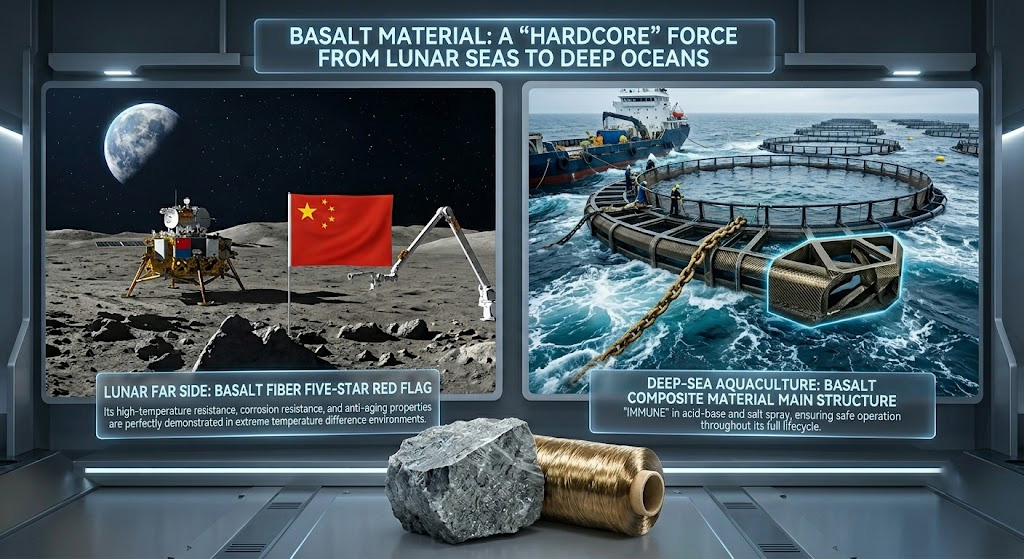
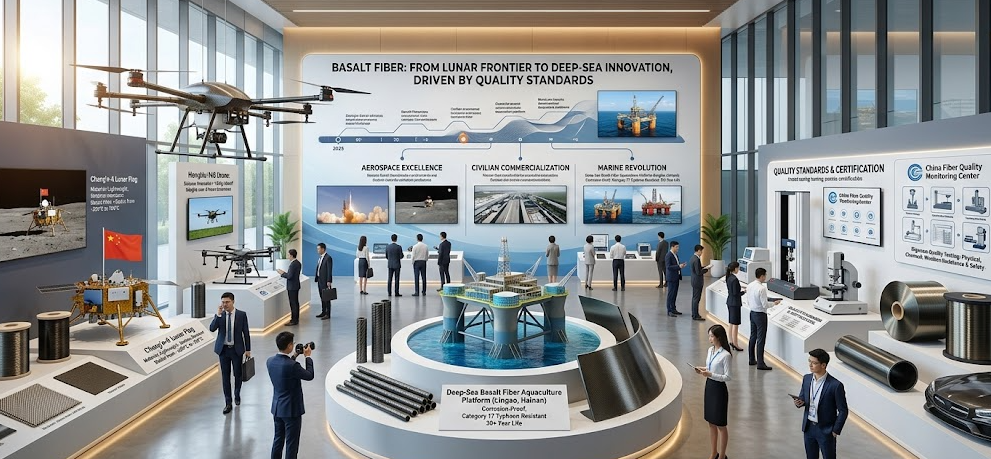
High and low temperature resistance: The long-term operating temperature range covers -269℃ to 700℃, and it can withstand instantaneous high temperatures of 1200℃ (such as the composite felt developed by Chongqing Zhidu). After 1000 hours of exposure at 700℃, the strength still maintains 85% of its original value. For example, the basalt fiber used in the national flag on the moon's surface by Chang'e-6 maintains structural stability under the extreme temperature difference of -180℃ to 150℃ on the far side of the moon. High Strength and Lightweight: Tensile strength reaches 3500-4800 MPa (far exceeding steel's 250-800 MPa), and density is only 2.6-2.8 g/cm³ (approximately 1/3 of steel), achieving a performance combination of "stronger than steel, lighter than aluminum." After using basalt fiber composite materials in a certain type of spacecraft structural component, the weight was reduced by 50%, and impact resistance increased by 30%.
3. Intelligent Production System Construction
Digital Twin and AI Optimization: Real-time monitoring of parameters such as melt viscosity and fiber diameter through fiber optic sensors, combined with AI algorithms to predict equipment failures (accuracy >95%), increases production yield to over 98%. For example, the online detection device developed by Huierjie achieves real-time control of ultra-fine fiber diameter, resulting in product consistency reaching international high-end levels.
Green Manufacturing Process: Using AI ore sorting technology, the proportion of qualified ore increased from 30% to 65%, raw material costs decreased by 25%, and unit energy consumption decreased by 40%, while achieving 100% recycling of tailings.
II. Aerospace Applications: Covering All Scenarios from Deep Space Exploration to Lunar Bases
Thanks to its characteristics of "high temperature resistance, radiation resistance, and strong design flexibility," basalt fiber has achieved multi-dimensional breakthroughs in the aerospace field:
1. Spacecraft Thermal Protection System
Atmospheric Re-entry Protection: Basalt fiber reinforced ceramic matrix composites (C/SiC) are used in the heat shield of the return capsule, capable of withstanding high temperatures of 1600℃, reducing weight by 20% and thermal conductivity by 30% compared to traditional carbon-carbon materials. After using this material in a certain type of return capsule, the temperature fluctuation inside the capsule was controlled within ±5℃.
Extreme Environment Insulation: The thermal insulation layer of the Chang'e 6 lander capsule uses basalt fiber felt, effectively blocking the temperature difference transmission between direct sunlight on the lunar surface (127℃) and the shaded side (-183℃), improving the temperature stability of the equipment inside the capsule by 40%.
2. Spacecraft Structures and Components
Lightweight Structural Components: Basalt fiber/epoxy resin composites are used in satellite brackets and solar panel frames. With a density of only 1.8 g/cm³, they reduce weight by 40% compared to aluminum alloys, while extending fatigue life by more than twice. For example, a certain communication satellite using this material reduced its overall weight by 120 kg, lowering launch costs by 15%.
High-Temperature Resistant Components: Basalt fiber-reinforced nickel-based alloys are used in turbofan engine turbine blades, increasing operating temperature by 150°C, improving fuel efficiency by 3%, and extending blade life by 20%. A Russian research team developed basalt plastic pipes, which exhibit two orders of magnitude lower axial displacement than aluminum alloys at the same wall thickness, making them suitable for rocket fuel delivery systems.
3. Deep Space Exploration and Lunar Base Construction
In-Situ Manufacturing on the Lunar Surface: Chinese research teams have simulated lunar soil composition to produce basalt fibers and developed automated fiber production equipment. This allows for the production of building materials (such as plates and pipes) on the lunar surface using local resources, reducing transportation costs by 90% compared to transporting materials from Earth. The basalt fiber used in the Chinese flag on Chang'e 6 has an 85% similarity in composition to lunar soil, providing material validation for future lunar construction.
Spacesuits and Life Support: Basalt fiber knitted sleeves are used in the thermal protection layer of spacesuits, withstanding -196°C liquid oxygen environments and molten metal splashes. Enhanced with a composite aluminum foil layer, they provide radiation shielding, blocking 99% of cosmic rays. A certain experimental spacesuit using this material reduced its overall weight by 18 kg and improved mobility by 25%.
III. From "Turning Stone into Gold" to "The Stars and the Sea," Basalt New Materials Lead the Aerospace Revolution
China's breakthrough in the mass production technology of thousand-ton-scale micron-sized ultra-fine basalt fibers not only marks my country's leap from "following" to "leading" in the global high-performance fiber field, but also provides indispensable fundamental support for deep space exploration, lunar base construction, and the protection of next-generation spacecraft. This "green stone," originating from deep within the Earth and forged at extremely high temperatures, is rewriting the cost and efficiency logic of aerospace manufacturing with its exceptional properties: stronger than steel, lighter than aluminum, and resistant to extreme temperature variations.