




The Allure of Basalt Fiber
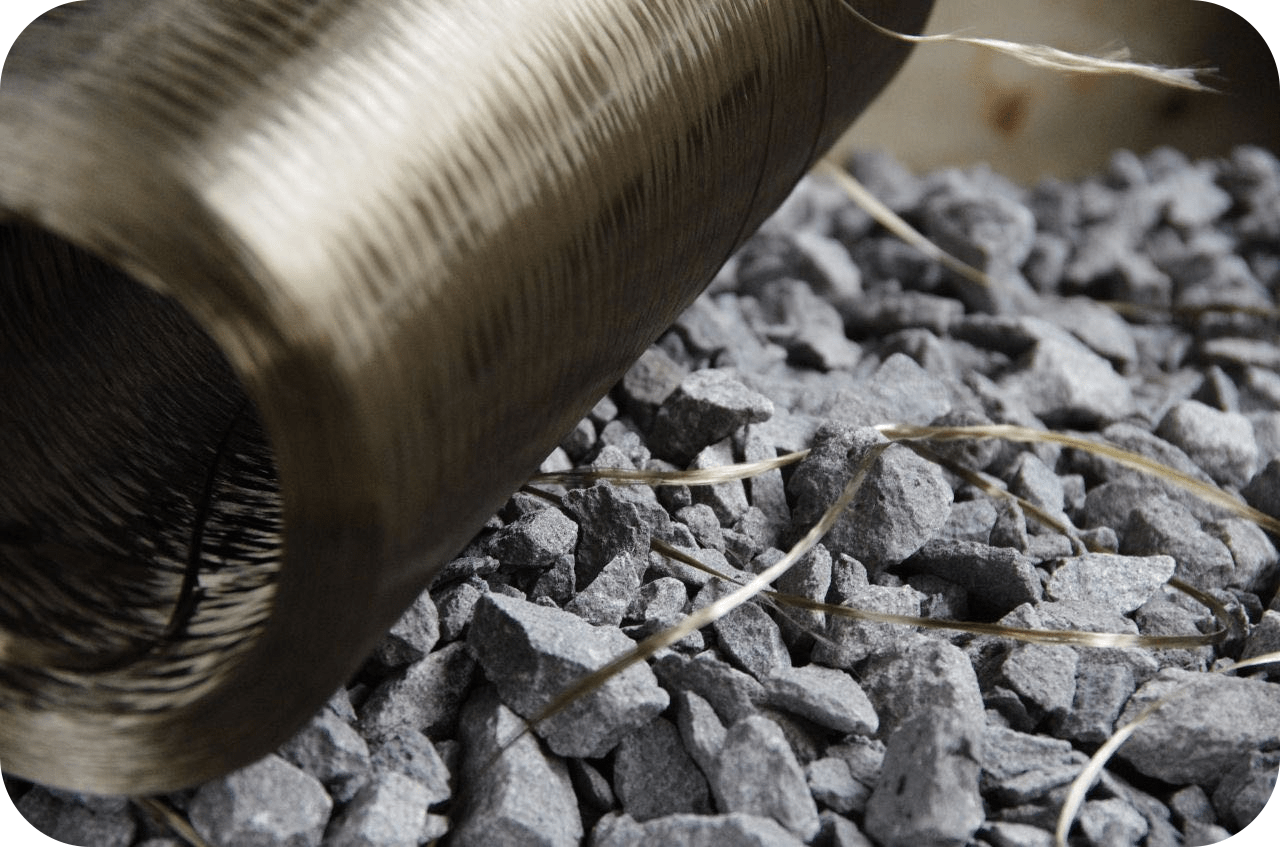
The concept of producing fibers from basalt is not new. The first patent for basalt fiber manufacturing was issued in 1923, and during the 1950s and 1960s, extensive research focused on its military applications. Even leading Glass Fiber producers explored basalt’s potential at the time, though they shifted their R&D focus in the 1970s to higher-performance glass fibers like S-2. Over the decades, interest in basalt fiber composites has fluctuated, but in recent years, it has surged steadily.
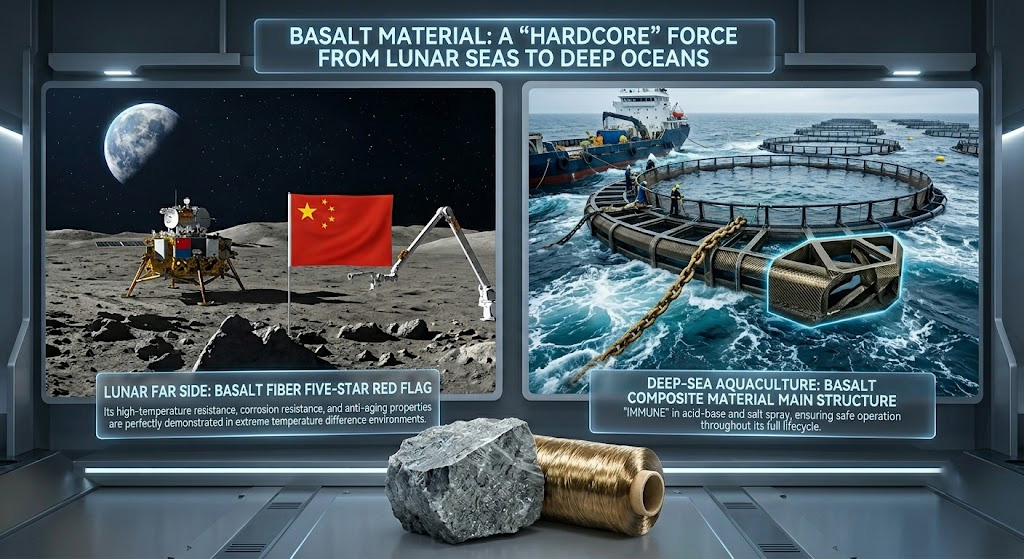
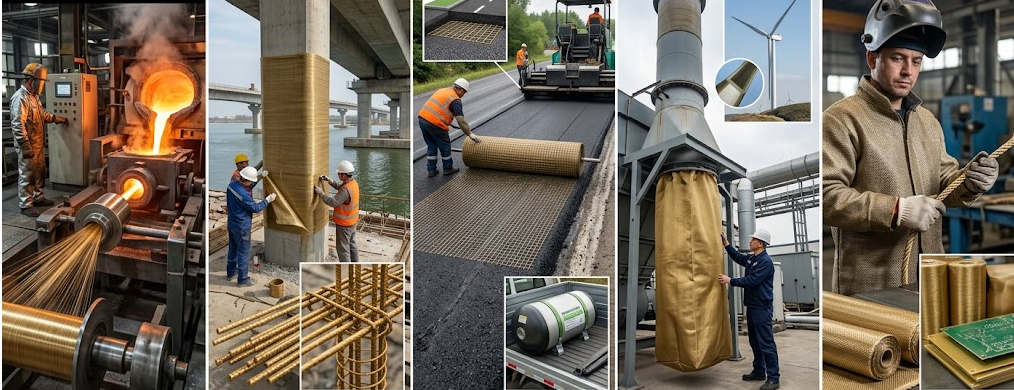
Given that basalt originates from magnesium- and iron-rich lava rapidly cooled into rock, it is no surprise that basalt fibers exhibit exceptional thermal insulation, fire resistance, and high-temperature stability. These properties make them a standard material for high-temperature insulation. For instance, Russian basalt fiber producer Kamenny Vek supplies the U.S. automotive industry with products for exhaust system insulation and provides heat-resistant materials for industrial applications.
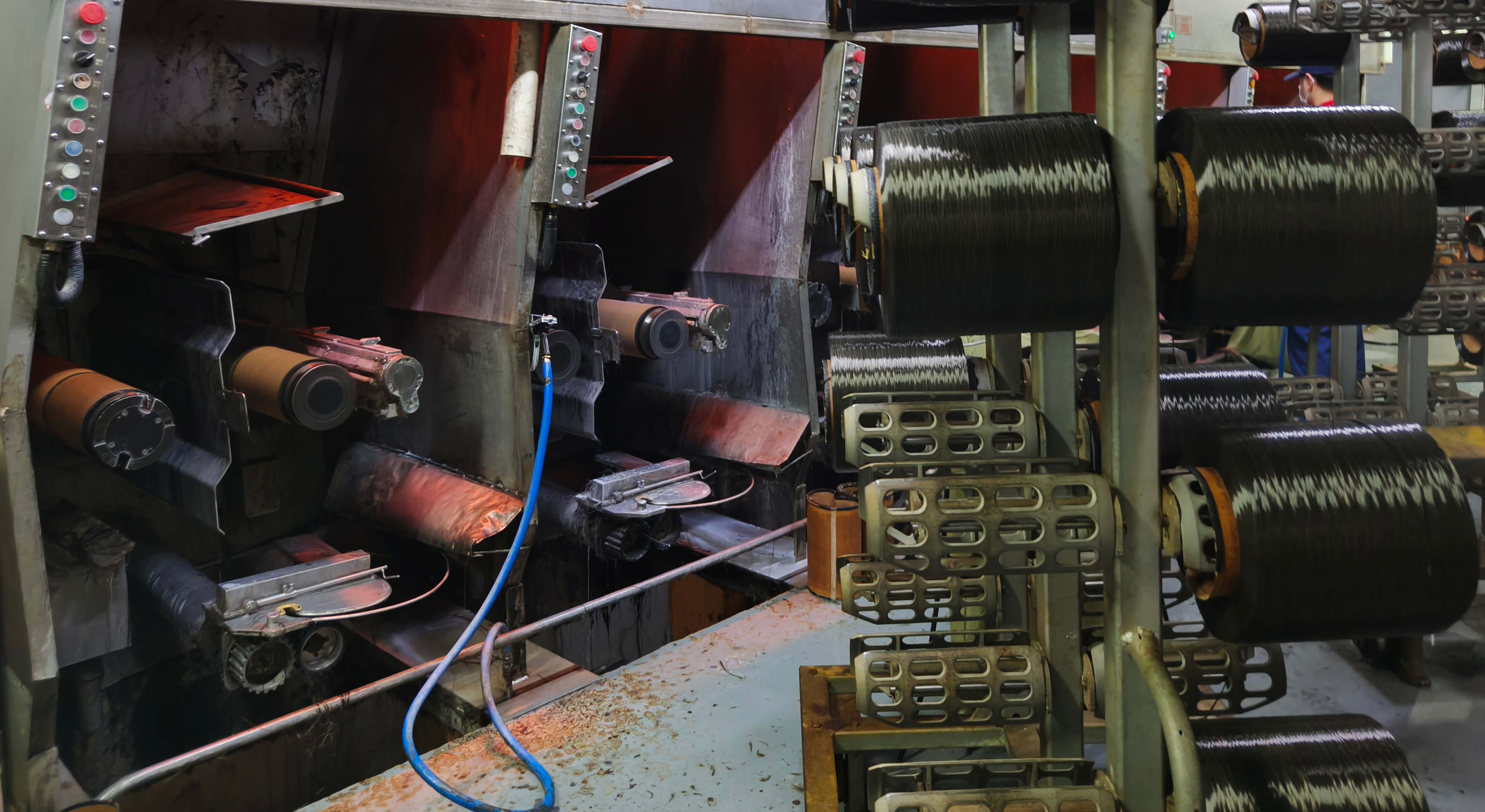
Beyond thermal performance, basalt fiber’s combination of strength, stiffness, impact resistance, and Chemical inertness makes it an attractive reinforcement for composites. In fiber-reinforced plastic (FRP) applications, its molding processes resemble those of glass fiber. Nearly any glass fiber molding technique can be adapted for basalt fiber with minor adjustments to key parameters. Basalt fiber is also compatible with all standard resin systems.
Although basalt’s density (2.63 g/cm³) is slightly higher than glass fiber, its performance advantages enable lighter and more design-flexible composites.
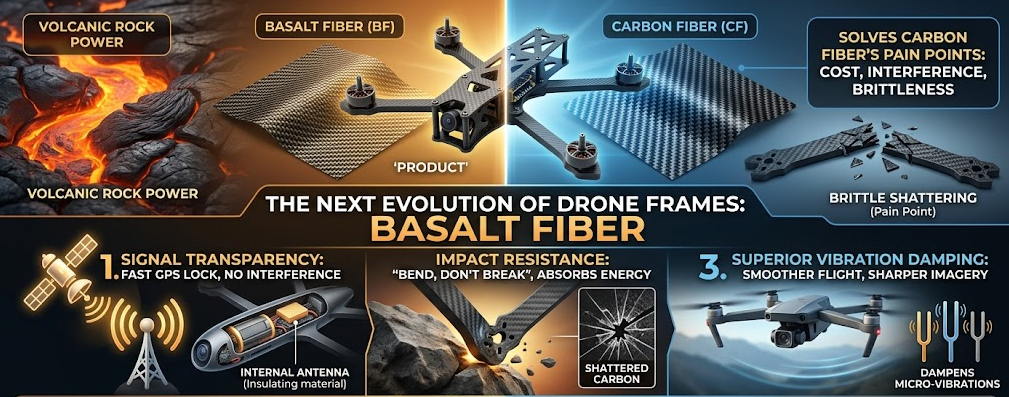
Basalt fiber’s thermal properties are gaining attention beyond insulation. Its composites are increasingly used in applications requiring broader temperature ranges. Its impact resistance also outperforms glass and carbon fibers. Preliminary studies by Germany’s Integrative Lightweight Construction Center and the Textile Technology Institute at RWTH Aachen University showed that basalt hybrid yarn fabric (HYWF)-reinforced polyamide 6 absorbs 35% more specific energy than glass fiber HYWF and 17% more than carbon fiber HYWF.
Iron and aluminum oxides in basalt contribute to additional advantages. For example, basalt fiber exhibits better corrosion resistance and fire retardancy than E-glass. A study by Ireland’s Mafic and Canada’s Fraunhofer Project Center confirmed that basalt fiber/epoxy test panels achieved 40% higher tensile modulus, tensile strength, and interlaminar shear strength, along with 20% greater specific stiffness, compared to E-glass/epoxy panels made with the same resin and process. Kamenny Vek has reported similar results.
Basalt fiber’s low water absorption is critical for construction and pipeline applications. It is non-conductive and, as a naturally occurring material, easier to recycle than synthetic fibers—a key consideration for automotive and other industries. Gencarelle describes basalt fiber as “leaner, greener, and tougher” than alternatives, positioning its composites as a cost-performance bridge between E-glass and carbon fiber. As Thompson notes, “We are filling the gap between carbon and glass fibers—a market long eager for such a solution.”
Transitioning from carbon to basalt fiber is reportedly easier than switching from E-glass, though both are feasible. For carbon fiber users, cost savings drive the shift, while basalt’s balanced performance-to-price ratio suits applications where carbon’s ultra-high performance is unnecessary. Their failure modes also differ: carbon fiber tends to fail catastrophically (e.g., shattering), whereas basalt fiber exhibits gradual, safer failure. Streetman illustrates: “A carbon composite prosthetic leg fails suddenly, causing a fall; a basalt composite leg allows the user to sit down.”
While production improvements are reducing costs, basalt fiber remains twice as expensive as E-glass in high-volume applications. To justify the premium, its superior properties—higher stiffness, strength, impact resistance, chemical/water resistance, and safer failure modes—must deliver critical value. As technology advances, this volcanic rock is carving a unique niche in the world of advanced materials.