

Applications of Basalt Fiber in the Deep-Sea Economy
1. Deep-Sea Resource Development
(1) Deep-Sea Oil and Gas Extraction
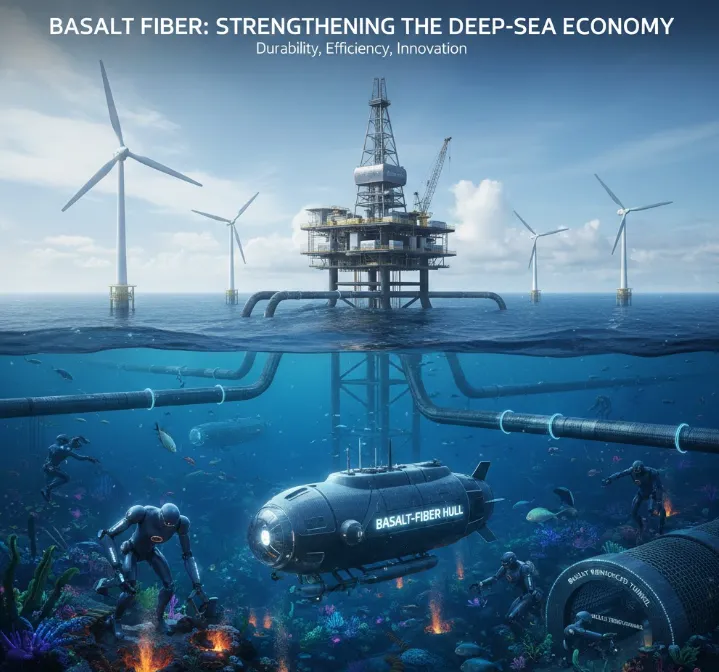
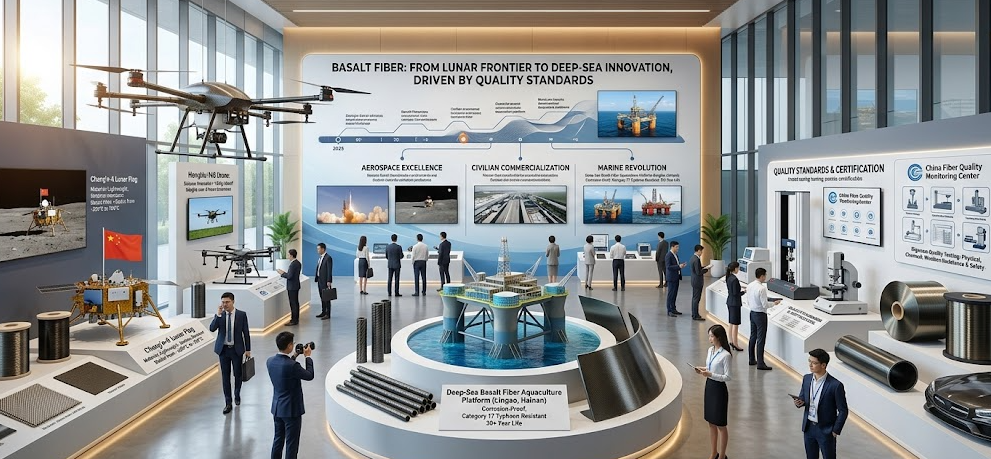
Basalt fiberplays a crucial role in deep-sea oil and gas extraction. In deep-sea oil and gas extraction platforms, its high-strength properties enhance the structural strength of the platform, enabling it to withstand the immense pressure and wave impacts in the harsh deep-sea environment. At the same time, its corrosion resistance effectively resists corrosive substances in seawater and oil and gas, extending the service life of the platform. In pipeline applications, Basalt Fiber-reinforced pipes have better pressure resistance and corrosion resistance, reducing the risk of pipeline leaks and ensuring the safety of oil and gas transportation. For extraction equipment, such as oil pumps and valves, the use ofbasalt fiber can improve their stability and reliability.
Deep-sea oil and gas fields that have adopted basalt fiber-reinforced extraction platforms and pipelines have experienced significantly less corrosion than those using traditional materials, greatly reducing maintenance costs and safety risks. Compared with traditional materials, extraction efficiency is expected to increase by 15%, and the service life of equipment is extended by 30%, resulting in significant economic benefits.
(2) Deep-Sea Mineral Resource Exploration and Extraction
Basalt fiberhas significant application advantages in deep-sea mineral resource exploration equipment, mining tools, and transportation pipelines. In exploration equipment, its lightweight characteristics reduce the weight of the equipment, facilitating transportation and operation, and improving exploration efficiency. At the same time, its high strength and corrosion resistance ensure the reliability of the equipment in complex deep-sea environments. For mining tools, basalt fiber-reinforced tools are more Durable, can withstand greater impact forces, and reduce damage and replacement frequency. In terms of transportation pipelines, it can effectively resist the wear of ore and the corrosion of seawater, reducing pipeline maintenance costs.
These advantages significantly improve exploration efficiency and reduce extraction costs. Lightweight exploration equipment can be deployed quickly, shortening the exploration cycle. Durable mining tools reduce downtime for repairs, improving extraction efficiency. Corrosion-resistant transportation pipelines reduce replacement and maintenance costs, thereby reducing overall extraction costs.
2. Deep-Sea Equipment Manufacturing
(1) Deep-Sea Submersibles
Basalt fiber has important applications in several key parts of deep-sea submersibles. In terms of the outer shell, its high strength and lightweight properties reduce the weight of the submersible while increasing its pressure resistance, allowing it to withstand the immense water pressure of the deep sea. In the frame structure, the use of basalt fiber enhances the stability of the frame, ensuring the overall safety of the submersible. The internal structure uses basalt fiber materials to further optimize the performance of the submersible.
(2) Deep-sea Robots
Basalt fiber plays an important role in multiple components of deep-sea robots. In terms of the robotic arm, its high strength and lightweight properties make the arm more flexible, enabling it to perform more complex operational tasks. The outer shell uses basalt fiber material, which improves the durability of the robot and resists erosion from the deep-sea environment. The application of basalt fiber in sensor components enhances their stability and accuracy.
These applications are of great significance in promoting the development of deep-sea robot technology. Flexible and durable robotic arms and shells improve the efficiency and reliability of the robots, allowing them to work stably in the deep-sea environment for extended periods. Stable and accurate sensors provide the robot with more precise data, helping it to better complete tasks such as exploration and sampling, and promoting the development of deep-sea robot technology to a higher level.
3. Marine Engineering Construction
(1) Subsea Tunnels
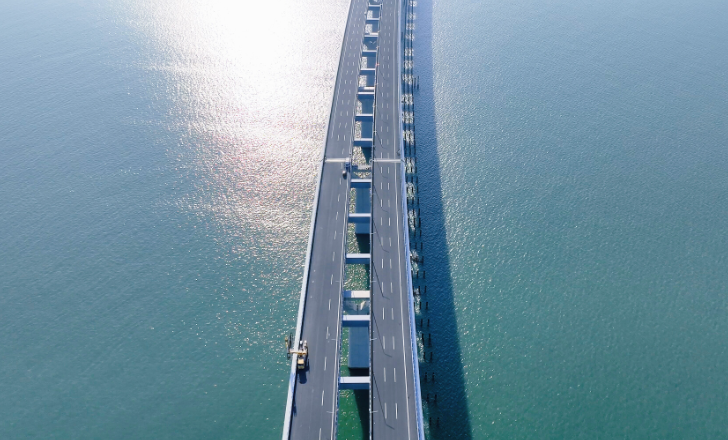
Basalt fiber has important applications in several aspects of subsea tunnels. In terms of lining, it enhances the structural strength of the tunnel and improves its stability. In the reinforcement process, basalt fiber can effectively resist the pressure of the surrounding soil, preventing tunnel deformation. In terms of waterproofing, its good sealing properties reduce seawater leakage, ensuring the safe use of the tunnel.
Basalt fiber plays a crucial role in dealing with complex geological conditions and water pressure environments at the seabed. It can adapt to different geological conditions, enhancing the adaptability of the tunnel. At the same time, its high strength and corrosion resistance can withstand seawater erosion and water pressure impact, extending the service life of the tunnel and ensuring its safety and stability during long-term use.
(2) Offshore Wind Power Foundations
The application of basalt fiber in offshore wind power foundation structures is significant. It can improve the load-bearing capacity of the foundation, allowing the wind turbine to stand more stably offshore. The corrosion resistance effectively resists seawater erosion, extending the service life of the foundation. This technology makes a significant contribution to reducing the cost of offshore wind power construction and improving power generation efficiency. The high-strength foundation structure reduces the size and weight of the foundation, lowering construction costs. At the same time, a stable foundation ensures the normal operation of wind turbines, improving power generation efficiency and reducing downtime due to foundation problems, thereby increasing power generation and improving economic benefits.