




Basalt Fiber: High-Performance Green New Material, Its Products, and Applications
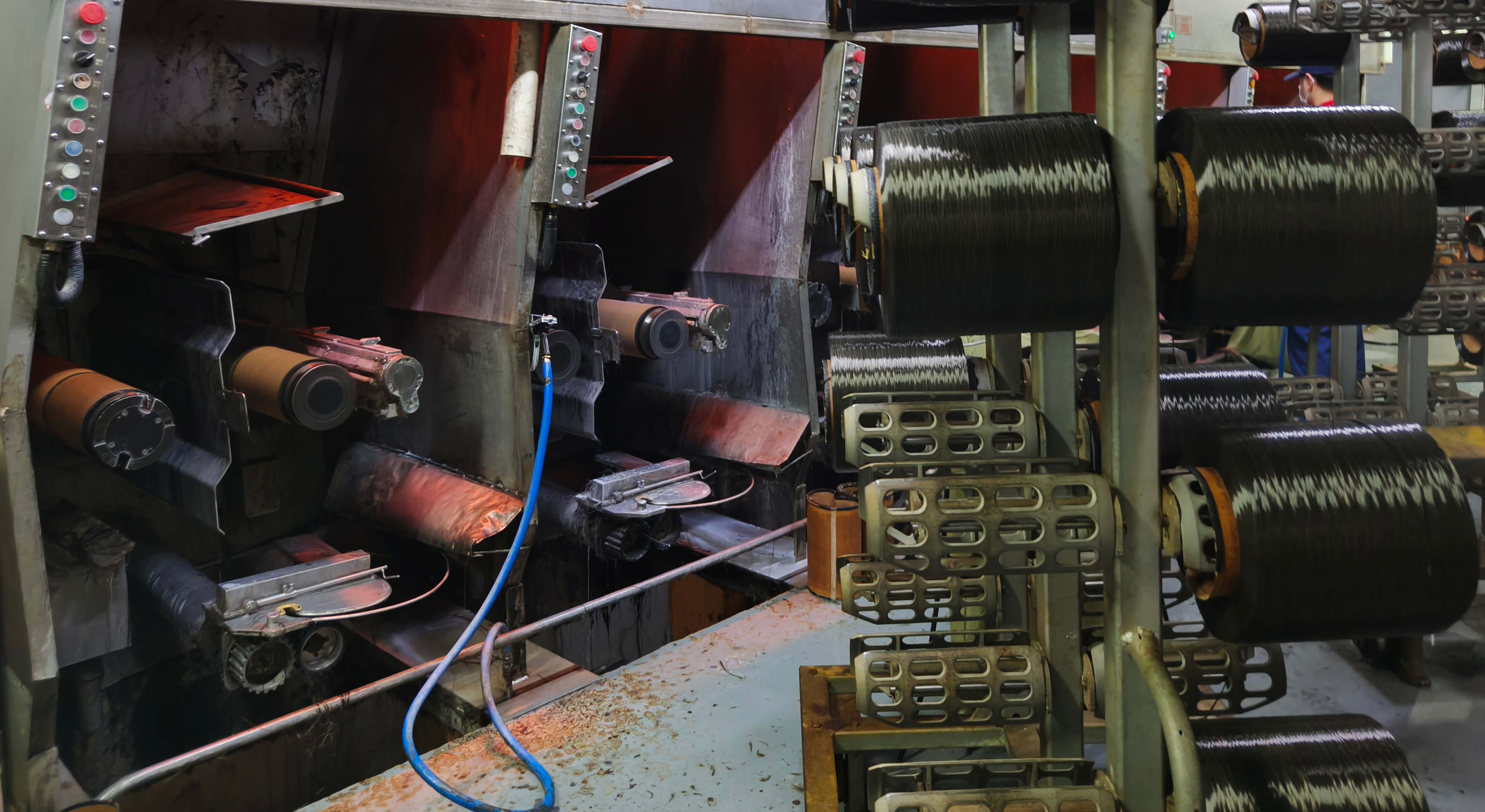
Basalt fiber materialhas powerful uses. So, how is basalt fiber produced? It is a continuous fiber made by high-speed drawing of basalt rock material after being melted at 1450°C to 1500°C through a platinum-rhodium alloy spinneret. Basalt fiber is brown or gold in color. Basalt fiber is a new type of inorganic, environmentally friendly, green, high-performance fiber material. It is a new material for the 21st century that is green, environmentally friendly, and non-polluting, and it is one of China's four major high-performance fibers. Basalt fiber exhibits excellent properties in terms of strength, resistance to high and low temperatures, corrosion resistance, thermal insulation, sound insulation, flame retardancy, as well as Chemical and electrical insulation.
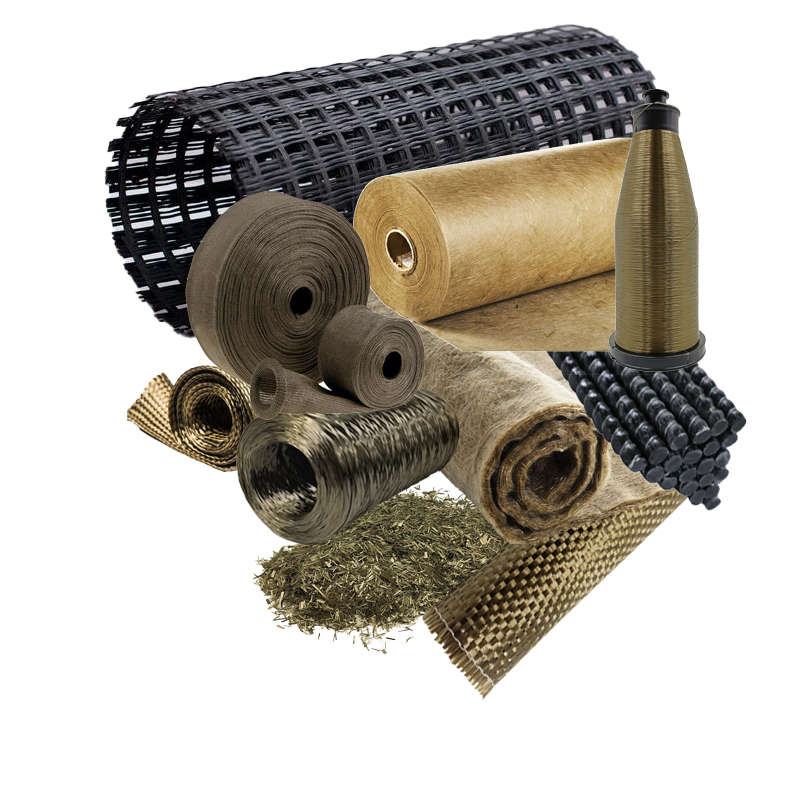
Basalt Fiber Roving
It is an assembled bundle formed by combining multiple parallel filaments or single parallel filaments without twisting. The tensile strength of 7 - 13 μm roving is ≥0.65 N/tex, the elastic modulus is ≥95 GPa, and the elongation at break is ≥2.6%. Basalt Fiber not only has high strength, high modulus, and impact resistance comparable to high-tech fibers such as PPTA (Poly-p-phenylene terephthalamide) and UHMWPE(Ultra-high-molecular-weight polyethylene), but also has excellent high-temperature resistance and light resistance. Especially, the interface bonding strength with resin is very high. Therefore, basalt roving of various specifications can be used for weaving, winding, and braiding various composite material preforms.
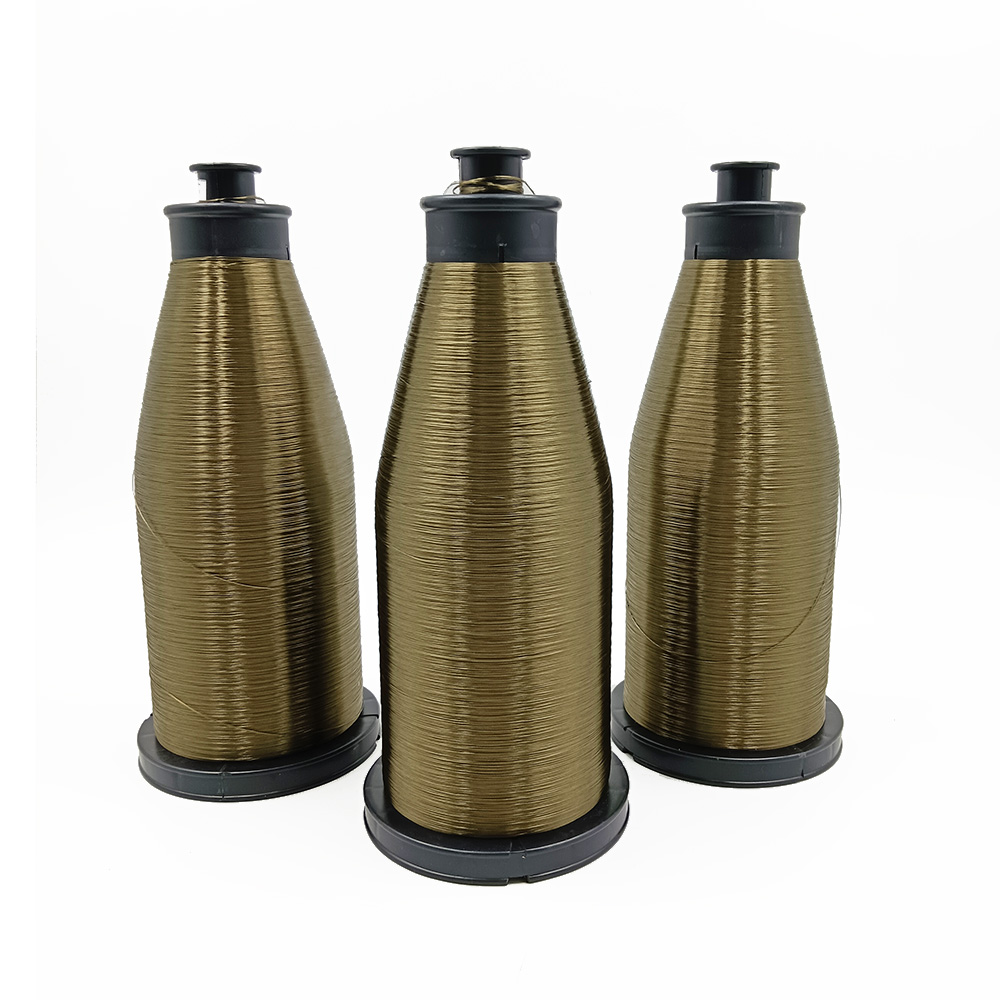
Basalt Fiber Textile Yarn
It is a yarn formed by twisting and plying multiple basalt fiber filaments, with the monofilament diameter generally ≤ 9 μm. Textile yarn can be broadly classified into yarn for weaving and yarn for other industrial uses; weaving yarn is mainly in the form of tube bobbins and conical bobbins.
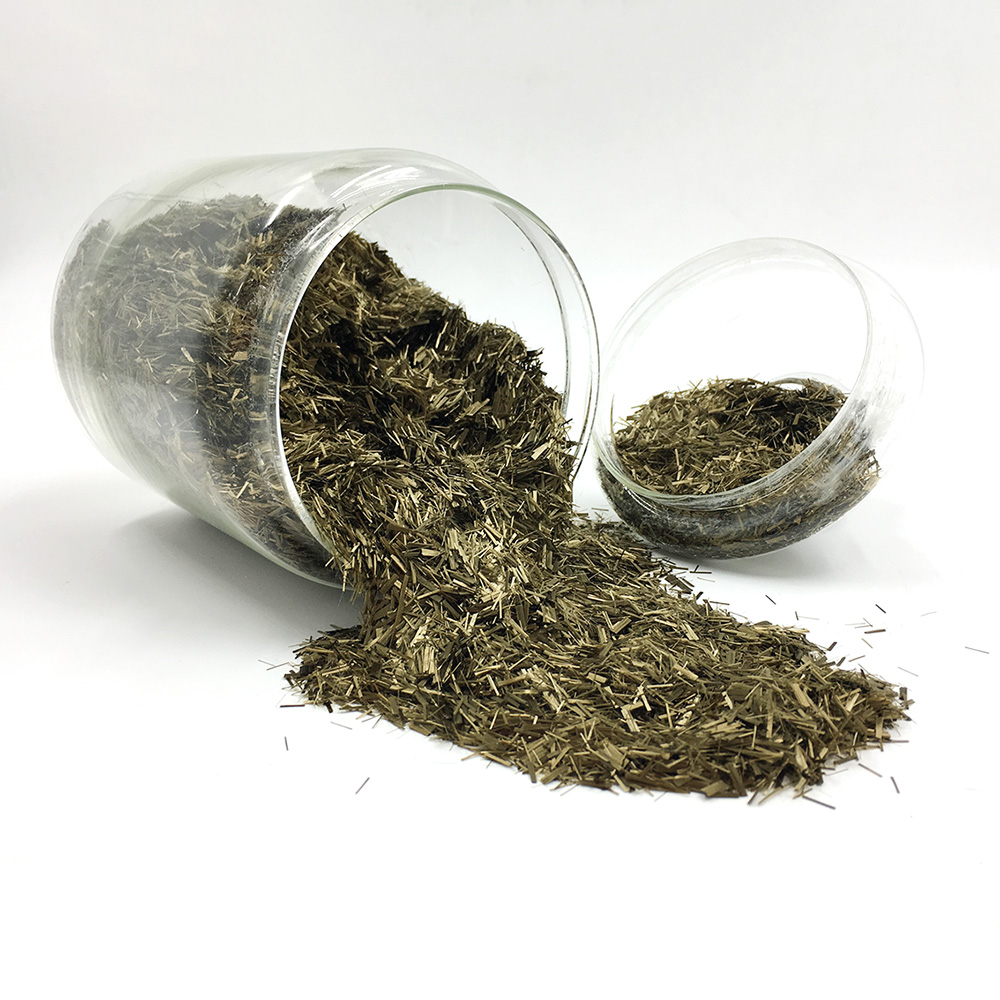
Basalt Fiber Chopped Strand
It is a product made by chopping continuous basalt fiber filaments. The fibers are coated with a (silane) sizing agent. Therefore, basalt fiber chopped strand is the material of choice for reinforcing thermoplastic resins and also the best material for reinforcing concrete. Basalt is a high-performance volcanic rock component. This special silicate gives basalt fiber excellent chemical resistance, especially the advantage of alkali resistance. Therefore, basalt fiber is an excellent material to replace polypropylene (PP) and polyacrylonitrile (PAN) for reinforcing cement concrete; it is also a highly competitive product to replace polyester fibers, lignin fibers, etc., in asphalt concrete, which can improve the high-temperature stability, low-temperature crack resistance, and fatigue resistance of asphalt concrete.
Basalt Fiber Texturized Yarn
Basalt fiber yarn is processed through a high-performance texturizing machine to produce basalt fiber texturized yarn. The forming principle is: a high-speed airflow enters the forming texturizing channel, creating turbulence. This turbulence is used to disperse the basalt fibers, causing them to form loop-like fibers, thereby imparting bulkiness to the basalt fiber and producing texturized yarn.
Basalt Fiber Fabric, also known as Basalt Fiber Woven Fabric
It is woven using high-performance basalt fiber after processes such as twisting and warping. Basalt fiber fabric is a high-performance fabric with excellent properties, high strength, uniform texture, flat surface, and diverse weaving techniques. It can be woven into low-density, breathable, light, and thin fabrics, or high-density, high-strength, thick, and stiff fabrics. Common basalt fiber fabrics include basalt fiber plain weave, basalt fiber twill weave, basalt fiber satin weave, basalt fiber double-weft weave, basalt fiber tape, etc.
Basalt Fiber Needle Punched Felt
Basalt fiber chopped strand is carded, and then the chopped mat layer is reinforced and compounded with a scrim using needling or hydroentangling processes to form a unified whole. It is then treated by impregnation and drying to form the finished needle-punched felt (post-treatment can also be omitted).
Basalt Fiber Composites
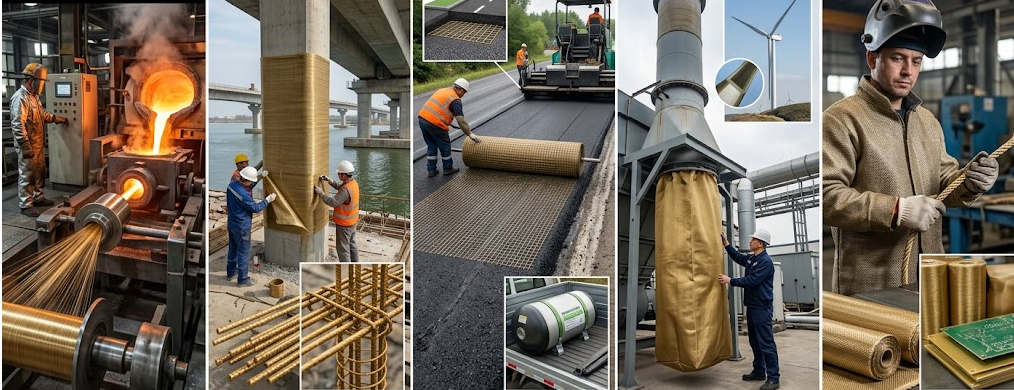
Compared with high-tech fibers such as carbon fiber, aramid, and ultra-high molecular weight polyethylene fiber (UHMWPE), basalt fiber not only possesses the high strength and high modulus characteristics of high-tech fibers, but also has excellent properties such as good high-temperature resistance (-269°C to 760°C), oxidation resistance, radiation resistance, thermal insulation, sound insulation, good filtration, high compressive strength and shear strength, and suitability for use in various environments, with a good cost-performance ratio. It is a pure natural inorganic non-metallic material and a new basic material and high-tech fiber that can meet the development needs of the national economy's basic industries. Basalt fiber and its composites can better meet the needs of structural materials in fields such as national defense construction, transportation, building, petrochemical industry, environmental protection, electronics, aviation, and aerospace, playing an important role in promoting national defense construction, major projects, and industrial structure upgrading. It is both a green material that meets the ecological environment requirements of the 21st century and a competitive new material industry with sustainable development in the global high-tech fiber sector. In particular, China already possesses independent intellectual property rights for basalt fiber manufacturing technology and process, and has achieved an internationally leading level with a "later-comer advantage." Therefore, vigorously developing the basalt fiber and its composite material industry is undoubtedly of great significance.
Application of Basalt Fiber in Functional Apparel
Basalt fiber fabric has high strength, permanent flame retardancy, can withstand short-term temperatures above 1000°C, and can be used long-term in a 760°C environment, making it an ideal substitute for asbestos and glass fiber cloth. Basalt fiber fabric has high breaking strength, high-temperature resistance, and permanent flame retardancy. It is a low-cost alternative to high-performance and advanced fibers such as Nomex (Aramid 1313), Kevlar (Aramid 1414), Zylon (PBO fiber), and carbon fiber. Basalt fiber fabric can be dyed and printed after chemical dyeing and finishing. After functional finishing, such as organofluorine finishing, it can be made into oil-repellent, water-repellent, and permanently flame-retardant fabric. Apparel that can be manufactured from basalt fiber fabric includes: firefighters' turnout gear, thermal insulation suits, proximity suits, protective clothing for furnace workers, welding workwear, and flame-retardant suits for military armored vehicle crews, etc.