






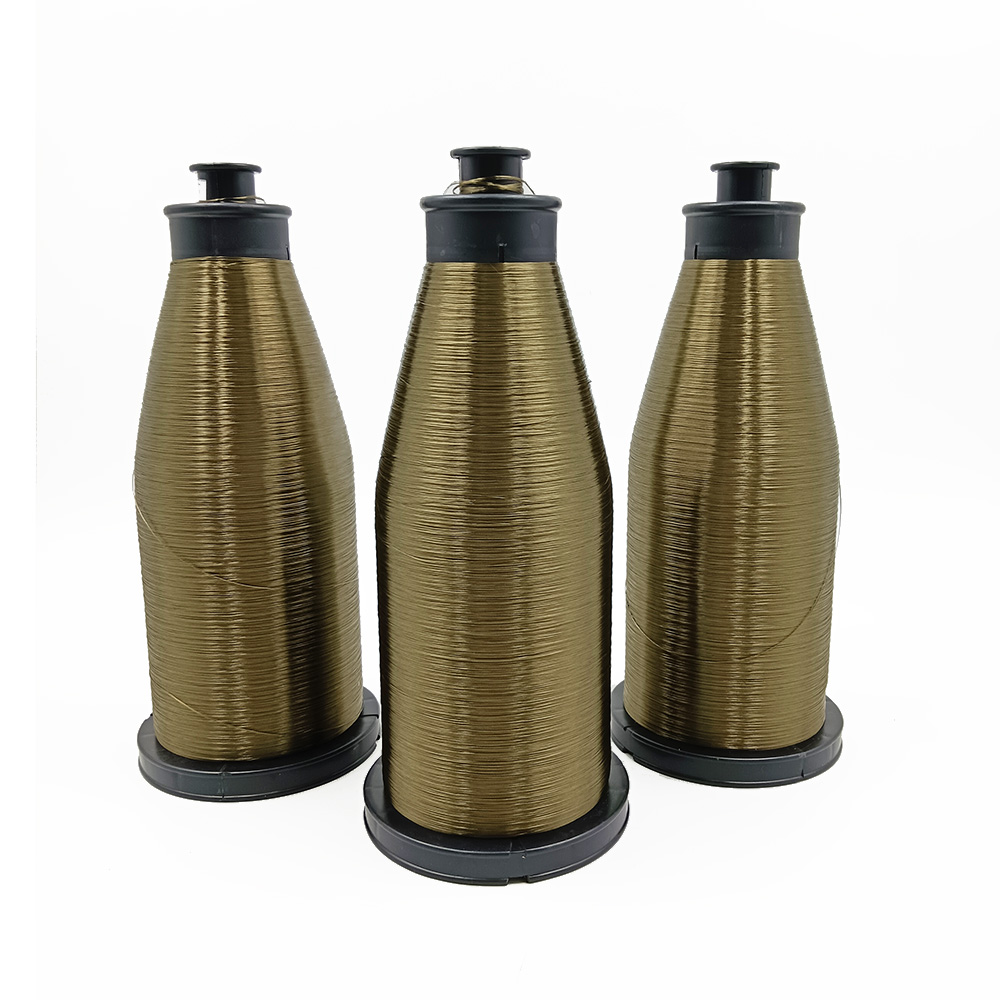
Comparison of the effects of different modification methods on the mechanical properties of basalt fibers
1.Effect of silane coupling agent modification on mechanical properties
Silane coupling agents (e.g. KH-550 and KH-570) form a reactive coating on the surface of basalt fibers through Chemical bonding, which improves the interfacial bonding between the fibers and the substrate, and at the same time, has a certain effect on the mechanical properties of the fibers.
KH-550 Modified:
Advantages: form a chemical bond on the fiber surface, and improve the adhesion between the fiber and the substrate, without significantly damaging the mechanical properties of the fiber itself.
Impact: Studies show that after KH-550 modification, the tensile strength and modulus of elasticity of basalt fibers basically remain unchanged, but due to the improvement of interfacial bonding properties, the overall mechanical properties of the composite material are significantly improved.
KH-570 modification:
Advantages: KH-570 roughens the surface of the basalt fibers and enhances their mechanical embedding with the matrix.
Impact: While surface roughening may slightly reduce the tensile strength of the fibers, the overall strength, toughness, and durability of the composite is significantly improved due to the improved interfacial bonding properties.
2.Effect of surfactant modification on mechanical properties
Cationic surfactants (e.g. CTAC) form a coating on the fiber surface mainly through physical adsorption, and their main purpose is to improve the hydrophilicity and dispersibility of fibers.
Advantage: The surfactant modification has almost no chemical erosion effect on the fiber surface, so it has less effect on the mechanical properties of the fiber.
Impact: The tensile strength and elastic modulus of the fiber are basically unchanged after CTAC modification. The modification mainly improves the dispersibility and hydrophilicity of the fibers, so that the matrix material uniformly wraps the fibers, thus indirectly improving the mechanical properties of the composites.
3.Effect of nano silica coating modification on mechanical properties
Nano-silica coating improves the surface roughness and interfacial bonding ability between fibers and matrix by forming a uniform layer of nanoparticles on the surface of basalt fibers.
Advantage: The nano-silica particles act as a “bridge” on the fiber surface, strengthening the bonding between the fiber and the matrix.
Impact: The coating of silica nanoparticles may cause slight physical damage to the fiber surface, but its impact on the tensile strength of the fibers is small (usually less than 5%). After modification, the overall mechanical properties (e.g. tensile strength, flexural strength) of the composite material can be improved significantly, up to 15%-30%.
4.Effect of organic iron liquid phase deposition modification on mechanical properties
Organic iron liquid phase deposition method is mainly used to enhance the bio-adhesion ability of basalt fibers, and its enhancement of mechanical properties is more indirect.
Advantage: the formation of the coating has a small effect on the mechanical properties of the fiber, and mainly enhances the functionality of the fiber.
Impact: the coating layer may slightly increase the rigidity of the fiber, but the impact on tensile or flexural strength is not significant. The mechanical properties of the modified composites are limited, and they are more often used in the environmental protection field.
5.Effect of other physical or chemical modifications on mechanical properties
Physical methods (e.g. heat treatment):
Heat treatment can change the surface structure of the fiber, but may cause thermal damage to the fiber itself, resulting in a decrease in tensile strength. Appropriate heat treatment helps to remove the impurity layer on the fiber surface, thus indirectly improving the interfacial bonding properties between the fiber and the matrix.
Chemical etching modification:
Chemical etching (e.g., acid treatment) roughens the fiber surface and enhances the mechanical embedding of the interface. However, etching may weaken the fiber itself, resulting in a loss of tensile properties, which needs to be weighed.
Comprehensive Comparison Table
| Modification Methods | Mechanical properties directly affect | Improvement of overall mechanical properties of composites | Main Mechanism of Action |
| Silane coupling agent (KH-550) | Largely unaffected | Raise significantly | Chemical bonding for enhanced interfacial bonding |
| Silane coupling agent(KH-570) | Surface roughening leads to slight weakening of fibers | Raise significantly | Enhanced mechanical embedding |
| CTAC Surfactant | Largely unaffected | Indirect promotion | Improved dispersion and hydrophilicity |
| Nano Silicon Dioxide Coating | Slight weakening of fiber strength (not more than 5%) | Raise significantly(15%-30%) | Increases roughness and enhances interfacial compatibility |
| Organic iron deposition modification | Largely unaffected | Limited promotion | Enhanced bio-attachment |
| hot treatment (e.g. of metal) | May cause thermal damage resulting in loss of fiber strength | Indirect promotion | Removal of surface impurity layer and improvement of interfacial bonding properties |
| Chemical etching modification | Roughening enhances interfacial bonding but may weaken fibers | Limited promotion | Surface roughening for enhanced mechanical insertion |
Conclusion
- Silane coupling agent and nano-silica coating are currently the modification methods that have the least effect on the mechanical properties of basalt fibers, while at the same time improving the overall mechanical properties of the composites most significantly.
- Surfactant modification has almost no direct effect on the mechanical properties of fibers, and it is suitable for scenarios that need to improve the dispersion or hydrophilicity of fibers.
- Chemical etching and heat treatment should be used with caution, because although they can improve the interfacial bonding properties, they may lead to a decrease in the mechanical properties of the fibers.
- The choice of modification method should be based on the application requirements to weigh the performance of the fiber itself and the overall performance of the composite material to improve the effect.
