






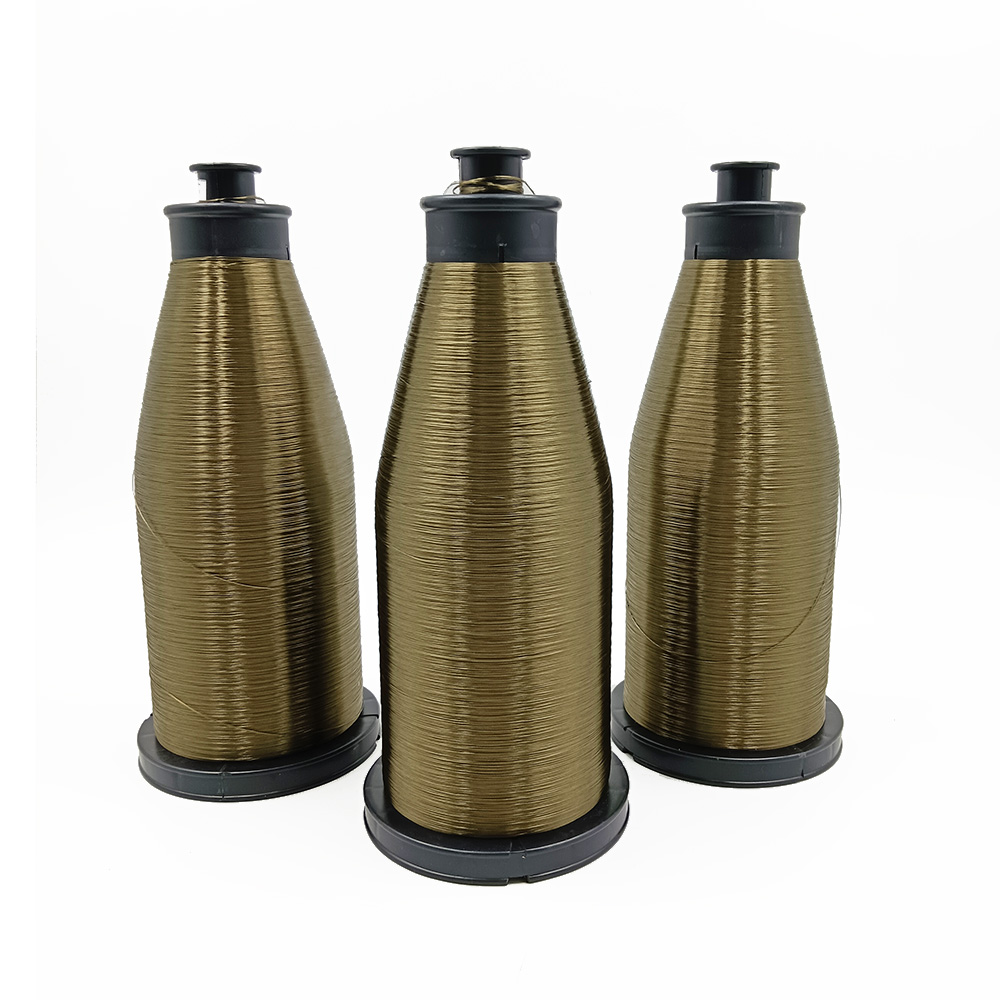
Introduction to basalt fiber geogrids
1.Definition of basalt fiber geogrid
Basalt geogrid is selected basalt fiber yarn, the use of foreign advanced warp knitting machine woven into the substrate, the use of warp knitting directional structure, make full use of the fabric in the yarn strength, to improve its mechanical properties, so that it has good tensile strength, tear strength and creep resistance, and after high-quality modified asphalt coated with a planar network of materials. It follows the principle of similar compatibility, focusing on its composite performance with asphalt mixture, and fully protect the fiber substrate, greatly improving the abrasion resistance and shear resistance of the substrate, so that it can be used for pavement enhancement, resistance to cracking rutting and other road hazards, and put an end to the asphalt pavement is difficult to enhance the problem.
2.The characteristics of the basic fiber geogrid
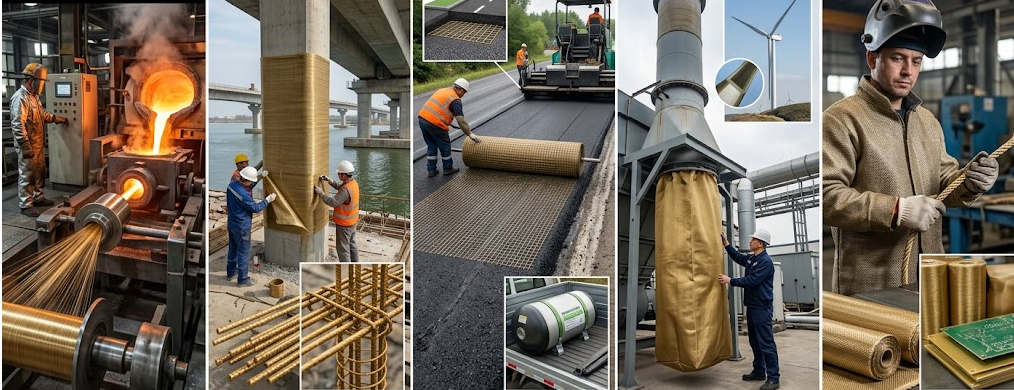
- The product has the advantages of High Strength, low elongation, high temperature resistance, high modulus, light weight, good toughness, corrosion resistance, long service life, easy to fit, etc., can be widely used in the old cement pavement, airport runway maintenance, embankment, river bank, slope protection, road and bridge pavement enhancement treatment and other engineering fields, can give the pavement to enhance the reinforcement, reinforcement, to prevent rutting fatigue cracks in the pavement, heat and cold expansion and contraction cracks and the following reflective cracking, and It can disperse the pavement bearing stress and prolong the service life of the pavement.
- High tensile strength and low elongation: basalt fiber geogrid is based on basalt fiber as raw material, and basalt fiber tensile strength is very high, more than other fibers and ordinary metal. At the same time it has a high modulus, has a high resistance to deformation, fracture elongation is less than 3%.
- No long-term creep: as a reinforcing material, with the ability to resist deformation in the case of long-term load that creep resistance is extremely important, basalt fiber will not creep, to ensure that the product can maintain long-term performance.
- Excellent physical and chemical stability: basalt fiber itself has a strong resistance to acid and alkali corrosion, basalt geogrid can resist a variety of physical wear and chemical erosion, but also against biological erosion and climate change, to ensure that its performance is not lost.
- Good thermal stability: basalt fiber melting point in 1500 ° C or more, long-term use of temperature between -260 ° ~ 650 °, to ensure that the basalt geogrid in the paving operation to withstand high temperature stability.
- The aggregate of the embedded lock and restriction: because the basalt geogrid is a mesh structure, asphalt concrete in the aggregate can be penetrated, so that the formation of the mechanical embedded lock. This restriction hinders the movement of aggregates, so that the asphalt mixture in the case of load can achieve a better state of compaction, higher load-bearing capacity, better load transfer performance and less deformation.
- And asphalt mixture compatibility: basalt geogrid in the post-treatment process coated materials are designed for asphalt mixture, each fiber is fully coated with asphalt has a high degree of compatibility, thus ensuring that the basalt fiber geogrid in the asphalt layer will not be segregated from the asphalt mixture, but firmly combined together.
- Anti-fatigue cracking: basalt geogrid in the asphalt surface layer, can be wheel pressure over the road surface and the resulting compressive and tensile stress dispersion, the formation of a buffer zone between the two stress areas, the gradual change of stress rather than sudden change, reducing the sudden change of stress on the asphalt surface layer of damage. At the same time, the low elongation of basalt geogrid reduces the bending of the pavement, ensuring that the pavement will not occur excessive deformation.
- High-temperature resistant rutting: the use of basalt geogrid in the asphalt layer, which plays a skeleton role in the asphalt layer. Aggregate in asphalt concrete through the grid, forming a composite mechanical locking system, limiting the movement of aggregates, increasing the transverse binding force in the asphalt surface layer, asphalt surface layer of each part of each other, preventing the asphalt surface layer of the push to play the role of resistance to rutting.
- Anti low temperature shrinkage cracking: in low temperature conditions, asphalt concrete cold shrinkage, resulting in tensile stress, when the tensile stress exceeds the tensile strength of asphalt concrete, resulting in cracks. Basalt geogrid in the application of asphalt surface layer, improve the surface layer of transverse tensile strength, so that the tensile strength of asphalt concrete is greatly improved, can resist larger tensile stress without damage. In addition, even if because of the local area of cracks, in the cracks occurring stress concentration, by basalt geogrid transfer and disappear, cracks will not develop into cracks.
- Delayed reduction of reflective cracks: in asphalt with basalt geogrid flat layer, inhibit the shear or tensile stress caused by traffic loads, release the strain, as asphalt concrete tensile reinforcement materials, to achieve the purpose of delaying the reduction of cracks.
3.The application of geogrid with basic fiber
Geogrid in the application of the main considerations of strength, tear resistance, and the combination of soil, durability and its economy. At present, geogrid has been used in the field of highway roadbed, railroad roadbed, soil embankment, bank slope enhancement, support and retaining structure, rock fracture layer repair, pavement enhancement repair and reflection crack prevention and control. Especially the application of geogrid in pavement enhancement and prevention of reflection cracks. Reflection crack is the road grass-roots level due to temperature change or load bearing too large and produce cracks, and through the interlayer stress propagation to the road surface, produce vertical or horizontal movement between layers and make the road surface cracking. The application of high-performance geogrid can effectively improve the interlayer shear strength and bending fatigue performance of the road, dispersing the stress concentration, thus effectively preventing the occurrence of pavement cracks, and greatly reduce the road maintenance costs. Reflection cracking is a phenomenon commonly found in asphalt pavement. For the reflection cracks in the road surface, laying a layer of geotextile between the asphalt surface layer and the underlayment can eliminate or slow down the generation of reflection cracks in the surface layer, thus extending the service life of the road. But asphalt pavement pouring temperature up to 160 ℃, resulting in geotextile or polymer geogrid fold, deformation, softening, so that its performance is greatly reduced. Applied in asphalt pavement geogrid is best to use basalt fiber geogrid, because the basalt fiber geogrid has good heat resistance, and high strength, high modulus, low elongation, low coefficient of thermal expansion and other characteristics.
