




Basalt Fiber Nonwoven Fabric: A Multi-Scenario "Functional Barrier" and "Environmentally Friendly Solution"
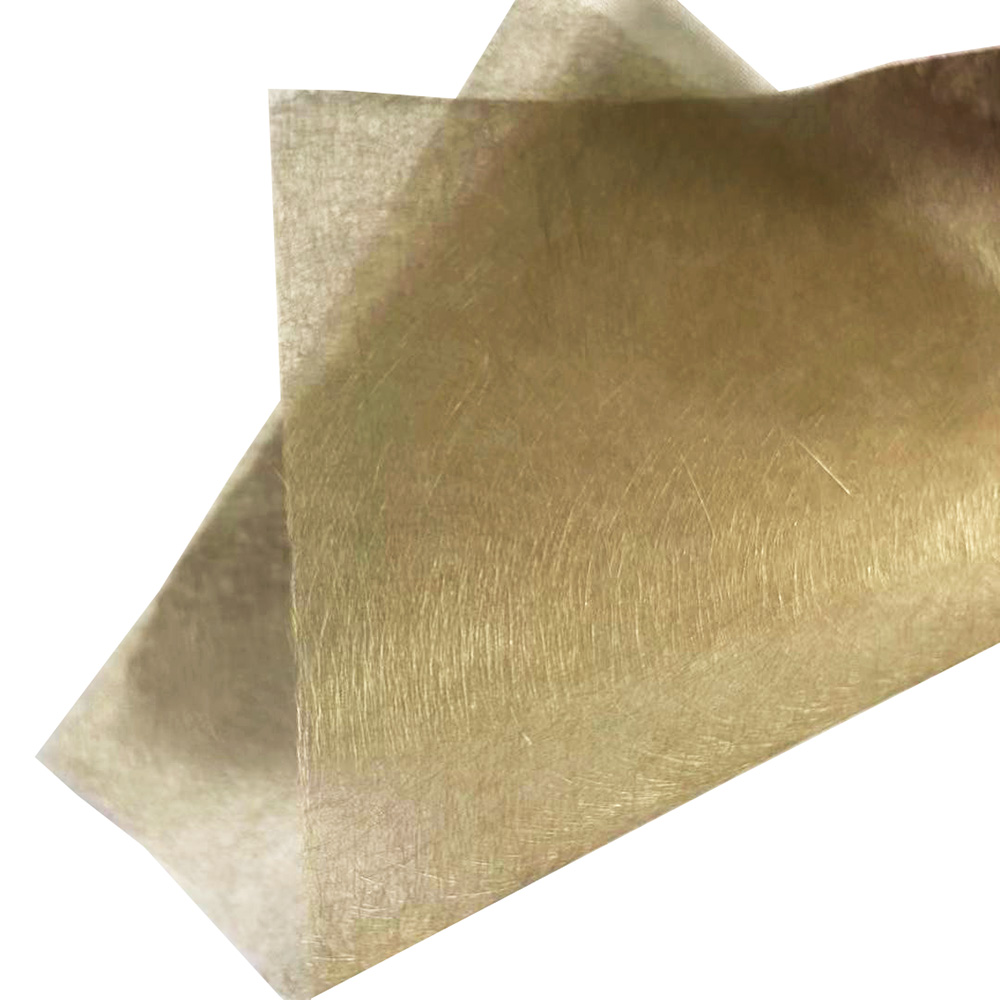
Basalt fiber nonwoven fabricis a sheet material made by randomly or orientedly laying chopped basalt fibers or continuous filaments into a web and then reinforcing it through nonwoven processes such as needle punching, hydroentangling, and meltblowing (which requires the addition of a small amount of hot-melt fibers). Its core value lies in its "structural controllability" and "functional versatility." By adjusting the fiber length, web laying method, and reinforcement process, its physical and Chemical properties can be customized to suit different scenarios.Basalt fiber nonwoven fabric is a general term. For example, our company'sBasalt Fiber Surfacing Tissue Mat and Basalt Fiber Needled Mat both fall under this category.
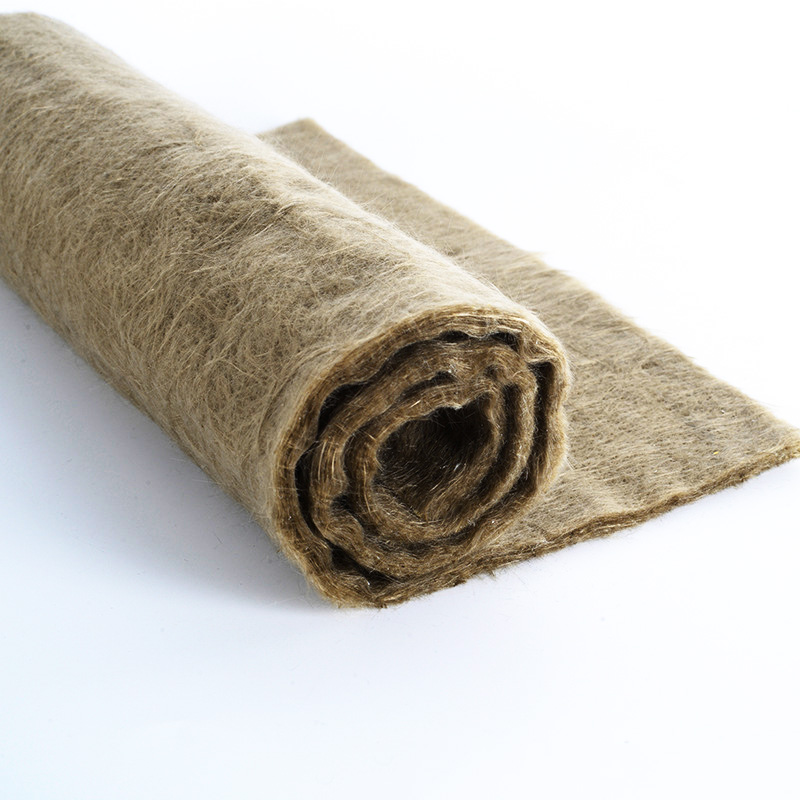
- Core Characteristics: Significant Advantages of Flexible Structure and Diverse Functions
Adjustable Structure and Thickness: From thin filter cloth (0.1mm) to thick sound-absorbing cotton (50mm), the number and density of web layers can be precisely controlled; random fiber distribution makes the material "isotropic," while oriented web laying can enhance mechanical properties in specific directions. Excellent filtration efficiency: The fiber diameter is fine (up to 5~10μm) and the porosity is high (up to 70%~90%), with a dust and particulate matter retention efficiency of over 99% (PM2.5 filtration efficiency ≥95%), and low air resistance.
Environmental protection and safety: The raw material is natural basalt, with no release of harmful substances such as formaldehyde and benzene; it can be naturally degraded or incinerated after disposal (incineration does not emit toxic gases, and the residue is inorganic oxides), meeting the requirements of "green manufacturing".
Multifunctional integration: Through composite processes (such as composite with carbon fiber and Glass Fiber) or coating treatments (such as waterproof coatings and antibacterial coatings), it can achieve multifunctional integration such as "filtration + heat insulation" and "protection + breathability".
- Core application value: From industrial filtration to public protection
(1) Industrial filtration field: The "core medium" for high-efficiency purification
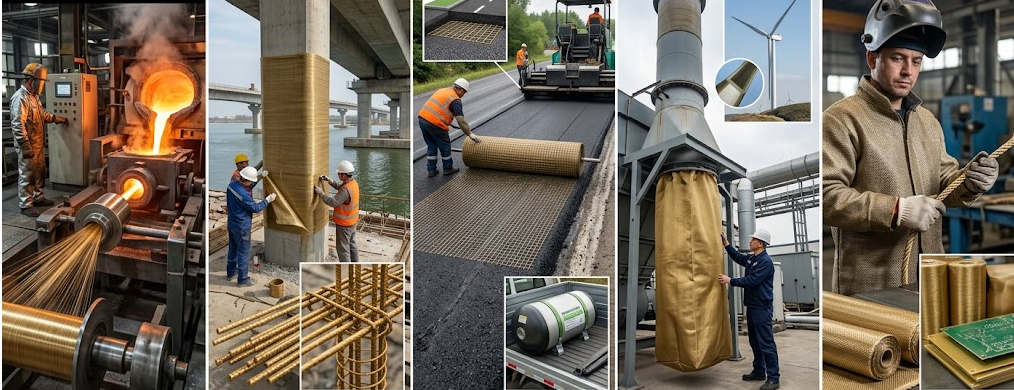
Basalt fiber nonwoven fabric has become the preferred material for filtration under extreme working conditions due to its resistance to high and low temperatures and chemical corrosion. In high-temperature flue gas filtration, baghouse filter media used in industries such as steel, cement, and waste incineration can filter dust and harmful particulate matter (such as dioxin carriers) in flue gas for extended periods at temperatures of 200-400℃, with a service life 3-5 times longer than traditional polyester filter media. In liquid filtration, as a precision filter cloth in the chemical and electroplating industries, it can filter suspended impurities in acidic and alkaline solutions without chemically reacting with the medium, achieving a filtration accuracy of 1-5μm.
(2) Protection and Environmental Protection: A "Dual Guarantee" of Safety and Greenness
In the field of personal protective equipment, it is used to manufacture dust masks, welding mask linings, and heat insulation layers for fire suits, combining high breathability and protection—compared to meltblown nonwoven fabric, it has stronger temperature resistance, making it suitable for high-temperature operations such as welding and firefighting, and it has no risk of static electricity accumulation, making it suitable for flammable and explosive environments. In the field of environmental protection and ecological restoration, as a geomembrane liner for soil remediation and a vegetation growth substrate for riverbank ecological protection, its acid and alkali resistance and anti-biodegradation properties ensure long-term structural stability while allowing water and nutrients to permeate, thus contributing to ecological environment restoration.
(3) Functional building materials: "Scenario optimization" for comfort and energy saving
In terms of sound-absorbing and noise-reducing materials, thick needle-punched nonwoven fabric is used as a sound-absorbing layer for building interior walls, elevator shafts, and rail transit tunnels. Through the reflection and damping effect of sound waves by the fiber pores, it can reduce noise by 15~25dB. It is also resistant to high temperature and non-flammable (oxygen index ≥40%, which is a non-combustible material). In terms of thermal insulation materials, it is used for building exterior wall insulation layers and industrial equipment insulation sleeves. It has a low thermal conductivity (≤0.038W/(m·K)) and does not absorb moisture or have the risk of mold growth, which is better than traditional rock wool insulation materials.
