








Construction Technology Analysis of Basalt Fiber-Reinforced Plaster Morta
1. Optimized Construction Process
(1) Mortar Mixing Optimization
Uneven fiber distribution during the mixing process can lead to localized strengthening of the mortar, affecting its crack resistance. To improve fiber dispersion, efficient mixing equipment should be used, and the mixing time and speed should be adjusted appropriately to ensure uniform fiber distribution throughout the mortar. Proper mixing time helps ensure the fibers are fully integrated with the cement-based material; both excessively long or short mixing times will impact fiber dispersion and the overall performance of the mortar. It's generally recommended to control the mixing time to 3-5 minutes, avoiding over-mixing, which can cause fiber breakage and negatively affect the reinforcing effect.
(2) Mortar Application Optimization
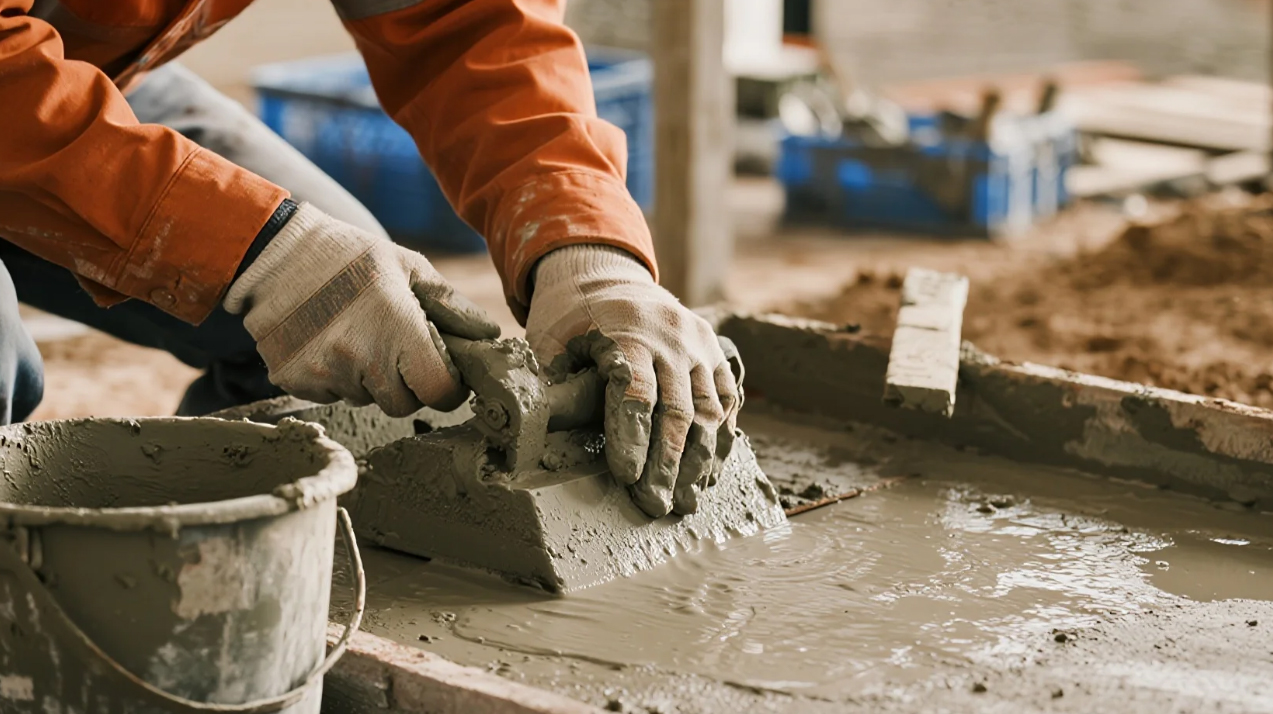
Applying a layer that's too thin can lead to cracking, while an overly thick layer can result in an uneven surface, reducing aesthetic appeal and durability. It's recommended to control the application layer thickness to between 3-5 mm and use tools like spatulas and trowels to ensure a flat and uniform coating. During application, a cross-application method should be used to ensure the fibers are fully covered on the mortar surface and achieve good bonding. Avoid Construction in high-temperature and strong-wind environments to reduce cracking caused by excessively rapid surface drying.
(3) Curing Method Optimization
Wet curing can prevent moisture loss during cement hydration, reducing crack formation. During the curing process, regularly spray water to keep the mortar surface moist and avoid direct exposure to strong sunlight and high temperatures. To ensure the strength and crack resistance of the mortar, the curing time should be extended to at least 7-14 days, especially in low-temperature environments where curing time can be appropriately prolonged. During the curing period, avoid external mechanical vibrations or other factors that could damage the mortar.
2. Measures for Optimizing Fiber Dispersion
Before adding basalt fibers, the fibers can undergo surface treatment, such as immersion, coating, or electrospinning, to improve their affinity with cement-based materials, thereby enhancing fiber dispersion in the mortar. The selection of fiber length and content directly affects their dispersion and reinforcing effect. Longer fibers tend to entangle during mixing, leading to uneven dispersion, so the appropriate fiber length and content should be determined based on test results. Fiber dispersants can be added to the mortar to aid fiber dispersion; dispersants reduce the mutual attractive forces between fibers, allowing them to be more uniformly distributed in the mortar. Optimizing mixing equipment and methods, such as using high-speed mixers or periodic mixing, can effectively improve fiber dispersion.